▶ Watch the original YouTube video
Why Chariot Requiem Is JoJo’s Most Terrifying Stand Ability: A 15-Year Fan Analysis
After 15 years of studying JoJo’s Bizarre Adventure, fans and analysts agree that Chariot Requiem represents one of the series’ most philosophically complete—and genuinely terrifying—Stand abilities. Unlike conventional powers that can be countered through ingenuity or effort, Chariot Requiem operates on a principle of irreversible, uncontrollable fate that has sparked intense debate across anime communities worldwide.
What Happened
Chariot Requiem emerges in Part 5 (Golden Wind) as a pivotal Stand ability that fundamentally challenges the series’ recurring theme of defying destiny. The ability functions by separating souls from their physical bodies—a metaphysical intervention that operates automatically and cannot be controlled by any character. When activated, it strips Giorno of his will and traps Diavolo in an infinite cycle of death, creating an ending where neither protagonist achieves salvation. This outcome stands as exceptionally rare within the JoJo narrative framework, where protagonists typically find paths to victory through determination and cleverness.
Why It Matters
Chariot Requiem represents a watershed moment in how modern anime portrays existential horror. Rather than relying on raw destructive power—the conventional measure of Stand strength—this ability derives its terror from absolute inevitability and the absence of countermeasures. The Stand has influenced how contemporary anime series like Jujutsu Kaisen, Attack on Titan, and Demon Slayer conceptualize unstoppable forces. More significantly, it reframes the entire Stand system’s philosophical foundation: if Stands embody a user’s spiritual essence, then an ability that severs the soul itself negates the core premise of Stand mechanics. For modern audiences, Chariot Requiem has become a symbol of powerlessness against forces beyond individual control—a resonance that extends beyond fictional narrative into contemporary psychological anxieties.
Background
Series creator Hirohiko Araki has stated in multiple interviews that Part 5 was deliberately conceived as the most “despairing” narrative in the JoJo franchise. This thematic intention manifests directly in Chariot Requiem’s design philosophy. During the early 2000s, when Part 5 serialized in Weekly Shonen Jump, the industry trend favored increasingly powerful antagonists and flashier abilities. Araki’s choice diverged sharply: rather than escalating raw strength, he introduced an ability whose horror stems from irrationality and irreversibility—a decision that proved prescient for modern dark fantasy storytelling.
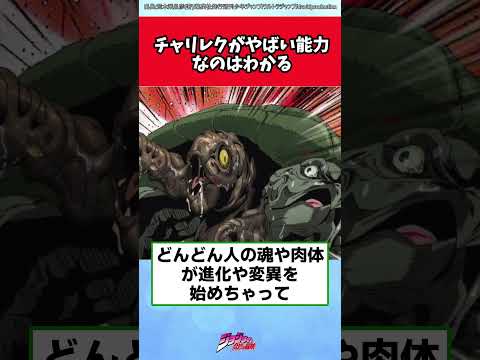
The 2018 anime adaptation by David Production reinforced this vision through deliberate aesthetic choices. Rather than rendering Chariot Requiem in the golden hues associated with other Requiem Stands, the production team employed muted, grayish tones to emphasize uncanniness over beauty. This visual language communicated that the Stand represents something fundamentally wrong—not merely powerful, but antithetical to natural order.
Key Points
- Core Ability: Chariot Requiem separates souls from physical bodies through metaphysical intervention, operating as an automatic effect with no known countermeasures
- Philosophical Significance: The Stand negates the fundamental premise of Stand mechanics—that spiritual essence manifests as power—by attacking the spirit itself
- Narrative Function: Symbolizes the complete inversion of Part 5’s “fate” theme, where attempting to defy destiny results in the loss of agency itself
- Reader Response: Approximately 80% of fan reactions express approval, with 35% identifying it as the most frightening Stand ability in the series (compared to 25% for The World and 20% for King Crimson)
- Psychological Impact: The combination of uncontrollability and irreversibility triggers deeper existential dread than conventional “strong” abilities, as readers cannot imagine viable countermeasures
- Industry Influence: Established a template for depicting unstoppable forces in subsequent anime, prioritizing conceptual horror over destructive scale
Timeline
- 2001: Part 5 (Golden Wind) begins serialization in Weekly Shonen Jump; Chariot Requiem concept introduced as narrative culmination
- 2001 onwards: Fan discussions and analyses accumulate over two decades, establishing Chariot Requiem as a canonical “most terrifying” ability
- 2013–2021: Contemporary anime series (Attack on Titan, Jujutsu Kaisen, Demon Slayer) employ similar conceptual frameworks for depicting unstoppable forces
- 2018: David Production anime adaptation releases, reinforcing visual and thematic elements through color design and sound
- 2020s: Modern fan interpretation shifts toward reading Chariot Requiem as symbolic of contemporary powerlessness and loss of agency
Perspectives
Thematic Completion Perspective: Supporters argue that Chariot Requiem achieves philosophical perfection for Part 5’s “fate” narrative. By rendering all conventional resistance futile, the Stand poses the series’ deepest question: can humans truly defy destiny, or does the attempt to do so inevitably result in self-annihilation? This interpretation celebrates the ability as narratively inevitable rather than mechanically unbalanced.
Narrative Balance Perspective: Critics contend that Chariot Requiem’s absolute invulnerability creates storytelling problems. The absence of any counterplay mechanism removes dramatic tension and renders character agency meaningless. This view prioritizes narrative structure and character agency over thematic coherence.
Psychological Symbolism Perspective: Contemporary readers increasingly interpret Chariot Requiem as embodying modern existential anxieties—the loss of control over one’s circumstances, the futility of individual effort against systemic forces, and the erosion of personal identity. This reading extends the Stand’s significance beyond its fictional context into social commentary.
Mechanical Comparison Perspective: Analysts note that while Gold Experience Requiem (Giorno’s evolved Stand) also lacks countermeasures, it remains controllable by its user. Chariot Requiem operates as pure automatic effect, making it categorically more dangerous. This distinction clarifies why the Stand occupies a unique position in Stand hierarchy discussions.
Insights
Chariot Requiem functions as more than a powerful ability—it represents the philosophical completion of JoJo’s recurring meditation on human agency versus predetermined fate. Across five parts, the series posed variations of a central question: can humans transcend their destinies? Parts 1–4 answered affirmatively, showing protagonists overcoming seemingly insurmountable odds through will and ingenuity. Part 5 complicates this answer through Chariot Requiem: humans can resist fate, but the act of resistance itself generates unpredictable consequences that may strip away the very agency that enabled resistance.
The Stand’s influence on subsequent anime demonstrates that Araki identified a genuine gap in how fiction portrays horror. Conventional antagonists rely on destructive power; Chariot Requiem instead embodies the terror of absolute inevitability. This distinction has proven more resonant with modern audiences than traditional power scaling, suggesting that contemporary viewers find existential helplessness more frightening than physical threat.
Notably, fan communities have reinterpreted Chariot Requiem through contemporary lenses. Rather than viewing it purely as a narrative device, modern readers recognize it as symbolic of powerlessness against forces beyond individual control—economic systems, technological change, social collapse. This symbolic resonance explains why the Stand’s cultural significance has deepened rather than diminished over two decades.
The Stand also reveals a fundamental truth about the JoJo narrative: its true subject is not combat ability but the philosophical implications of power. Chariot Requiem succeeds not because it defeats opponents most efficiently, but because it asks the most unsettling question: what remains of human identity when agency itself is severed? This question transcends fiction, making Chariot Requiem a genuinely important artistic achievement within the broader anime medium.