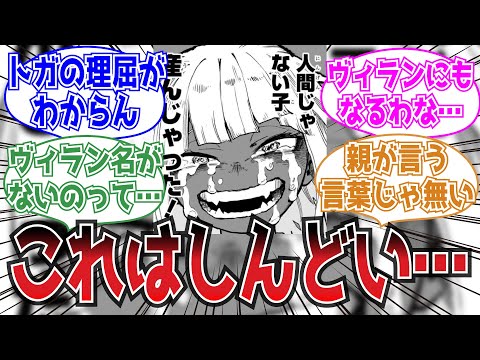
▶ Watch the original YouTube video
My Hero Academia Episode 392: Why Toga Himiko’s Struggle Resonates With Readers
Episode 392 of My Hero Academia brings Toga Himiko’s internal conflict into sharp focus, sparking intense debate among fans about social exclusion, identity, and the nature of belonging. The episode’s portrayal of her psychological suffering has divided the fanbase between those who empathize with her pain and those who reject her actions, raising fundamental questions about how society treats those who cannot conform.
What Happened
In episode 392, Toga Himiko’s emotional and psychological struggle is articulated directly for the first time. Rather than expressing her suffering solely through actions, she verbalizes her internal conflict—the fundamental incompatibility between her nature and society’s expectations. This explicit articulation of her “difficulty in living” has generated significant reader response and sparked widespread discussion across social media platforms and fan communities.
Why It Matters
Toga Himiko represents a rare and unflinching examination of social exclusion in contemporary anime and manga. Unlike other characters dealing with social alienation, Toga is denied the conventional narrative resolutions available to similar characters in other works. She cannot simply accept herself, find a supportive community, or legitimately oppose society. This triple bind makes her struggle emblematic of a critical contemporary issue: what happens to individuals whose fundamental nature conflicts irreconcilably with social norms? The episode’s treatment of this question reflects broader industry trends toward exploring themes of social isolation and the difficulty of living in modern society—themes that have intensified since the COVID-19 pandemic.
Background
Toga Himiko was introduced relatively early in My Hero Academia’s serialization and has evolved significantly throughout the narrative. Creator Kohei Horikoshi has gradually shifted the series from an optimistic exploration of individual talents contributing to society toward a more complex examination of how individual traits do not necessarily lead to happiness or social integration. Toga embodies this thematic evolution. Her character is defined by a biological imperative—the desire to consume blood—that cannot be suppressed, a psychological inability to accept this aspect of herself, and a social reality that absolutely rejects her nature. This three-layered structure of suffering distinguishes her from comparable characters in other major works.
Key Points
- Direct Verbalization of Suffering: Episode 392 marks the first time Toga explicitly articulates her psychological pain in language, moving beyond behavioral expression to direct communication.
- Three-Layered Conflict: Her struggle operates simultaneously at biological (instinctual desire), psychological (self-rejection), and sociological (social impossibility) levels.
- Absence of Redemptive Pathways: Unlike comparable characters in other series, Toga lacks access to conventional narrative solutions—self-acceptance, community integration, or legitimate resistance.
- Divided Fan Response: Reader reactions split between empathetic identification with her suffering and moral rejection of her actions, reflecting the fundamental contradiction at the heart of social exclusion.
- Thematic Alignment with Series Evolution: The episode exemplifies My Hero Academia’s transformation from a straightforward hero narrative into an examination of how individual “quirks” (powers) do not guarantee social belonging or personal fulfillment.
- Contemporary Relevance: The episode reflects broader industry trends toward exploring social isolation and the psychological toll of non-conformity, particularly post-pandemic.
Comparative Analysis: What Makes Toga Different
Toga’s character stands apart from other socially alienated characters across anime and manga through a systematic comparison of narrative resolutions:
Senjougahara Hitagi (Monogatari): Her struggle with her tiger nature culminates in self-acceptance and integration into a supportive community. Toga lacks this pathway.
Eren Yeager (Attack on Titan): His yearning for freedom finds expression through direct action and warfare. His alienation becomes a catalyst for agency. Toga’s actions, by contrast, are criminalized and socially delegitimized.
Zero Two (Darling in the Franxx): Her quest for humanity is resolved through romantic love and relational integration. Toga’s capacity for connection is distorted and weaponized rather than redemptive.
Persona 5 Protagonists: Their struggle between social persona and authentic self resolves through collective action and mutual support. Toga remains fundamentally isolated.
Yuji Itadori (Jujutsu Kaisen): Though marked as a cursed object, he finds legitimate social placement within the jujutsu community. Toga has no equivalent institutional space.
Fan Response: A Divided Fanbase
Empathetic Interpretation: Many readers report emotional resonance with Toga’s articulation of her suffering. Social media responses emphasize the authenticity of her psychological portrayal and note that her struggle mirrors real experiences of social non-conformity. Some readers identify personally with her inability to fit societal expectations. These responses treat the episode as a serious engagement with the psychology of social exclusion.
Critical Interpretation: Other readers maintain that while Toga’s suffering may be understandable, her violent actions cannot be morally justified or celebrated. This perspective emphasizes that empathy for suffering does not require approval of harmful behavior. Some worry that sympathetic portrayal of a character who commits violence risks normalizing such actions.
Philosophical Engagement: A third category of response treats the episode as posing an unanswered philosophical question: Is Toga truly “evil,” or is she a victim of a system that offers no viable path to existence? This interpretation suggests that Horikoshi deliberately withholds resolution to reflect the genuine absence of solutions in comparable real-world situations.
Industry Context: Why This Matters Now
The past five years of anime and manga have seen a marked increase in narratives exploring social exclusion and existential difficulty. Works including Jujutsu Kaisen, the final arc of Attack on Titan, Chainsaw Man, and Spy x Family all engage with themes of social alienation, the gap between social expectations and individual desire, and the psychological cost of non-conformity. This trend reflects genuine shifts in audience experience. The COVID-19 pandemic accelerated social isolation for many viewers and readers, making narratives about disconnection and the difficulty of belonging emotionally resonant in new ways.
My Hero Academia itself has undergone thematic evolution. The series began in 2014 with a relatively optimistic premise: individuals possess unique talents (quirks) that, when properly developed, allow them to contribute meaningfully to society. Over fifteen years of serialization, this premise has been systematically complicated. The narrative has increasingly explored cases where individual talents create social problems rather than solutions, where development of one’s abilities does not lead to happiness, and where society’s structures actively prevent certain individuals from finding any legitimate place.
Toga’s character arc embodies this thematic shift. Her portrayal reflects what appears to be a deliberate artistic choice by Horikoshi to move beyond conventional hero narratives toward a more unflinching examination of social dysfunction.
Psychological Dimensions
The fan response to episode 392 reveals a psychologically sophisticated phenomenon: readers simultaneously empathize with Toga’s suffering while rejecting her actions. This is not a contradiction but rather an accurate reflection of how societies actually respond to socially excluded individuals. We wish to help those who suffer, yet we also need to protect ourselves from potential harm. Toga embodies this contradiction perfectly—her pain is real and comprehensible, yet her impulses pose genuine danger.
This psychological complexity distinguishes Toga from characters like Lelouch (Code Geass) or Light Yagami (Death Note), whose moral ambiguity stems from their choices to pursue power. Toga’s ambiguity stems from her fundamental nature, which she did not choose and cannot change. This distinction makes her case more philosophically challenging and emotionally destabilizing for audiences.
Broader Implications
Episode 392 raises questions that extend far beyond anime criticism. The episode engages, whether intentionally or not, with real contemporary issues: how societies treat neurodivergent individuals, how mental health conditions are managed when they conflict with social norms, and what obligations exist toward individuals whose nature makes social integration impossible.
Notably, Horikoshi appears to deliberately withhold conventional narrative resolution. Toga is not offered a path to self-acceptance, community integration, or legitimate resistance. This refusal to provide easy answers reflects a kind of artistic honesty—in actual societies, such complete solutions often do not exist. The episode’s power derives partly from this refusal to offer false comfort.
The concept of “quirks” in My Hero Academia functions as a metaphor for individual difference more broadly. In the series’ logic, every person possesses a unique talent that should theoretically allow them to contribute to society. Yet Toga’s quirk—the ability to shapeshift by consuming blood—cannot be integrated into any socially legitimate role. This gap between the series’ optimistic premise and Toga’s reality creates the narrative tension that makes her character compelling.
Insights and Takeaways
Episode 392 demonstrates that My Hero Academia has evolved from a straightforward hero narrative into a serious engagement with social dysfunction and psychological suffering. The episode’s refusal to provide easy answers or conventional redemptive pathways reflects a mature artistic vision willing to pose difficult questions without resolving them.
The divided fan response is not a weakness of the episode but rather evidence of its success in articulating a genuinely complex problem. Readers who feel empathy for Toga and readers who reject her actions are both responding authentically to the material. The episode creates space for both responses simultaneously.
Toga Himiko’s character raises a question that modern societies have not adequately answered: What do we owe to individuals whose fundamental nature makes social integration impossible? The episode does not answer this question. Instead, it asks it with clarity and emotional force. In doing so, it reflects a broader shift in contemporary narrative media toward acknowledging that some problems do not have neat solutions, and that honesty about this fact may be more valuable than false reassurance.
The episode’s impact suggests that audiences are increasingly receptive to narratives that engage seriously with social exclusion, psychological suffering, and the limits of conventional redemptive narratives. Whether Horikoshi ultimately provides resolution to Toga’s arc or leaves it fundamentally unresolved will significantly influence how this series is ultimately evaluated.