▶ Watch the original YouTube video
How Uma Musume’s Middle School Culture Reveals the Depth of Game Narrative Design
A viral video compilation of trainer reactions to middle school games in Uma Musume Pretty Derby has sparked broader discussion about how modern games balance competitive gameplay with character-driven storytelling. The phenomenon reveals how players across different playstyles find meaning in seemingly trivial daily-life scenes, highlighting a fundamental shift in what gamers value from their experiences.
What Happened
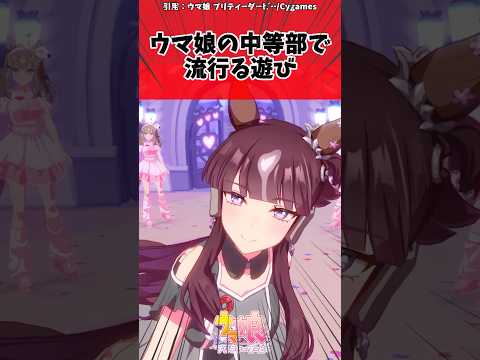
A video titled “Trainer Reactions to Popular Games in Uma Musume’s Middle School” has gained traction in the gaming community, showcasing diverse player reactions to in-game scenes featuring middle school-aged characters engaging in casual activities. The video captures moments where younger Uma Musume characters participate in playground games and social interactions within the academy setting, prompting varied emotional responses from the player base. These reactions range from laughter and nostalgia to genuine emotional investment in character development, illustrating how players interpret the same content through fundamentally different lenses.
Why It Matters
Uma Musume Pretty Derby represents a significant evolution in how games integrate narrative depth with gameplay mechanics. The middle school content demonstrates that modern game design has moved beyond treating daily-life scenes as mere filler between competitive moments. Instead, these scenes function as essential character development tools that deepen player attachment and create meaningful storytelling opportunities. This shift reflects broader industry trends where players increasingly value experiencing character arcs and relationships alongside traditional gameplay progression. Understanding how different player types respond to this content reveals important insights about audience segmentation and the multiple ways games can satisfy diverse player motivations simultaneously.
Background
Uma Musume Pretty Derby, released in 2021, is a mobile game that combines horse racing simulation with character-driven storytelling set in an academy environment. The game features over 150 characters divided into three age categories: middle school, high school, and senior. The middle school section serves as both a gameplay progression phase and a narrative exploration of character development during a formative life stage. The game’s structure parallels early 2000s slice-of-life anime such as “Haruhi” and “K-On!” in its emphasis on daily interactions and relationship building. The academy setting functions as a counterbalance to the competitive racing elements, creating a dual-narrative structure where characters maintain their humanity outside of competition.
Key Points
- Multiple Player Perspectives: Trainers approach the game with different priorities—some focus on racing optimization, others prioritize character stories, and some value academy life scenes above all else. Middle school content resonates differently with each group.
- Character Development Through Play: The games and social activities depicted in middle school scenes reveal character personalities and relationship dynamics in ways that pure racing content cannot achieve, functioning as essential narrative tools.
- Symbolic Significance of Middle School: The middle school phase represents a transitional period where characters maintain innocence and unlimited potential before the competitive pressures of higher-level racing fully take hold.
- Social Function of Play: In-game activities serve sociological functions beyond entertainment—they establish social hierarchies, deepen character bonds, and allow characters to express their humanity separate from their racing identities.
- Industry Evolution: Uma Musume exemplifies how modern games have elevated daily-life content from optional filler to narrative content with equal or greater value than competitive gameplay.
- Community Engagement: Reaction videos and community discussions demonstrate that players actively seek multiple interpretations of the same content, using each other’s perspectives to deepen their own understanding and enjoyment.
Timeline
- 2018: Uma Musume Pretty Derby anime series airs, establishing the academy setting and character relationships as central to the franchise identity.
- 2019: Mobile game launches with academy-based gameplay structure and character progression system.
- 2021: Game gains significant international player base; community begins creating reaction and analysis content around character moments.
- 2024: Middle school content compilation video goes viral, sparking renewed discussion about narrative design and player engagement.
Perspectives
Optimization-Focused Players: Some trainers view middle school content as narratively interesting but mechanically irrelevant to racing performance. They may skip story scenes to maximize efficiency, seeing academy life as a distraction from competitive progression.
Story-Driven Players: This segment values character development and emotional arcs above racing results. They appreciate how middle school scenes establish personality traits and relationship foundations that make later character growth meaningful. For these players, the academy content is the primary draw.
Academy-Life Enthusiasts: A dedicated subset of players prioritizes the daily-life simulation aspects above all else. They engage most deeply with scenes showing character interactions, social dynamics, and the formation of friendships within the academy setting.
Comparative Media Analysis: Players familiar with slice-of-life anime recognize Uma Musume’s middle school content as an evolution of narrative techniques pioneered by series like “A-Channel” and “Yuru Yuri,” now implemented within interactive game mechanics rather than animated sequences.
Insights
The viral response to Uma Musume’s middle school content signals a fundamental maturation in how games approach character storytelling. Rather than treating daily-life scenes as rewards or breaks from core gameplay, Uma Musume integrates them as equally important narrative elements. This design choice acknowledges that modern players seek multiple forms of engagement—some want optimization challenges, others want emotional investment, and many want both simultaneously.
The middle school phase functions symbolically as a space where characters can temporarily escape their identities as racing competitors and exist as ordinary young people. This represents a sophisticated thematic statement about the importance of maintaining humanity within competitive systems—a resonant message for contemporary audiences navigating high-pressure environments.
The diversity of trainer reactions demonstrates that successful modern games must accommodate multiple playstyles and value systems. Uma Musume succeeds because it provides genuine content for optimization-focused players, emotional depth for story-driven players, and social simulation for community-oriented players. This multi-layered design approach represents the current frontier of game narrative design.
Further, the existence of reaction videos and community analysis around these scenes indicates that players increasingly view games as shared cultural experiences worthy of discussion and interpretation. The middle school content becomes a lens through which the broader game design philosophy can be examined and debated, elevating what might appear as simple character interactions into meaningful artistic statements about game design priorities.