▶ Watch the original YouTube video
Black Knight Swordcalibur Evaluation: A Deep Analysis of EXVS2IB’s Most Divisive Mobile Suit
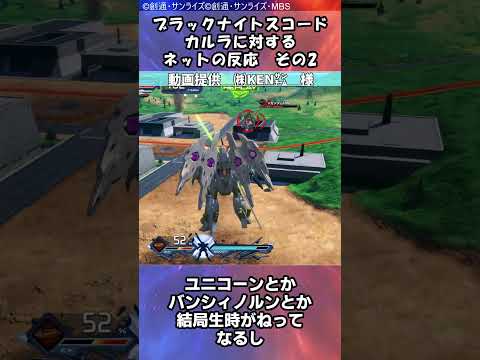
The Black Knight Swordcalibur in Extreme Versus 2 Innovative Battle Breakers presents a fascinating paradox: on paper, its Dimensional Enhancement system appears overwhelmingly powerful, yet in actual competitive play, the mobile suit struggles to reach its full potential. This analysis explores why this machine has become one of the most difficult-to-evaluate units in the game, examining the gap between theoretical strength and practical viability in a 2v2 team-based environment.
What Happened
The Black Knight Swordcalibur has generated significant debate within the EXVS2IB community regarding its actual competitive viability. While the unit possesses impressive specifications and a unique Dimensional Enhancement mechanic that dramatically increases its capabilities, players consistently report that the mobile suit fails to perform at expected levels in real matches. This contradiction between theoretical power and practical performance has created a complex evaluation landscape where opinions remain sharply divided.
Why It Matters
The Black Knight Swordcalibur’s evaluation challenges reveal fundamental design questions about balancing individual unit strength with team-based gameplay mechanics. Understanding why this machine struggles despite its powerful abilities provides insight into how 2v2 competitive games must account for partner dynamics, meta-game environments, and the practical conditions under which players actually compete. The unit’s case study demonstrates how game balance extends beyond individual unit statistics to encompass team composition and environmental factors.
Background
EXVS2IB is a 2v2 team-based competitive fighting game featuring mobile suits from the Gundam franchise. The Black Knight Swordcalibur distinguishes itself through its Dimensional Enhancement system—a powerful upgrade state that significantly boosts the unit’s performance. However, reaching this enhanced state requires surviving the early game phase, during which the unit suffers from critically low durability compared to current meta-dominant machines like the Unicorn and Banshee. The game’s team-based nature means that while one player focuses on survival and enhancement buildup, their partner absorbs concentrated enemy fire, creating a strategic asymmetry that undermines the unit’s theoretical advantages.
Key Points
- Durability Crisis: The Black Knight Swordcalibur’s base durability is extremely low, making it vulnerable to established meta units like Unicorn and Banshee before it can reach Dimensional Enhancement.
- Enhancement Accessibility Problem: While the Dimensional Enhancement state is genuinely powerful, the difficulty of reaching this state in competitive matches severely limits its practical utility.
- Team Dynamics Burden: The unit’s evasion-focused playstyle requires the partner to absorb enemy aggression, creating an unsustainable team composition where one player bears disproportionate risk.
- Meta-Environment Mismatch: Current meta-game conditions favor aggressive, durable units that can pressure opponents immediately, directly countering the Black Knight Swordcalibur’s survival-focused approach.
- Potential for Revaluation: Changes to the meta-game environment, partner unit availability, or direct balance adjustments could dramatically shift the unit’s competitive viability.
- Design Philosophy Conflict: The unit represents a tension between creating mechanically unique machines and maintaining practical competitive balance in team-based gameplay.
Timeline
- Approximately 3 months after EXVS2IB launch: Initial player experimentation with Black Knight Swordcalibur reveals fundamental durability and team-balance issues.
- Ongoing: Community debate continues regarding whether the unit’s problems stem from poor balance or suboptimal player understanding.
- Future potential: Meta-game shifts, balance patches, or new partner units could alter the unit’s competitive standing.
Perspectives
Optimistic Assessment: Some players argue that the Black Knight Swordcalibur possesses genuine theoretical strength and that with proper partner selection and refined gameplay strategies, the unit can perform competitively. They point to the unit’s superior evasion capabilities and sub-assist quality as underutilized advantages. This perspective emphasizes that the unit’s current low evaluation reflects incomplete understanding rather than fundamental design failure.
Realistic Assessment: Experienced competitive players note that despite its powerful enhancement state, the unit simply cannot survive long enough to reach that state against current meta opponents. They observe that the Unicorn and Banshee possess sufficient offensive pressure to eliminate the Black Knight Swordcalibur before Dimensional Enhancement becomes accessible. This perspective prioritizes actual match outcomes over theoretical potential.
Design Critique: Game design analysts suggest the Black Knight Swordcalibur exemplifies a fundamental tension in 2v2 team games: creating mechanically distinctive units while maintaining practical viability. The unit’s design succeeds in uniqueness but fails in environmental adaptation, suggesting that individual unit balance cannot be evaluated in isolation from team composition and meta-game conditions.
Insights
The Black Knight Swordcalibur case reveals that “strength” in competitive games is not a fixed property but rather a contextual variable dependent on meta-game conditions, team dynamics, and environmental factors. A unit can possess impressive specifications yet remain impractical if the conditions required to leverage those specifications are unrealistic. The unit’s struggle demonstrates that 2v2 team-based games require balance considerations that extend beyond individual unit tuning to encompass partner synergy and strategic interdependence.
The community’s divided evaluation reflects genuine complexity rather than simple disagreement. Players focusing on theoretical specifications identify real power in the Dimensional Enhancement system, while players emphasizing practical match conditions identify real problems with durability and accessibility. Both perspectives are valid, and the contradiction between them points to a design challenge rather than a player misunderstanding.
The unit’s potential for future revaluation remains significant. Historical precedent in the EXVS series demonstrates that meta-game shifts can dramatically alter unit viability. If current meta-dominant units receive balance adjustments, if new partner units with complementary mechanics become available, or if the overall game balance shifts toward durability-focused gameplay, the Black Knight Swordcalibur could transition from underperformer to competitive contender. This possibility underscores that game balance is dynamic and that current evaluation should be understood as environmentally contingent rather than absolute.