▶ Watch the original YouTube video
Why Fans Love DIO’s Original Anime Dialogue in JoJo’s Bizarre Adventure
Anime adaptations of JoJo’s Bizarre Adventure have introduced original dialogue for the villain DIO that fans praise as “high-resolution” character development. These additions, not present in the original manga, have sparked widespread discussion about how anime can enhance source material through strategic scriptwriting and voice acting.
What Happened
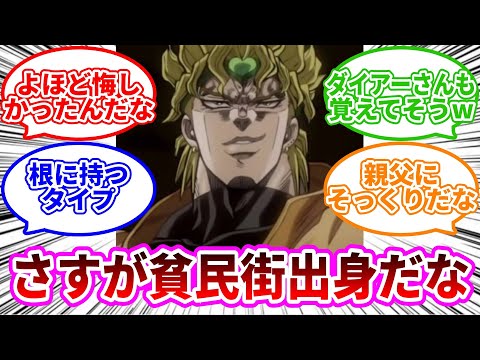
The anime adaptation of JoJo’s Bizarre Adventure has added original dialogue for the character DIO that diverges from the source manga. These additions have generated significant fan discussion online, with viewers describing the new lines as “high-resolution” and praising them for deepening the character’s psychological complexity. The phenomenon has become particularly notable in Part 3: Stardust Crusaders, where DIO’s expanded dialogue has been widely celebrated across YouTube and social media platforms.
Why It Matters
This development raises important questions about anime adaptation strategy and the relationship between source material and new creative interpretation. The success of DIO’s original dialogue demonstrates how anime can enhance character understanding without contradicting the original work. This approach has implications for how future anime adaptations handle character development, particularly for complex antagonists. The positive reception suggests a shift in industry standards toward balancing faithfulness with creative enhancement.
Background
JoJo’s Bizarre Adventure anime began airing in 2012, adapting Hirohiko Araki’s long-running manga series. Over 15 years of continuous anime production, the adaptation team has developed increasingly sophisticated methods for translating manga’s implicit character psychology into explicit dialogue. DIO, the primary antagonist of Parts 1 and 3, has been a focal point for this approach. Voice actor Taketo Koyasu, who performs DIO, is known for his ability to convey complex emotional states through nuanced vocal performance, making him an ideal vehicle for expanded character dialogue.
Key Points
- Original dialogue enhances character depth: DIO’s anime-exclusive lines clarify his psychological motivations and relationship with the protagonist Jonathan/Jotaro without contradicting the manga.
- Fan reception is predominantly positive: The majority of viewers describe the additions as “high-resolution” and appreciate the deeper character understanding they provide.
- Strategic scriptwriting complements voice acting: The dialogue additions are designed to showcase voice actor Taketo Koyasu’s performance capabilities and emotional range.
- Adaptation fills implicit gaps: The anime makes explicit what the manga expressed implicitly through visual storytelling, helping new viewers understand character motivation.
- Minority concerns about source fidelity: Some fans express concern that additions constitute unauthorized changes to the original work, though this view remains a minority position.
- Industry-wide implications: The success of this approach may influence how other Jump series handle anime adaptation and character development.
Timeline
- 2012: JoJo’s Bizarre Adventure anime begins airing, introducing animated adaptation of the manga.
- 2014: Part 3 Stardust Crusaders airs, featuring expanded DIO dialogue that becomes particularly notable to long-time fans.
- 2019: Part 5 Golden Wind airs, continuing the pattern of character-enhancing original dialogue.
- 2019-2024: Industry trend toward “character resolution” becomes increasingly apparent across multiple anime adaptations.
- Present: DIO’s original dialogue continues to be cited as a successful example of anime adaptation strategy.
Perspectives
Supporter perspective: Fans who appreciate the original dialogue view it as a natural extension of the manga’s implicit character psychology. They argue that anime’s different medium—combining voice, music, and animation—requires explicit dialogue to convey what manga communicates through visual storytelling alone. These viewers see the additions as complementary rather than contradictory, enhancing their understanding of DIO’s motivations and his complex relationship with the protagonist.
Purist perspective: Some fans express concern that original dialogue constitutes unauthorized modification of Araki’s work. They worry that additions might drift from the author’s intended characterization and prefer strict adherence to the source material. However, this viewpoint represents a minority position within the fanbase.
Industry perspective: Animation professionals recognize original dialogue as a strategic tool for serving multiple audiences simultaneously—satisfying manga readers while making the work accessible to new viewers unfamiliar with the source material. This approach acknowledges that manga and anime are distinct media with different narrative requirements.
Insights
DIO’s original anime dialogue represents a successful model for anime adaptation that transcends the traditional binary of “faithful” versus “creative.” Rather than viewing these categories as opposed, the anime demonstrates how they can work in concert. The dialogue additions succeed because they articulate what the manga expressed implicitly—DIO’s obsessive recognition of Jonathan as his only true rival, his complex psychology beneath his arrogant exterior, and his intellectual appreciation for worthy opponents.
The positive reception reflects a broader shift in anime production philosophy. Rather than treating adaptation as mere visual translation, studios increasingly recognize that different media require different narrative strategies. Manga communicates through panel composition, facial expression, and visual pacing; anime must convey equivalent information through dialogue, voice performance, and sound design.
The success of this approach has potential industry-wide implications. If other major Jump series adaptations adopt similar strategies—expanding character dialogue to enhance psychological depth—anime as a medium may establish new standards for how source material can be honored while being creatively enhanced. The key appears to be ensuring that additions align with the original author’s apparent intent and character consistency, rather than contradicting or undermining them.
For viewers, the DIO example suggests that the most satisfying anime adaptations may be those that treat source material not as sacred text requiring literal reproduction, but as a foundation for collaborative artistic expression across media formats.