▶ Watch the original YouTube video
Why Nitta Arata’s Cursed Technique Is Dangerously Overpowered: A Deep Analysis of Jujutsu Kaisen’s Most Underrated Character
Nitta Arata’s cursed technique “Stop Wounds” appears to be a simple healing ability, but a closer examination reveals it functions as a form of time manipulation with potentially unlimited medical applications. Despite possessing one of the series’ most powerful abilities, Nitta remains severely underutilized in the narrative—a deliberate creative choice that speaks to the depth of Jujutsu Kaisen’s character design and storytelling constraints.
- What Happened
- Why It Matters
- Background
- Key Points
- Comparative Analysis: Nitta Against Other Healing Abilities
- Medical Implications and Real-World Applications
- Narrative Constraints and Storytelling Decisions
- The Reversed Technique Danger
- Character Psychology and Expectation Gaps
- Fan Reception and Community Analysis
- Insights
What Happened
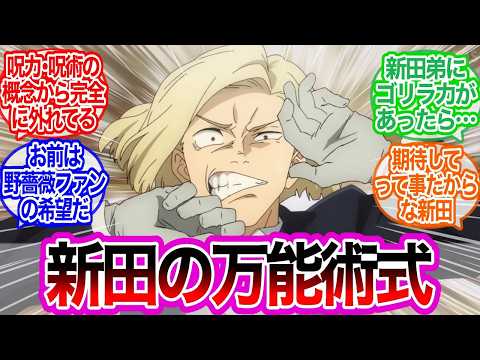
Nitta Arata is a supporting character in Jujutsu Kaisen who possesses the cursed technique “Stop Wounds.” While his ability appears straightforward—preventing injuries from worsening—careful analysis reveals it functions as a temporal ability that freezes the progression of damage rather than healing it. Despite this extraordinary power, Nitta appears minimally throughout the series, particularly after his brief moment of prominence during the Shibuya Incident arc. His limited screen time stands in stark contrast to the overwhelming utility his technique would provide in both combat and medical scenarios.
Why It Matters
Understanding Nitta’s character illuminates how Jujutsu Kaisen’s creators manage narratively problematic power levels. A character with the ability to indefinitely halt injury progression could trivialize most conflicts and medical crises in the series. The deliberate restriction of Nitta’s appearances demonstrates sophisticated storytelling—maintaining narrative tension while acknowledging the logical implications of his ability. This approach offers insights into how modern anime and manga handle overpowered character abilities without resorting to arbitrary power scaling or ability limitations.
Background
Nitta Arata first appears during the Shibuya Incident arc, where his cursed technique is activated to save Maki Zenin from a critical injury. His technique doesn’t heal wounds; rather, it halts their progression entirely. This distinction is crucial. When Maki continues moving despite her injuries remaining unhealed, the lack of further damage demonstrates that her wounds have been frozen in time at the moment of technique activation. This mechanism differs fundamentally from conventional healing abilities seen in other anime series.
The character’s introduction includes a memorable line: “Please have high expectations”—a statement that becomes ironic given his subsequent absence from the narrative. This apparent contradiction between his potential and his utilization forms the core of his character’s intrigue.
Key Points
- Technique Mechanics: “Stop Wounds” freezes injury progression rather than healing, functioning as a form of temporal manipulation limited to wound states
- Medical Applications: In medical emergencies—cardiac arrest, stroke, severe trauma—the technique could indefinitely preserve patients in their injury state, allowing unlimited time for treatment
- Combat Imbalance: The technique’s power far exceeds Nitta’s personal combat ability, creating an asymmetry that the narrative must carefully manage
- Narrative Necessity: Frequent appearances would undermine story tension by providing solutions to most critical situations characters face
- Reversed Technique Potential: If Nitta learned to reverse his technique, he could accelerate wound progression into fatal injuries—a dangerous power with significant psychological implications
- Character Role Conflict: Nitta’s true utility lies in medical support rather than combat, yet he’s positioned as a jujutsu sorcerer expected to participate in battles
Comparative Analysis: Nitta Against Other Healing Abilities
When compared to healing abilities in other major anime series, Nitta’s technique stands apart:
| Series | Ability | Function | Comparison to Nitta |
|---|---|---|---|
| My Hero Academia | Recovery Girl’s Healing | Accelerated wound healing | Nitta’s technique doesn’t heal—it halts progression, allowing unlimited treatment time |
| Attack on Titan | Titan Regeneration | Automatic body part restoration | Nitta’s technique prevents damage escalation without requiring regenerative ability |
| Demon Slayer | Demon Regeneration | Biological tissue restoration | Nitta’s technique works on any injury type, regardless of biological limitations |
| Jujutsu Kaisen | Shoko Ieiri’s Healing | Complete injury restoration | Nitta’s technique requires no energy expenditure for maintaining the frozen state; time-unlimited |
Medical Implications and Real-World Applications
The medical potential of Nitta’s technique extends far beyond the series’ narrative. In real medical emergencies, survival depends critically on time. Cardiac arrest patients suffer irreversible brain damage after approximately three minutes without intervention. Beyond ten minutes, survival becomes virtually impossible.
With Nitta’s technique, this temporal constraint vanishes entirely. A patient in cardiac arrest for thirty minutes could have their condition frozen at the moment of arrest, allowing medical teams unlimited time to stabilize and treat them. This applies equally to stroke victims, severe trauma cases, and organ failure scenarios. In practical terms, Nitta’s ability would revolutionize emergency medicine—a point frequently noted in fan discussions of the series.
This reality underscores why Nitta’s character must remain marginalized in the narrative. His presence in a medical facility would render most life-or-death scenarios non-threatening, fundamentally altering the story’s stakes.
Narrative Constraints and Storytelling Decisions
Jujutsu Kaisen demonstrates a recurring pattern: characters with excessively powerful abilities receive limited screen time. This isn’t a flaw in writing—it’s a deliberate structural choice. Nitta’s minimal appearances serve multiple narrative functions simultaneously.
First, they preserve dramatic tension. If Nitta appeared regularly, numerous critical moments would become solvable through his technique. The series’ most dangerous situations—where characters face seemingly insurmountable odds—would lose their impact if a simple technique could freeze the threat indefinitely.
Second, the limitation creates character depth. Nitta’s “Please have high expectations” line gains tragic weight when followed by near-total absence. This gap between potential and utilization suggests internal conflict: awareness of his power’s magnitude coupled with inability to apply it meaningfully in combat scenarios.
Third, it establishes a thematic consistency with other anime that manage overpowered characters. Series like Code Geass addressed similar problems by introducing ability constraints. Jujutsu Kaisen’s approach—limiting appearances rather than adding mechanical restrictions—proves equally effective while maintaining logical consistency.
The Reversed Technique Danger
Most cursed techniques possess reversed versions that invert their function. For Nitta, this possibility carries disturbing implications. If “Stop Wounds” freezes injury progression, its reversal would accelerate it—transforming any existing injury into a fatal wound instantaneously.
Such a technique would be extraordinarily dangerous, not merely in combat effectiveness but in psychological impact. The ability to instantly convert any wound into a killing blow would carry immense moral weight. This potential development may explain why Nitta’s character arc remains deliberately constrained—his growth toward mastering reversed techniques would fundamentally alter the series’ power dynamics.
Character Psychology and Expectation Gaps
Nitta’s character embodies a specific psychological archetype: the capable individual whose talents don’t align with their assigned role. His technique excels in medical support and crisis stabilization, yet he’s positioned as a combat jujutsu sorcerer. This fundamental mismatch creates internal tension that defines his characterization.
His statement “Please have high expectations” reflects awareness of this contradiction. He knows his ability’s potential, yet the narrative structure prevents him from fulfilling that potential in meaningful ways. This gap between self-awareness and circumstantial limitation creates a subtle but compelling character dynamic.
Similar patterns appear in other anime—characters whose abilities don’t suit their assigned roles, creating internal conflict and narrative complexity. Nitta represents this archetype executed with particular subtlety.
Fan Reception and Community Analysis
Online discussions of Nitta’s character reveal consistent patterns in fan interpretation. The most common observation: “He would be treated like a god in medical facilities.” This reflects accurate analysis of the technique’s medical applications. Multiple commenters independently identified that Nitta’s true value lies in emergency medicine rather than combat.
Another frequent observation: “Time is the only resource he needs to provide—that alone makes him infinitely useful.” This captures the technique’s essential function: not healing, but purchasing time. The distinction proves crucial to understanding why Nitta’s ability is so powerful despite appearing simple.
Fan discussions also noted the irony of Nitta’s minimal appearances despite his power level, with comments like “It’s funny how Nitta barely appears despite being so strong.” This irony itself becomes thematic—the technique’s narrative power-breaking potential necessitates its user’s absence.
Insights
Nitta Arata represents a sophisticated approach to managing narrative-breaking power levels. Rather than imposing arbitrary mechanical limitations on his technique, Jujutsu Kaisen’s creators restricted his appearances, allowing his ability’s logical implications to remain intact while preventing narrative collapse.
This approach demonstrates that power balance in storytelling doesn’t require ability nerfing—it requires careful character deployment. A character can possess genuinely overpowered abilities while remaining narratively balanced through limited utilization and role misalignment with their assigned function.
Nitta’s character also illustrates how anime can explore the gap between potential and circumstance. His tragedy isn’t weakness—it’s the inability to fully apply his strength in contexts where he’s expected to operate. This creates psychological depth that pure power scaling cannot achieve.
Looking forward, Nitta’s future appearances will likely signal major narrative shifts. If he emerges as a significant character, it will indicate the story entering a phase where his technique’s implications can be safely explored. Conversely, continued absence would confirm the creators’ decision to permanently exclude his ability from central narrative conflicts—a valid choice that acknowledges the logical impossibility of maintaining tension with such a powerful character present.
Ultimately, Nitta Arata exemplifies how thoughtful character design can transform a potentially problematic power level into a vehicle for exploring deeper themes about ability, purpose, and the gap between potential and application.