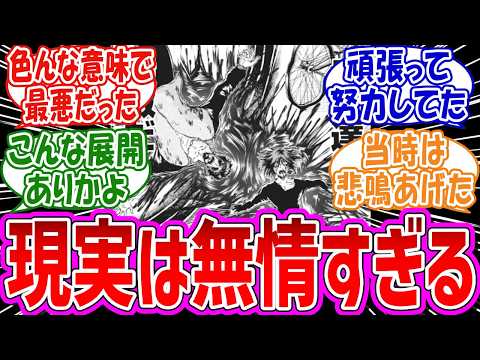
▶ Watch the original YouTube video
Why Manga Depicts the Limits of Effort: How Great Works Capture the Futility of Hard Work
Manga has evolved to depict not the failure of the unprepared, but the heartbreak of those who gave everything and still fell short. This exploration examines how masterworks across decades—from Slam Dunk to Jujutsu Kaisen—use the theme of effort’s limitations to create profound emotional resonance with readers.
- What Happened
- Why It Matters
- Background
- Key Points
- Evolution of Futility Across Eras
- Perspectives: How Different Works Approach Impermanence
- Comparative Analysis: Methods of Depicting Impermanence
- The Psychology of Futility: Why These Scenes Resonate
- Reader Reception and Cultural Impact
- Insights: The True Purpose of Depicting Impermanence
What Happened
Over the past 15 years, a consistent thematic thread has emerged across acclaimed manga and anime: the depiction of impermanence and the limits of human effort. Rather than celebrating triumph through perseverance, contemporary manga increasingly portrays scenarios where characters do everything within their power—yet still fail to achieve their goals. This shift represents a fundamental change in how storytellers approach character development and narrative resolution, moving away from the “effort always pays off” formula toward a more nuanced, realistic portrayal of struggle and limitation.
Why It Matters
This thematic evolution reflects a broader cultural shift. As readers mature and society moves beyond the myth that hard work guarantees success, manga creators have begun exploring deeper psychological territories. The depiction of futility—when characters exhaust all options and still face defeat—resonates more powerfully with modern audiences than simple failure narratives. Understanding this trend reveals how storytelling adapts to audience expectations and how art can process difficult truths about human limitation and mortality.
Background
The journey began with Slam Dunk, where protagonist Sakuragi Hanamichi reaches an emotional peak during the Sannoh game, only to have the subsequent match result dismissed in a single phrase: “They lost badly.” This stark contrast between buildup and anticlimactic resolution introduced a new way of depicting defeat—not through dramatic battle sequences, but through the cold reality of outcome. Over subsequent decades, works like Haikyu!!, Attack on Titan, Jujutsu Kaisen, and Goblin Slayer have expanded this approach, each finding unique methods to illustrate the gap between effort and result, between determination and capability, between hope and reality.
Key Points
- Effort’s Limitation vs. Unworthiness: The most emotionally devastating scenes are not those depicting foolish characters facing predictable failure, but those showing characters who did everything possible yet still fell short of their goals.
- Talent Compounds Effort: A recurring theme across multiple works is that talented individuals also work hard, creating a “double despair”—the realization that even maximum effort cannot overcome innate ability gaps.
- Resolve Cannot Overcome Reality: In Jujutsu Kaisen, a character’s life-or-death attack is casually stopped with one hand, illustrating how emotional conviction and psychological resolve are meaningless against true power disparity.
- Subverted Reader Expectations: Works like Goblin Slayer deliberately invert genre conventions (goblins as weak enemies) to shock readers with the harsh reality that fantasy adventure often ends in meaningless death.
- Consistent Cross-Generational Theme: From 2000s classics to 2020s works, the depiction of impermanence has become a hallmark of acclaimed manga, suggesting this theme resonates across age groups and eras.
Evolution of Futility Across Eras
The portrayal of effort’s limitations has evolved significantly. In early 2000s works like Slam Dunk and Dragon Ball, futility appeared primarily as simple defeat. By the 2010s, Attack on Titan deepened this concept, depicting futility as the erasure of accumulated effort through meaningless death. In contemporary works like Jujutsu Kaisen, futility operates on a psychological level—the disconnect between a character’s resolve and their actual capability. This progression mirrors reader maturation; as audiences grew older and more experienced with life’s disappointments, creators responded with increasingly sophisticated explorations of limitation.
Perspectives: How Different Works Approach Impermanence
Slam Dunk’s Minimalist Approach: Inoue Takehiko conveys defeat through understatement. After an emotionally charged tournament game, the next match receives only a dismissive one-line summary. This technique uses narrative silence to amplify the impact of failure.
Haikyu!!’s Character-Focused Method: Furudate Haruichi depicts Yamaguchi Tadasa, a first-year substitute who perfected only his serve, failing in his debut with a single service error. The cruelty lies not in the failure itself, but in how a crystallized effort evaporates in an instant. Yet the work’s genius emerges when Yamaguchi asks for another chance—suggesting that understanding futility does not mean surrendering.
Jujutsu Kaisen’s Psychological Dimension: Akutami Gege separates resolve from power entirely. A character’s willingness to stake their life on a single attack means nothing against an opponent with superior ability. This approach reveals that emotional intensity and physical capability operate on completely different axes.
Goblin Slayer’s Genre Subversion: By inverting the fantasy convention that goblins are weak enemies, the work demonstrates that adventure narratives often end not with dramatic confrontation, but with mundane, meaningless death. This shatters reader expectations built on genre familiarity.
Comparative Analysis: Methods of Depicting Impermanence
| Work | Author | Form of Futility | Technique |
|---|---|---|---|
| Slam Dunk | Inoue Takehiko | Match result dismissed in one sentence | Narrative understatement after emotional buildup |
| Haikyu!! | Furudate Haruichi | Crystallized effort destroyed by single error | Instant negation of accumulated preparation |
| Jujutsu Kaisen | Akutami Gege | Life-or-death attack stopped with one hand | Complete separation of resolve from capability |
| Attack on Titan | Isayama Hajime | Accumulated effort erased through meaningless death | Repetition of character sacrifice without narrative payoff |
| Kuroko’s Basketball | Fujimaki Tadatoshi | Miracles revealed as mere play | Retroactive destruction of reader achievement |
| Goblin Slayer | Kumo Kagyu | Fantasy conventions inverted | Reader expectation reversal through genre subversion |
The Psychology of Futility: Why These Scenes Resonate
The emotional power of futility-focused narratives stems from a fundamental principle: creators must fully understand reader expectations before betraying them. When a character fails because they were foolish or unprepared, readers experience a sense of “they deserved it.” But when a character fails despite doing everything correctly, readers confront the arbitrary cruelty of reality itself.
This distinction explains why certain scenes achieve lasting impact. The moment in Jujutsu Kaisen when a character’s desperate attack is casually deflected resonates because it demonstrates that emotional conviction has no bearing on physical outcome. Similarly, in Dragon Ball, when Tien’s self-destruct technique fails to damage Nappa, the scene’s cruelty intensifies when allies die before Tien can even witness the result—a temporal dimension of futility where the protagonist’s sacrifice becomes meaningless before it is even complete.
Reader Reception and Cultural Impact
Audience responses to these works reveal deep engagement with the theme of limitation. Comments frequently distinguish between “foolish failure” and “complete effort meeting insurmountable obstacles,” indicating that readers recognize and value the nuanced portrayal of futility. Responses to Jujutsu Kaisen‘s scenes emphasize appreciation for the “absolute power gap that refuses to align with the character’s resolve.” Even Slam Dunk‘s single dismissive sentence receives positive evaluation, with readers recognizing Inoue’s intentional choice rather than viewing it as narrative laziness.
This reception demonstrates that modern audiences do not seek escapism through guaranteed success narratives. Instead, they find catharsis in honest portrayals of limitation—stories that acknowledge the gap between effort and outcome while still depicting characters who choose to continue forward despite understanding that gap.
Insights: The True Purpose of Depicting Impermanence
The prevalence of futility-focused narratives across acclaimed manga reveals a fundamental truth: depicting impermanence is not nihilism. It is not a message that effort is meaningless or that struggle is pointless. Rather, it is the opposite.
When Haikyu!!‘s Yamaguchi asks for another chance after his failure, or when Jujutsu Kaisen‘s protagonist continues fighting despite understanding the power disparity, these moments illustrate the deepest form of human strength: the ability to act meaningfully in the face of acknowledged limitation. The purpose of depicting futility is not to counsel despair, but to celebrate the specific courage required to move forward when success is not guaranteed.
This thematic evolution reflects broader cultural maturation. As society moves beyond the myth that hard work guarantees success, manga creators have begun exploring what it means to live authentically within a reality of limitation. The works that most deeply affect readers are those that refuse false comfort while simultaneously affirming human dignity in the face of that discomfort.
The future of manga storytelling will likely deepen this exploration. As audiences continue to experience the gap between effort and outcome in their own lives, creators who can honestly depict that gap while maintaining faith in human resilience will produce the most resonant works. The message is not that effort is futile. The message is that effort matters precisely because success is not guaranteed—and that continuing to act meaningfully in the face of that uncertainty is the truest form of strength.