▶ Watch the original YouTube video
Hunter x Hunter Succession War: Is Kurapika’s Claim About Woble’s Inheritance Rights a Bluff or the Truth?
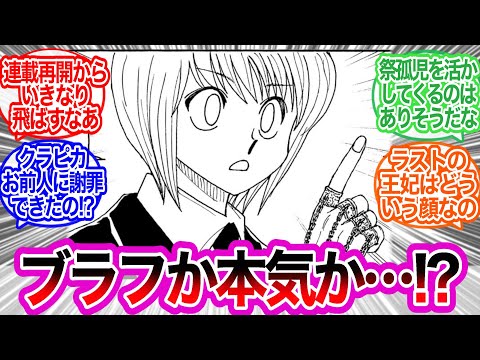
In Chapter 411 of Hunter x Hunter’s Succession War arc, Kurapika makes a shocking claim that Prince Woble may lack inheritance rights to the Kakin throne. This revelation has divided the fanbase between those who believe it’s a strategic bluff and those who think it’s genuine information. We analyze the evidence, narrative patterns, and psychological warfare tactics to determine what Kurapika is really doing.
What Happened
During the intense Succession War arc, Kurapika publicly declares that Prince Woble may not be a legitimate heir to the throne of Kakin, claiming he is either not the biological child of the Queen or the King. This statement shocks both the other princes and the fanbase, forcing a reassessment of the inheritance rules that govern the entire conflict. The Queen’s reaction to this claim becomes a critical clue in determining whether Kurapika is telling the truth or executing a sophisticated psychological manipulation strategy.
Why It Matters
This moment represents a fundamental shift in the Succession War’s dynamics. If Woble truly lacks inheritance rights, the entire strategic landscape changes—other princes would have no reason to eliminate him, and the Queen’s secrets would be exposed. More importantly, this scene exemplifies creator Yoshihiro Togashi’s mastery of psychological warfare in storytelling. The ambiguity forces readers and characters alike to operate under the same uncertainty, creating narrative tension that keeps audiences invested in discovering the truth. This technique reflects broader trends in modern anime and gaming narratives, where psychological complexity and moral ambiguity drive engagement more effectively than straightforward plot progression.
Background
The Succession War arc of Hunter x Hunter centers on the conflict between the 14 princes of Kakin competing for the throne. Kurapika has positioned himself as protector of Prince Woble and the Queen, using his Nen abilities and strategic thinking to keep them alive amid the chaos. Throughout the series, Togashi has established that inheritance rights depend on being the legitimate child of the Queen—a condition that Kurapika now questions. The arc is characterized by complex mind games, hidden agendas, and characters operating with incomplete information, making it one of the most psychologically intricate storylines in the entire series.
Key Points
- Kurapika’s Shocking Declaration: He publicly claims Woble may not be the Queen’s biological child or the King’s legitimate heir, challenging the fundamental basis of his inheritance rights
- Inheritance Rules Reconfirmed: The claim forces a reexamination of the succession criteria, establishing that being the Queen’s child is essential for legitimate inheritance
- Fanbase Divided: Online discussions split sharply between those viewing this as strategic deception and those believing it reveals genuine information
- Tactical Shift: Kurapika appears to transition from passive time-buying strategies to active information warfare and psychological manipulation
- The Queen’s Expression: Her reaction to the claim serves as a crucial indicator for determining the statement’s veracity
- Strategic Ambiguity: Whether true or false, the claim’s psychological impact on other princes may matter more than its factual accuracy
Timeline
- Chapter 411: Kurapika makes his controversial claim about Woble’s inheritance rights
- Immediate Aftermath: The Queen’s reaction and other princes’ responses begin to unfold
- Ongoing: Fanbase debate continues regarding the claim’s authenticity and strategic purpose
Perspectives
The Bluff Theory: Supporters of this interpretation argue that Kurapika is executing a sophisticated psychological operation similar to strategies seen in other anime like Code Geass, where the protagonist deliberately spreads false or ambiguous information to destabilize enemy factions. According to this view, Kurapika’s goal is to create confusion among the other princes, making them uncertain about whether eliminating Woble serves their interests. This interpretation aligns with Kurapika’s established pattern of preparing multiple contingency plans and his deep understanding of Nen-based psychological warfare.
The Truth Theory: Proponents of this view point to the Queen’s reaction as evidence that Kurapika is revealing genuine information. They argue that Kurapika, as the Queen’s trusted aide, would have access to sensitive information about Woble’s true parentage. If this claim is accurate, it would explain why the Queen has gone to such lengths to protect Woble and why she might have hidden this secret. This perspective suggests that Kurapika is using the truth as a weapon, betting that the revelation will alter the other princes’ calculations.
The Hybrid Theory: A third interpretation suggests that Kurapika’s statement contains partial truths wrapped in strategic ambiguity. He may know something significant about Woble’s status but deliberately presents it in a way that maximizes psychological impact while maintaining plausible deniability. This approach would be consistent with Togashi’s narrative style, where complete clarity is deliberately withheld to maintain tension.
Insights
Kurapika’s declaration exemplifies Togashi’s sophisticated approach to narrative tension. Rather than providing definitive answers, the creator maintains ambiguity that serves multiple narrative functions: it keeps readers uncertain about future developments, forces characters to make decisions based on incomplete information, and creates the psychological pressure that makes the Succession War arc compelling. This technique reflects an evolution in storytelling trends across anime and gaming, where psychological complexity and moral ambiguity have become more valued than straightforward plot resolution.
The effectiveness of Kurapika’s strategy—whether bluff or truth—demonstrates that in psychological warfare, the impact of information often matters more than its veracity. By forcing other princes to recalculate their strategies based on uncertain information, Kurapika achieves his primary goal of protecting Woble and the Queen, regardless of whether his claim is factually accurate. This represents a shift from passive defense to active manipulation, suggesting that Kurapika has adapted his tactics to the accelerating pace of the Succession War.
The presence of external wildcards like Kurapika’s sworn enemy and other unpredictable elements means that even Kurapika’s carefully laid plans remain vulnerable to disruption. This “rule-breaking intervention” element, characteristic of Togashi’s storytelling, ensures that the Succession War remains fundamentally unpredictable, keeping both characters and readers in a state of productive uncertainty that drives engagement and investment in the narrative’s outcome.