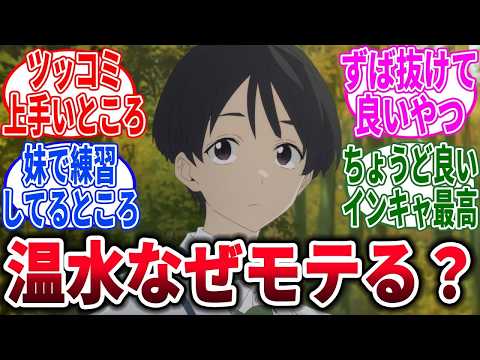
▶ Watch the original YouTube video
Why Nukun, the Unremarkable Guy, Is So Likeable: A Deep Analysis of the ‘Convenient Man’ Archetype in Modern Anime
Nukun, a seemingly ordinary and unassuming protagonist from a popular light novel anime adaptation, has captured the affection of numerous female characters despite possessing no special talents or striking appearance. This analysis explores the psychological mechanisms behind his appeal, examining how his listening skills and emotional availability create dependency structures that reveal deeper truths about contemporary anime romance narratives and modern relationship expectations.
- What Happened
- Why It Matters
- Background
- Key Points
- Character Analysis: The Mechanics of Appeal
- Comparative Analysis with Similar Characters
- Internet Reception and Community Response
- Psychological Mechanisms: Self-Handicapping and Expectation Management
- Broader Implications for Modern Anime and Relationship Narratives
- Practical Perspective for Viewers
- Conclusion: The Paradox of the Convenient Man
What Happened
Nukun has emerged as an unexpectedly popular character in anime communities, attracting significant attention and fan discussion. Unlike typical anime protagonists who possess exceptional abilities, striking appearances, or commanding personalities, Nukun is deliberately portrayed as unremarkable—plain-looking, untalented, and socially unassuming. Yet despite these apparent disadvantages, he consistently receives romantic interest from multiple female characters throughout the narrative. This paradox has sparked widespread online debate and analysis regarding what makes him attractive and what his popularity reveals about contemporary anime storytelling and audience preferences.
Why It Matters
Nukun’s character represents a significant shift in how modern anime depicts romantic protagonists and male ideals. Rather than embodying traditional hero archetypes—the powerful warrior, the genius strategist, or the charismatic leader—Nukun succeeds through emotional availability and attentive listening. This shift reflects broader changes in how audiences, particularly younger viewers, conceptualize desirable traits in relationships. Understanding Nukun’s appeal provides insight into evolving social expectations, the psychology of emotional dependency, and how contemporary media shapes perceptions of healthy versus problematic relationship dynamics. His character also raises important questions about whether anime is promoting genuinely healthy relationship models or romanticizing emotionally manipulative behavior disguised as kindness.
Background
Nukun’s character analysis emerges from the broader context of light novel anime adaptations that gained prominence in the 2010s. During this period, works like “My Teen Romantic Comedy SNAFU” and “Saekano: How to Raise a Boring Girlfriend” introduced protagonists who challenged traditional anime hero archetypes. However, Nukun distinguishes himself through a unique approach: rather than being self-aware about his role as a “convenient man” (a character who exists primarily to fulfill others’ emotional needs), he appears genuinely unaware of the dependency structures he creates. His background includes a wealthy family, which provides the financial security necessary for his seemingly selfless acts of kindness. Additionally, his relationship with his sister Kaju appears to establish a psychological template that influences how he relates to other female characters, consistently categorizing them as “friends” rather than potential romantic partners.
Key Points
- The Listening Paradox: Nukun’s primary appeal stems from his ability to listen without offering deep criticism or pushing others toward growth—a trait that appears kind but actually creates emotional dependency rather than fostering independence.
- Economic Privilege as Foundation: His wealthy family background is crucial to his character; it enables him to perform “selfless” acts of kindness without financial constraint, a detail often overlooked by fans but essential to understanding his functionality.
- The Friend-Zone Mechanism: Nukun’s obsessive adherence to the “friend” categorization prevents romantic progression and creates a pattern where multiple female characters experience unrequited feelings, resulting in numerous “losing heroines.”
- Psychological Dependency Structure: Rather than helping female characters move forward emotionally, Nukun’s presence keeps them in states of emotional stagnation, dependent on his attentiveness during vulnerable moments.
- Sister Complex Influence: His established deep relationship with his sister Kaju appears to psychologically prevent him from viewing other women as romantic possibilities, unconsciously relegating them to secondary emotional roles.
- Self-Handicapping Strategy: His constant self-deprecation about being “plain” and unremarkable may function as a psychological strategy that lowers others’ expectations while allowing his minor kindnesses to be perceived as exceptional.
Character Analysis: The Mechanics of Appeal
The Power of Attentive Listening
Nukun’s most defining characteristic is his ability to listen without judgment or deep intervention. When female characters experience heartbreak or emotional distress, he provides a sympathetic ear without pushing them toward resolution or personal growth. While this appears compassionate on the surface, psychological analysis reveals a more complex dynamic. Drawing parallels to Rogers’ theory of “active listening” in counseling, Nukun’s approach creates what psychologists term “codependency”—a relationship pattern where one person becomes emotionally reliant on another’s validation and presence.
This contrasts sharply with other anime protagonists. Hachiman from “My Teen Romantic Comedy SNAFU” deliberately performs the role of the convenient man while maintaining self-awareness about his emotional sacrifice. Conversely, Nukun appears unconscious of his role, which paradoxically makes his dependency-creating behavior more effective. Female characters in his orbit don’t recognize they’re becoming dependent because Nukun himself doesn’t acknowledge the dynamic.
The Losing Heroine Phenomenon
A recurring pattern in Nukun’s narrative is the proliferation of “losing heroines”—female characters who develop romantic feelings for him but never achieve reciprocation. This isn’t accidental; it’s structurally embedded in Nukun’s psychology. His rigid categorization of women as “friends” creates an impenetrable barrier that no amount of emotional investment can overcome. This mechanism is particularly influenced by his sister Kaju, whose established position in his emotional life appears to occupy a space that prevents other women from being perceived as romantic possibilities.
This pattern mirrors what occurs in “sister complex” narratives within anime, where the sister character’s special status unconsciously diminishes other female characters’ romantic viability. The result is a narrative structure that generates romantic tension while simultaneously making resolution impossible—a dynamic that keeps viewers emotionally invested in unresolved romantic storylines.
Economic Privilege as Invisible Foundation
A critical yet frequently overlooked element of Nukun’s character is his wealthy family background. This economic security enables his entire behavioral pattern. His ability to perform acts of kindness without expectation of return, to spend time listening to others’ problems, and to maintain emotional availability all depend on not needing to prioritize financial survival or career advancement. In contrast, characters from economically disadvantaged backgrounds cannot afford such emotional labor without it being perceived as transactional.
This raises important questions about whether Nukun represents a genuinely desirable male archetype or whether he represents the privilege of a specific social class. His appeal may be less about his personal qualities and more about the economic security that allows him to perform those qualities convincingly.
Comparative Analysis with Similar Characters
Hachiman Hikigaya (“My Teen Romantic Comedy SNAFU”)
Hachiman deliberately adopts the role of the convenient man while maintaining critical self-awareness. He reads others’ psychology and sometimes offers harsh truths designed to promote growth. Crucially, he understands that his self-sacrifice comes at a cost to himself. This self-awareness distinguishes him from Nukun, whose similar behavior appears unconscious and therefore more psychologically problematic.
Tomoya Okazaki (“Clannad”)
Unlike Nukun, Tomoya actively engages with others’ problems and pushes them toward resolution and personal development. His relationships involve mutual growth rather than one-directional emotional dependency. This represents a healthier relational model than what Nukun demonstrates.
Sorata Kanda (“The Pet Girl of Sakurasou”)
Sorata’s character arc involves learning that simply being present and listening isn’t sufficient for healthy relationships; he must also challenge others and encourage their independence. This character development trajectory is absent from Nukun’s narrative, suggesting a fundamentally different approach to depicting male protagonists.
Internet Reception and Community Response
Positive Reception
Online communities frequently praise Nukun as an ideal male figure. Comments such as “He’s genuinely kind,” “This is what an ideal man should be,” and “His listening skills are wonderful” appear consistently across platforms. This positive reception is particularly pronounced among female viewers, which aligns with the psychological analysis: Nukun’s listening ability is especially effective for individuals in emotionally vulnerable states.
Critical Reception
Simultaneously, critical voices emerge questioning Nukun’s characterization. Commenters note that he’s “too convenient,” “unrealistic,” and that “he’s actually making people dependent on him.” These critiques align precisely with psychological analysis of his character, suggesting that viewers with greater critical distance recognize the problematic dependency structures embedded in his behavior.
The Friend-Zone Question
Particularly interesting is the widespread questioning of Nukun’s obsessive adherence to the “friend” categorization. Multiple viewers ask why he maintains such rigid boundaries despite clear romantic interest from others. This observation supports the analysis that his sister complex and psychological barriers prevent him from viewing other women as romantic possibilities, regardless of their feelings.
Psychological Mechanisms: Self-Handicapping and Expectation Management
Nukun’s constant self-deprecation—repeatedly emphasizing his plainness, lack of talent, and unremarkable nature—may function as a psychological strategy termed “self-handicapping.” This mechanism involves deliberately lowering one’s self-presentation to reduce others’ expectations. When expectations are low, minor acts of kindness are perceived as exceptional, and failures are easily excused. Nukun’s strategy of emphasizing his ordinariness may be a calculated (or unconscious) method of managing how others perceive his actions.
This interpretation suggests that Nukun’s appeal isn’t based on genuine superiority or even genuine kindness, but rather on a sophisticated psychological manipulation of expectations. By presenting himself as less-than, he ensures that his baseline behavior exceeds what others anticipate, creating an illusion of exceptional consideration.
Broader Implications for Modern Anime and Relationship Narratives
Nukun’s popularity reflects significant shifts in how contemporary anime depicts relationships and male ideals. Traditional anime protagonists were often portrayed as agents of change—characters who helped others grow and transform. Modern protagonists like Nukun are increasingly depicted as emotional containers—characters whose primary function is to absorb others’ emotional needs without pushing for growth or change.
This shift may reflect broader societal changes. As modern life becomes increasingly individualized and isolating, the demand for characters who simply listen without judgment intensifies. Nukun fulfills this need perfectly, providing a fantasy figure who exists primarily to validate and support without making demands or requiring reciprocal emotional labor.
However, this narrative model raises concerns. Relationships built on one-directional emotional dependency are psychologically unhealthy. By romanticizing Nukun’s behavior, anime may be normalizing relationship dynamics that, in reality, lead to emotional stagnation and mutual dissatisfaction.
Practical Perspective for Viewers
For audiences encountering Nukun’s character for the first time, a critical recommendation emerges: avoid interpreting him as an ideal male archetype to emulate in real-world relationships. While his behavior appears kind and considerate within the anime narrative, the psychological mechanisms underlying his actions—creating dependency, avoiding genuine intimacy, maintaining rigid emotional boundaries—would be problematic in actual relationships.
Instead, engaging with Nukun’s character as a psychological study proves more valuable. Asking why he behaves as he does, what psychological needs his behavior fulfills, and what dependency structures he creates provides insight into both the character and the broader narrative choices of contemporary anime. This analytical approach transforms Nukun from an idealized figure into a complex character study worthy of critical examination.
Comparative viewing of works like “Horimiya” and “Cute High Earth Defense Club Love!” offers alternative relationship models and male archetypes, providing context for understanding the diversity of contemporary anime romance narratives.
Conclusion: The Paradox of the Convenient Man
Nukun embodies a fundamental paradox in contemporary anime: he possesses qualities society values—kindness, attentiveness, emotional availability—yet his implementation of these qualities creates psychological structures that ultimately harm those around him. His appeal is undeniable, particularly for viewers experiencing emotional vulnerability, yet his character model raises serious questions about what contemporary media is teaching audiences regarding healthy relationships.
The shift from protagonists who facilitate others’ growth to protagonists who enable others’ emotional dependency reflects broader social changes. As individualization and isolation increase, the fantasy of a figure who exists primarily to listen and validate becomes increasingly appealing. Nukun represents this fantasy perfectly.
However, the sustainability of such relationships remains questionable. A partnership built entirely on one person’s emotional availability and another’s dependency cannot indefinitely satisfy either party. The true measure of Nukun’s character will emerge in how the narrative ultimately addresses this fundamental imbalance—whether it acknowledges the problematic nature of the dependency structures he creates or continues to romanticize them as expressions of love.
Until that resolution arrives, Nukun remains a fascinating case study in how contemporary anime simultaneously reflects and shapes modern audiences’ understanding of desirable relationships, emotional intimacy, and the nature of human connection.