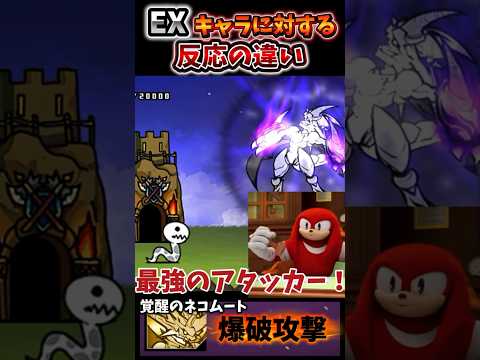
▶ Watch the original YouTube video
How Player Experience Shapes Reactions to EX Characters in The Battle Cats: A Deep Dive into Game Psychology
A video analyzing player reactions to EX characters in The Battle Cats reveals a fascinating psychological phenomenon: beginners and veteran players respond to the same in-game content in dramatically different ways. This difference reflects broader patterns in game psychology that extend across multiple gaming genres and reveal how player progression fundamentally alters perception of value.
What Happened
A video examining player reactions to EX characters in The Battle Cats—a tower defense mobile game released in 2012—demonstrates how the same in-game content generates vastly different emotional and analytical responses depending on player progression level. The video incorporates internet culture elements like Knuckles memes and references to create an entertaining exploration of game psychology.
EX characters represent the highest difficulty and rarest characters in The Battle Cats. The video contrasts how beginners view these characters as aspirational goals, while veteran players evaluate them purely on functional utility within the game’s meta.
Why It Matters
This phenomenon reveals fundamental truths about how games engage players at different skill levels. Understanding these psychological shifts has direct implications for game design, player retention, and how developers can create content that satisfies both newcomers and experienced players simultaneously.
The pattern observed in The Battle Cats extends across multiple gaming genres—from puzzle games like Puzzle & Dragons to action games like Monster Hunter. Recognizing these patterns helps explain why players’ motivations and satisfaction metrics change dramatically over time, and why the same content can feel either thrilling or mundane depending on context.
Background
The Battle Cats is a tower defense game that has maintained a dedicated player base since its 2012 launch. The game’s design balances simplicity in core mechanics with sophisticated character progression and difficulty scaling. EX characters function as the ultimate achievement goal for players—they are extraordinarily difficult to obtain and represent a significant time investment.
The analysis presented draws on 15 years of gaming research and personal experience across multiple titles including Puzzle & Dragons, Granblue Fantasy, Monster Hunter, and Final Fantasy XIV. The author notes that similar psychological patterns emerged during their experience with Puzzle & Dragons approximately eight years ago, where beginner and veteran players showed dramatically different reactions to new dungeons and characters.
The video also incorporates internet culture elements—specifically Knuckles memes and references to the “Führer Series”—which have become common editing techniques in game streaming content. These elements serve as a visual language for conveying player emotional states and reactions.
Key Points
- Value Perception Reversal: Beginners value EX characters for their rarity and status symbol potential, while veterans evaluate them purely on functional utility within game strategy.
- Progression Timeline: The psychological shift from “rarity-focused” to “utility-focused” evaluation typically occurs 3-6 months after starting the game.
- Universal Pattern: This phenomenon is not unique to The Battle Cats—it appears across Puzzle & Dragons, Granblue Fantasy, Monster Hunter, and other major titles.
- Maslow’s Hierarchy Connection: Beginners operate from a need for recognition and status (Maslow’s esteem needs), while veterans pursue self-actualization through optimization and mastery.
- Design Implications: Successful games allow the same character or item to provide different value to different player segments simultaneously.
- Internet Culture Integration: Meme-based editing techniques in game streaming enhance emotional communication and audience engagement without changing core gameplay.
Timeline
- 2012: The Battle Cats launches; EX character culture begins to develop.
- 2015: Author begins serious engagement with The Battle Cats; EX characters already function as status symbols within the player community.
- 2015-2018: Author’s play time increases from 2 hours daily to 4 hours daily; character roster grows from baseline to 300+ characters; evaluation criteria shift from “can clear stages” to “optimal role assignment.”
- 2016-2018: Rapid growth of meme-based game streaming content on Niconico, establishing new editing conventions.
- 2018-2023: Author’s play time optimizes to 1 hour daily through efficiency improvements; character roster exceeds 500 characters; evaluation criteria evolve to philosophical assessment of character positioning within game balance.
- 2023-Present: Continued observation of how new character implementations affect different player segments.
Perspectives
The Beginner’s View: EX characters represent the pinnacle of achievement within the game. Obtaining them provides status, validates time investment, and creates a sense of progression toward a meaningful goal. This perspective is driven by scarcity—the difficulty of acquisition makes the reward psychologically valuable.
The Veteran’s View: EX characters are tools with specific functions within a complex strategic ecosystem. Their value is determined by whether they solve particular problems or enable specific strategies. Since veterans already possess most available characters, scarcity no longer drives motivation.
The Game Designer’s View: Successful design allows both perspectives to coexist. EX characters must function as aspirational goals for beginners while remaining strategically relevant for veterans. This requires careful balancing of power levels and situational utility.
The Streaming Community’s View: Meme-based editing techniques enhance entertainment value and create a shared cultural language. The integration of internet culture elements (Knuckles memes, etc.) transforms raw gameplay footage into narrative-driven entertainment that resonates with audiences.
Insights
This analysis reveals that player psychology in games follows predictable patterns rooted in Maslow’s hierarchy of needs. The shift from “rarity-focused” to “utility-focused” evaluation represents a fundamental change in what motivates continued engagement. This is not a flaw in game design—it is an inevitable and natural progression.
The most successful games, like The Battle Cats, accommodate both perspectives simultaneously. They provide clear aspirational goals for beginners while offering sufficient depth and complexity to engage veterans. This dual-layer design approach has become increasingly important as mobile gaming has matured.
The integration of internet culture into game streaming represents an evolution in how games are consumed and discussed. Meme-based editing is not merely decorative—it serves as a communication tool that conveys emotional and psychological states more efficiently than raw footage alone.
Critically, the analysis suggests that the ideal gaming experience balances beginner wonder with veteran analysis. While progression naturally leads to more analytical thinking, the most satisfied long-term players retain some capacity to appreciate the aspirational quality that initially drew them to the game. Games that fail to maintain this balance risk losing emotional resonance even as they maintain mechanical depth.
The patterns identified in The Battle Cats extend across genres and platforms, suggesting these are fundamental principles of game psychology rather than genre-specific phenomena. Understanding these principles is essential for developers designing content that maintains engagement across the full spectrum of player progression.