▶ Watch the original YouTube video
Why Mobile Suit Gundam SEED FREEDOM’s Crossbone Gundam Was Designed for Pirates: A Deep Analysis
The theatrical release of Mobile Suit Gundam SEED FREEDOM introduces the Crossbone Gundam, a mobile suit explicitly designed with “pirate-oriented” specifications. This analysis explores how the machine’s unconventional weapon loadout, character compatibility with Asuran, and thematic significance reveal the production’s intentional design philosophy and what it means for the Gundam franchise’s future direction.
What Happened
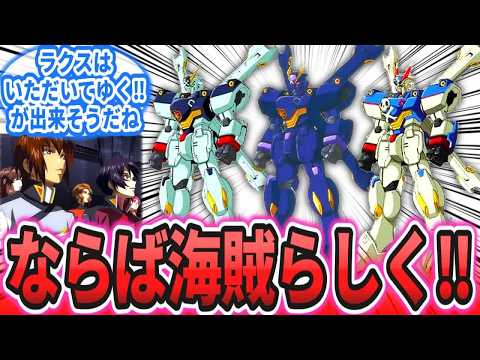
In the theatrical film Mobile Suit Gundam SEED FREEDOM, a new mobile suit called the Crossbone Gundam is discovered beneath Orb and becomes the primary machine for protagonist Asuran. Unlike traditional military mobile suits designed for organized forces, this machine features an unconventional array of weapons and systems explicitly described as “pirate-oriented” by the narrative. The suit’s design philosophy prioritizes practical combat effectiveness over unified aesthetic or organizational standardization, incorporating beam sabers, shot lancers, scissor anchors, I-field generators, and brand markers—each added to counter specific threats rather than following a coherent military doctrine.
Why It Matters
The Crossbone Gundam’s design represents a significant thematic shift in the Gundam SEED continuity. Rather than serving as a state military weapon, this machine embodies the philosophy of independent operators working outside formal organizational structures. This design choice reflects broader narrative themes about characters rejecting institutional control in favor of personal conviction. The machine’s existence raises important questions about Lacus’s leadership philosophy, the nature of resistance movements, and how individual agency manifests in military technology. For long-time Gundam fans, this represents a potential paradigm shift in how the franchise conceptualizes mobile suit design and character relationships with their machines.
Background
The Gundam SEED continuity has long explored themes of organizational conflict and personal conviction. Asuran, introduced in the original Gundam SEED series in 2004, has consistently struggled with questions of loyalty and personal belief, serving multiple organizations including ZAFT, Orb, and Terminal. His combat style emphasizes close-quarters melee combat with beam sabers, distinguishing him from typical Gundam protagonists who rely primarily on beam rifles. The theatrical film builds upon established external continuity suggesting Asuran engaged in pirate activities, providing narrative justification for his association with a pirate-specification mobile suit. The Crossbone Gundam itself references the Universal Century’s famous Crossbone Gundam X1, a legendary experimental mobile suit known for its diverse and unconventional weapon systems.
Key Points
- Pirate-Oriented Design Philosophy: The Crossbone Gundam’s weapon loadout reflects practical counter-measures against specific threats rather than unified military doctrine, including beam sabers designed to cut through beam shields, high-output lancer weapons, scissor anchors for close-range suppression, and hand-mounted I-field generators replacing traditional shields.
- Perfect Character Compatibility: The machine’s equipment configuration aligns almost completely with Asuran’s established combat style emphasizing melee combat, multi-faceted tactical response, and technical expertise, making it arguably the most optimized mobile suit for this character in the entire franchise.
- Practical Logistics Reflection: The absence of traditional shields and emphasis on hand-mounted beam defenses suggests design constraints reflecting pirate operational realities—limited supply lines and the necessity to maximize effectiveness with available resources.
- Thematic Significance of Independence: The machine symbolizes Asuran’s transition from organizational soldier to independent warrior fighting for personal convictions, representing a broader narrative shift toward characters operating outside formal military hierarchies.
- Lacus’s Paradox: The “pirate-oriented” designation reveals a fundamental contradiction in Lacus’s character—she rejects centralized control and destiny-based governance while simultaneously exercising authoritarian influence over her followers, using the “pirate” framing to avoid acknowledging her own role as a de facto leader.
- Contrast with Previous Mobile Suit Design: Unlike the Destiny Gundam’s overwhelming firepower or the Justice Gundam’s organizational support structure, the Crossbone Gundam prioritizes self-sufficiency and practical adaptation, reflecting a fundamentally different operational philosophy.
Weapon Systems Analysis
The Crossbone Gundam’s armament reveals the production’s intentional design strategy. The Zanbah functions as a high-output beam saber specifically engineered to cut through beam shield defenses, directly addressing threats like the Black Knight mobile suit. The Shot Lancer provides long-range suppression capability, enabling tactical flexibility beyond close-quarters combat. Scissor anchors serve close-range control functions, allowing Asuran to leverage his tactical awareness in confined engagements. The I-field hand-mounted beam shield system replaces traditional shield equipment, reflecting the practical constraint that pirates cannot afford the luxury of dedicated defensive equipment. The Brand Marker, added as a retrofit, further demonstrates the machine’s evolution through accumulated combat experience rather than original design specification.
This accumulation of specialized weapons represents what might be called “counter-stacking”—each weapon system was added to address specific encountered threats. This approach contrasts sharply with the unified design philosophy of military mobile suits, which typically follow coherent doctrinal frameworks. The Crossbone Gundam instead embodies the pragmatic philosophy of “use what you have to maximum effect,” a principle fundamentally aligned with pirate operational constraints.
Character Compatibility Assessment
Asuran’s established character profile demonstrates exceptional compatibility with the Crossbone Gundam’s systems. His combat style emphasizes melee engagement, tactical awareness, and technical understanding—precisely the capabilities this machine demands. Unlike typical mobile suit pilots who operate within organizational command structures, Asuran possesses both the intuitive combat sense associated with Newtype-like perception and the technical rationality of an engineer, making him uniquely capable of managing the machine’s complex and unconventional systems.
The Justice Gundam, Asuran’s previous primary machine, established the template for high-mobility, multi-weapon platforms. The Crossbone Gundam represents an evolution of this philosophy, optimized specifically for independent operation rather than organizational support. Where the Justice Gundam was designed as “one unit among many,” the Crossbone Gundam is engineered for “one warrior against many,” fundamentally altering the tactical assumptions underlying the machine’s systems.
Thematic Implications
The designation of the Crossbone Gundam as “pirate-oriented” carries profound thematic weight beyond simple mechanical specification. When Lacus describes the machine using this terminology, she simultaneously acknowledges and obscures a fundamental contradiction in her own position. She explicitly rejects the Destiny Plan’s centralized control while exercising de facto authoritarian influence over her organization. By framing their activities as “pirate” operations rather than military actions, Lacus avoids directly confronting her role as a leader imposing her will on others.
This parallels the psychological mechanisms observed in other Gundam antagonists. Char Aznable justified the attempted meteor strike on Earth as necessary for human evolution, refusing to acknowledge the action as genocide. Similarly, Lacus frames her interventions as necessary resistance to oppressive systems while avoiding recognition of her own authoritarian tendencies. The “pirate” designation functions as psychological distance from the uncomfortable reality of her leadership role.
The machine itself embodies this contradiction—it is not truly “pirate” equipment in the traditional sense, but rather a sophisticated military mobile suit designed by advanced technical facilities and deployed by an organized resistance movement. The pirate framing is aspirational rather than descriptive, reflecting Lacus’s desire to position her organization outside formal power structures while simultaneously wielding considerable influence.
Comparative Analysis with Other Mobile Suits
Universal Century Crossbone Gundam X1: The original Crossbone Gundam from the Universal Century timeline was primarily an experimental platform emphasizing multi-functional capabilities. The CE world variant prioritizes practical combat effectiveness within pirate operational constraints, representing a more pragmatic evolution of the experimental design philosophy.
Justice Gundam: Asuran’s previous machine was designed as an organizational asset with support infrastructure. The Crossbone Gundam eliminates this dependency, requiring the pilot to manage all tactical functions independently. This shift reflects Asuran’s transition from organizational soldier to independent operator.
Destiny Gundam: Shin’s machine emphasized overwhelming firepower supported by organizational logistics. The Crossbone Gundam instead prioritizes adaptability and self-sufficiency, representing fundamentally different operational philosophies. Where Destiny Gundam asks “how do we eliminate threats,” the Crossbone Gundam asks “how do we survive and adapt.”
Fan Reception and Community Analysis
Online communities responded strongly to the Crossbone Gundam’s design specifications. Comments frequently referenced the machine’s “incomprehensible weapon loadout,” suggesting fans recognized the intentional design philosophy behind the seemingly chaotic armament. The observation that “Bella’s policy, supply constraints, and Sanary’s testing objectives combined to create this incomprehensible weapon-heavy configuration” demonstrates sophisticated audience understanding of the practical factors driving design decisions.
Notably, fans emphasized Asuran’s uniqueness, with comments like “there can’t be many Asurnas. One is enough” reflecting recognition of his exceptional character profile. This suggests audiences intuitively understood the perfect compatibility between character and machine, appreciating the design’s optimization for a specific pilot rather than general-purpose military deployment.
Broader Franchise Implications
The Crossbone Gundam’s design philosophy potentially signals a significant direction shift for the Gundam franchise. Previous entries conceptualized mobile suits primarily as military weapons serving organizational interests. This machine instead represents a weapon designed for individual agency and personal conviction. This shift aligns with contemporary storytelling trends emphasizing skepticism toward institutional authority and valorizing independent action.
The machine’s status as a test platform further suggests intentional narrative positioning—Lacus’s organization is experimenting with new operational models beyond traditional military hierarchies. Whether this represents genuine evolution toward non-hierarchical organization or merely rhetorical reframing of continued authoritarian control remains thematically ambiguous, reflecting the series’ sophisticated engagement with questions of power and agency.
Conclusion
The Crossbone Gundam’s “pirate-oriented” design represents far more than mechanical specification. It embodies thematic exploration of individual agency, organizational authority, and the psychological mechanisms through which leaders rationalize their exercise of power. The machine’s unconventional weapon systems reflect practical pirate operational constraints while simultaneously serving as narrative expression of Asuran’s character arc and Lacus’s complex relationship with leadership.
For the Gundam franchise, this design choice signals potential evolution toward mobile suits conceptualized as expressions of individual philosophy rather than organizational doctrine. Whether this represents genuine narrative development or sophisticated repackaging of familiar power dynamics remains to be seen, but the Crossbone Gundam’s introduction undeniably marks a significant moment in the series’ thematic evolution.