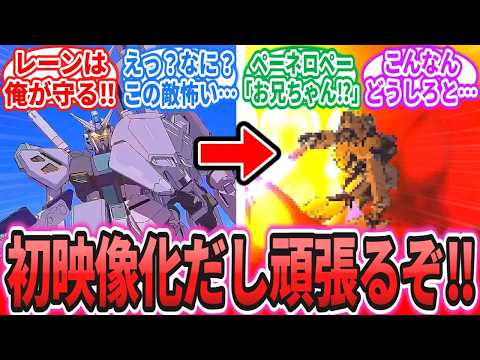
▶ Watch the original YouTube video
How Gundam Fans Embraced the Mass-Produced New Gundam: A 15-Year Perspective on Supporting Characters in Mobile Suit Gundam
The mass-produced New Gundam from Mobile Suit Gundam: Hathaway’s Flash has captured fan hearts not through victory, but through its desperate struggle against the superior Gusion Gundam. After 15 years of Gundam fandom and analyzing online reactions, one longtime viewer discovers that this supporting mobile suit embodies the franchise’s deepest themes about human resilience in the face of overwhelming odds.
What Happened
In Mobile Suit Gundam: Hathaway’s Flash, a mass-produced New Gundam—an aging mobile suit from the previous generation—faces off against the cutting-edge Gusion Gundam. Despite being technologically outmatched and lacking the advanced Minovsky Flight System of newer models, the pilot of the mass-produced unit fights valiantly against impossible odds. Online fan communities have responded with overwhelming appreciation for this underdog battle, praising both the mobile suit’s performance and the pilot’s determination.
Why It Matters
This scene represents a significant evolution in how the Gundam franchise portrays supporting characters and mobile suits. Rather than relegating secondary units to mere background cannon fodder, Hathaway’s Flash grants them narrative weight and emotional depth. The fan reaction reveals a shift in what modern anime audiences value: not flashy victories by overpowered protagonists, but the struggle of ordinary soldiers facing extraordinary circumstances. This reflects broader changes in storytelling preferences across the anime industry, where character psychology and moral complexity increasingly matter more than raw power levels.
Background
The mass-produced New Gundam first appeared in Mobile Suit Gundam: Counterattack (1988), where it served primarily as enemy cannon fodder. For decades, viewers dismissed it as a forgettable mass-production unit. However, Hathaway’s Flash (2021) reimagines this mobile suit’s role by placing it at the center of a pivotal battle sequence. Director Tomino Yoshiyuki has previously stated in interviews that the Gundam series derives importance not solely from protagonist machines, but from how surrounding units engage in combat. This philosophy directly influenced the decision to feature the mass-produced New Gundam prominently in the theatrical trilogy.
The broader context involves how Gundam’s portrayal of supporting mobile suits has evolved over three decades. Early Gundam works treated secondary units as expendable. By the 2010s, series like Mobile Suit Gundam Unicorn began developing pilot psychology and emotional stakes for supporting characters. Hathaway’s Flash represents the culmination of this trend, where a supporting mobile suit becomes a vehicle for exploring themes of human limitation, sacrifice, and dignity in warfare.
Key Points
- The mass-produced New Gundam faces a one-sided battle against the superior Gusion Gundam, yet pilots and fans celebrate its valiant effort rather than its outcome
- Online communities emphasize the pilot’s determination and the mobile suit’s respectable performance despite technological disadvantages
- The absence of the Minovsky Flight System creates a significant combat capability gap, highlighting how technological disparity affects battlefield reality
- Fan comments frequently reference a moment where the pilot’s will seems to inhabit the machine, echoing Amuro’s legacy and suggesting that human determination transcends mechanical limitations
- The battle sequence demonstrates meticulous animation and storytelling, treating a supporting unit with the care typically reserved for protagonist machines
- Fan sentiment shifted from viewing the mass-produced New Gundam as “enemy fodder” to recognizing it as a symbol of ordinary soldiers’ struggle in warfare
Evolution of Supporting Mobile Suits in Gundam
| Work | Supporting Mobile Suit | Narrative Approach | Fan Reception |
|---|---|---|---|
| Mobile Suit Gundam: Counterattack (1988) | Jegan | Straightforward mass-production unit portrayal | Viewed as enemy cannon fodder |
| Mobile Suit Gundam Unicorn (2010) | Jesta | Pilot internal conflict and determination emphasized | Recognized as soldiers fighting desperately |
| Mobile Suit Gundam: Hathaway’s Flash (2021) | Mass-Produced New Gundam | Simultaneous portrayal of pilot psychology and mechanical limitations | Celebrated as symbol of warfare’s human tragedy |
Perspectives
The Humanization Argument: From a narrative evolution standpoint, Hathaway’s Flash demonstrates how Gundam has progressively humanized supporting characters. Where earlier works treated mass-produced units as interchangeable, modern Gundam grants them individual agency and emotional resonance. This shift reflects broader industry trends toward character-driven storytelling.
The Technological Disparity Lens: The battle gains significance through its exploration of how technological gaps translate to combat reality. The mass-produced New Gundam’s lack of Minovsky Flight System creates a concrete disadvantage, making the pilot’s struggle tangible rather than abstract. Fans appreciate this grounded approach to mobile suit combat.
The Symbolism of Defeat: Rather than celebrating victory, the sequence invites viewers to find meaning in dignified struggle against overwhelming odds. This aligns with Gundam’s recurring theme that warfare’s true tragedy lies not in individual defeats, but in the human cost of conflict. The mass-produced New Gundam becomes a vessel for exploring this theme.
The Pilot-Machine Connection: Fan comments frequently reference moments where the pilot’s determination appears to transcend the machine’s limitations. This echoes foundational Gundam philosophy: that human will and skill matter as much as mechanical specifications. The mass-produced New Gundam demonstrates this principle through its underdog performance.
Insights
The enthusiastic fan response to the mass-produced New Gundam reveals a fundamental shift in what modern anime audiences value. Rather than celebrating protagonist dominance, viewers increasingly appreciate stories that explore human limitation, resilience, and dignity. This supporting mobile suit succeeds not because it wins, but because it fights meaningfully despite disadvantages.
The evolution from Counterattack’s expendable Jegans to Hathaway’s emotionally resonant mass-produced New Gundam reflects 33 years of narrative maturation. The Gundam franchise has learned that supporting characters—and by extension, supporting mobile suits—can carry profound thematic weight when treated with care and respect. This approach resonates with contemporary audiences who increasingly question simplistic narratives of technological superiority determining outcomes.
Furthermore, the mass-produced New Gundam’s prominence in Hathaway’s Flash suggests a deliberate creative choice to ground the story in the perspective of ordinary soldiers rather than elite pilots. This democratization of narrative focus aligns with broader anime industry trends toward psychological complexity and moral ambiguity. The supporting mobile suit becomes a lens through which viewers examine warfare’s human dimensions.
Looking forward, this approach likely represents the direction of future Gundam works. As audiences mature and storytelling sophistication increases, the franchise’s willingness to invest narrative resources in supporting characters and machines will likely deepen. The mass-produced New Gundam demonstrates that supporting roles, when executed with intention and care, can achieve emotional impact equal to or exceeding that of protagonist machines.
Ultimately, the fan embrace of the mass-produced New Gundam affirms a core Gundam principle: that human determination, sacrifice, and dignity transcend mechanical specifications. In an era of increasingly powerful protagonist machines, this humble mass-produced unit reminds viewers why the franchise endures—not through spectacle, but through genuine exploration of what it means to fight, struggle, and persevere.