▶ Watch the original YouTube video
Kamen Rider Blade’s Rengel King Form: Two Decades of Fan Anticipation Finally Realized
After 20 years, the Rengel King Form—one of four legendary final transformations from the 2004-2005 Kamen Rider Blade series—has finally been realized as a physical suit and debuted at an event. The appearance of this long-awaited form has sparked massive emotional reactions from longtime fans and reignited discussions about the series’ incomplete legacy.
What Happened
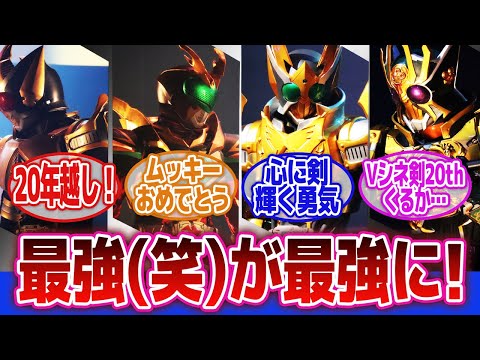
At a recent Kamen Rider Blade 20th anniversary event, the Rengel King Form made its debut as a fully realized physical costume suit. This marks the first time in two decades that one of the four legendary King Forms—the ultimate transformations promised in the original series—has been brought to life beyond the original broadcast. The event also featured all four King Forms appearing simultaneously for the first time, with Blade, Garren, Rengel, and Wild Chalice all in their ultimate forms.
Why It Matters
The Rengel King Form’s appearance represents far more than a simple costume reveal. For fans who watched Kamen Rider Blade during its original 2004-2005 run, the series left a significant gap: only the protagonist Blade received a King Form during the broadcast, while the other three riders—Garren, Rengel, and Wild Chalice—never received theirs. This created a sense of incompleteness that has persisted in fan communities for two decades. The realization of Rengel’s King Form signals that the production team is finally addressing this long-standing narrative gap, validating the patience and loyalty of fans who have waited since the original series ended.
Background
Kamen Rider Blade aired from 2004 to 2005 and introduced an innovative concept for the franchise: four primary riders based on playing card suits (Spades, Hearts, Diamonds, and Clubs), each with the potential to achieve a King Form—a legendary final transformation. However, during the original broadcast, only Blade (Kazuma Kenzaki) achieved and displayed his King Form. The other three riders’ King Forms remained unrealized, existing only in concept.
This contrasted sharply with contemporary series like Kamen Rider Ryuki (2002) and Kamen Rider 555 (2004), which both featured multiple riders achieving their ultimate forms during their original broadcasts. Blade’s incomplete approach created an unusual situation where fans spent two decades wondering why the other riders never received their promised transformations.
In recent years, the Kamen Rider franchise has shifted toward revisiting and completing past storylines. The Rengel King Form’s creation represents part of this broader trend of legacy completion and fan service.
Key Points
- Historic Debut: The Rengel King Form appeared as a physical suit for the first time at a Blade 20th anniversary event, 20 years after the original series ended.
- Design Characteristics: The form features a gold and orange color scheme, appearing more robust and powerful compared to Blade’s sleeker King Form. The shoulder armor is notably larger and more imposing.
- Trending Moment: Rengel King Form became the #1 trending topic on Twitter, with fans celebrating that the long-marginalized character finally received recognition.
- Complete Transformation Lineup: For the first time, all four King Forms appeared together at an event, with Blade, Garren, Rengel, and Wild Chalice all in their ultimate forms.
- Production Investment: The creation of a new physical suit suggests significant production investment, raising expectations for future video releases or new content featuring the form.
- Fan Sentiment: Online reactions emphasized that Rengel, a character historically treated as secondary or comedic, finally received the spotlight and validation fans believed it deserved.
Timeline
- 2004-2005: Kamen Rider Blade airs with only Blade’s King Form depicted in the series.
- 2004: Kamen Rider 555 and other contemporary series feature multiple riders achieving ultimate forms during broadcast.
- 2002: Kamen Rider Ryuki establishes precedent for multiple riders with ultimate forms in a single series.
- 2016: Kamen Rider Amazons explores themes of delayed narrative completion and long-term character development.
- 2024: Blade 20th anniversary event features the debut of Rengel King Form as a physical suit, along with other King Forms.
Perspectives
Fan Perspective: Long-term Blade fans view the Rengel King Form as validation of their patience and loyalty. For two decades, fans questioned why Rengel never received his promised transformation, often expressing this as a running joke. The actual realization of the form transformed this “teasing” into genuine celebration. Comments from fans emphasized that seeing Rengel finally receive recognition felt like a narrative promise being kept.
Production Perspective: The creation of the Rengel King Form suggests the production team recognizes the incomplete nature of the original series and is actively working to address fan expectations. The investment in a new physical suit indicates this is not a one-off appearance but potentially the beginning of larger projects.
Design Philosophy: The Rengel King Form’s design differs notably from Blade’s King Form. Where Blade’s form emphasizes elegance and refinement, Rengel’s emphasizes power and presence. This suggests a deliberate choice to express how different characters would embody the concept of “king” in the modern era, rather than simply replicating the original design.
Comparative Context: Unlike Ryuki (which featured 13 riders with most achieving ultimate forms during broadcast) or 555 (which showed all primary riders’ ultimate forms), Blade uniquely left three King Forms unrealized. This made Blade’s approach to multiple riders fundamentally different from its contemporaries, and the current effort to complete those forms represents a correction of that divergence.
Insights
The Rengel King Form’s appearance signals a broader shift in how the Kamen Rider franchise approaches its legacy. Rather than treating past series as closed chapters, the franchise is now actively revisiting and completing unfinished narrative threads. This reflects both a deepening respect for fan investment and a recognition that some stories deserve second chances.
The emotional response to Rengel’s King Form reveals something important about fan communities: the “teasing” of a character over two decades was actually an expression of affection and investment. When the form finally appeared, that accumulated anticipation transformed into genuine celebration. This suggests that fan communities maintain emotional continuity across decades, and that fulfilling long-deferred expectations carries disproportionate emotional weight.
The design differences between Blade’s and Rengel’s King Forms also matter. They suggest that the production team did not simply archive an old design but reconsidered what a King Form should look like in the present era. This indicates thoughtful creative engagement with the material rather than mere nostalgia exploitation.
Looking forward, the creation of the Rengel King Form likely signals that other unrealized forms—particularly Garren and Wild Chalice’s King Forms—may eventually be realized as well. The investment in physical suits and the positive fan response create both creative and commercial incentives for continued development. Whether this leads to new video content, additional events, or other media remains to be seen, but the foundation has been laid for completing Blade’s originally incomplete vision.
Ultimately, the Rengel King Form represents a moment where a 20-year gap between expectation and reality finally closes. For fans who have carried this question since 2005, the appearance of the form validates their patience and suggests that even long-dormant fan desires can eventually be addressed.