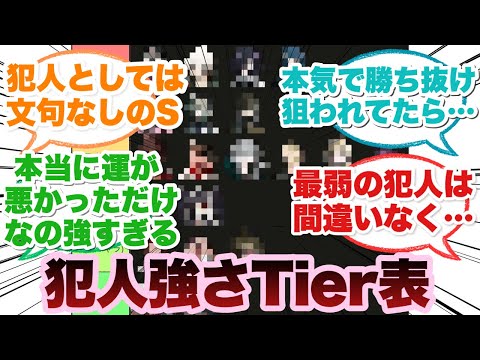
▶ Watch the original YouTube video
Danganronpa Culprit Strength Tier List Sparks Debate Among Fans: A 15-Year Analysis
A viral YouTube tier list ranking the strength of culprits across the Danganronpa series has ignited passionate discussion within the fan community. The debate reveals fundamental disagreements about how to evaluate what makes a culprit “strong”—from physical capability to psychological depth to narrative impact.
What Happened
A YouTube video presenting a tier list ranking the strength of culprits from across the Danganronpa franchise has become a focal point for fan discussion. The ranking sparked widespread debate on social media platforms including Twitter, 5channel, and YouTube comments, with fans disagreeing about the methodology and placement of various culprits. The discussion revealed that the gaming community lacks consensus on what “strength” means when evaluating antagonists in the series.
Why It Matters
The Danganronpa series stands apart from other mystery games because culprits are not distant antagonists but rather main characters whom players interact with throughout the narrative. This unique design creates emotional investment that makes culprit evaluation deeply personal for fans. The tier list debate illustrates how modern gaming communities engage with character analysis and how different evaluation frameworks can lead to contradictory conclusions about the same character. Understanding these discussions reveals broader trends in how players interpret narrative design and character motivation.
Background
Danganronpa, developed by Spike Chunsoft, revolutionized the mystery game genre by centering culprits as psychologically complex main characters rather than distant villains. Since the original 2010 release, the franchise has expanded across multiple games, anime adaptations, and manga series. The series spans three main entries: Danganronpa: Trigger Happy Havoc (Hope’s Peak Academy arc), Danganronpa 2: Goodbye Despair, and New Danganronpa V3. Each installment presents culprits with distinct motivations, psychological profiles, and narrative significance. The franchise’s emphasis on character psychology over pure mystery mechanics has cultivated a fanbase deeply invested in understanding culprit motivations and actions.
Key Points
- Multiple definitions of “strength” exist: Fans evaluate culprits using different criteria—physical capability, psychological resilience, planning sophistication, motivation credibility, and narrative impact—leading to conflicting rankings.
- Culprit characterization varies significantly across series: The Hope’s Peak Academy games, Despair arc, and V3 present fundamentally different culprit archetypes and motivational frameworks, requiring different evaluation standards.
- Motivation credibility outweighs physical ability: Fan discussions consistently prioritize whether a culprit’s actions feel psychologically justified over whether they possess superior physical strength.
- Emotional proximity affects evaluation: Because players develop relationships with culprits before their identities are revealed, the psychological impact of revelation significantly influences how fans assess culprit “strength.”
- Creator intent versus fan interpretation diverges: The development team may have prioritized psychological depth and narrative necessity over raw culprit capability, creating potential misalignment with fan ranking methodology.
- Comparative analysis with other mystery franchises: Unlike series such as Ace Attorney where culprits remain external antagonists, Danganronpa’s integration of culprits as classmates creates unique evaluation dynamics.
Timeline
- 2010: Original Danganronpa released, establishing the formula of psychologically complex culprits as main characters.
- 2012: Danganronpa: Trigger Happy Havoc released on PSP, introducing Western audiences to the series.
- 2011–2015: Industry trend toward morally complex antagonists and psychological depth in character design becomes prominent.
- 2015–present: Multiple anime adaptations, manga series, and spin-offs expand the Danganronpa universe and provide additional culprit characterization.
- Recent: YouTube tier list video generates renewed fan discussion about culprit evaluation methodology.
Perspectives
Physical Strength Advocates: Some fans prioritize culprits who demonstrate superior combat ability or planning sophistication. From this perspective, culprits who execute elaborate schemes or overcome physical obstacles rank highest.
Psychological Depth Proponents: Many fans emphasize the psychological resilience and emotional complexity of culprits. This group values culprits who maintain conviction in their motivations despite psychological pressure, ranking them based on mental fortitude rather than physical capability.
Narrative Necessity Interpreters: Other fans evaluate culprits based on their importance to overall story structure. From this angle, culprits whose actions fundamentally alter the narrative trajectory or thematic direction rank highest, regardless of individual capability.
Motivation Credibility Evaluators: A significant portion of the community prioritizes whether a culprit’s actions feel psychologically justified. These fans rank culprits higher when their motivations are comprehensible and sympathetic, even if their physical or planning abilities are modest.
Cross-Media Consistency Analysts: Some fans consider how culprit characterization remains consistent across game, anime, and manga adaptations. Culprits whose portrayals align across media receive higher evaluations from this perspective.
Comparative Analysis: Danganronpa Versus Other Mystery Franchises
| Franchise | Culprit Status | Psychological Depth | Player Emotional Investment |
|---|---|---|---|
| Ace Attorney | External antagonist | Moderate | Low to Moderate |
| Danganronpa | Main character/classmate | Extremely Deep | High |
| AI: The Somnium Files | External antagonist | Moderate | Moderate |
This comparison demonstrates that Danganronpa’s unique positioning of culprits as established main characters creates substantially higher emotional investment than franchises where culprits remain external figures. Players interact with Danganronpa culprits during daily life sequences before their identities are revealed, establishing relationships that intensify the psychological impact of revelation. This structural difference explains why Danganronpa culprits generate more nuanced evaluation frameworks than culprits in comparable franchises.
Five Dimensions of Culprit Strength
Fan discussions reveal five distinct evaluation axes:
- Physical Strength: The capacity to harm victims and overcome physical obstacles.
- Psychological Strength: Mental resilience and commitment to motivations despite pressure.
- Planning Sophistication: Intellectual capability to devise and execute complex schemes.
- Motivation Credibility: The degree to which players find a culprit’s actions psychologically justified and comprehensible.
- Narrative Impact: The extent to which a culprit’s actions shape the overall story and thematic direction.
Individual culprits score differently across these dimensions. For example, a culprit might rank low in physical strength but exceptionally high in motivation credibility and psychological strength. Another might demonstrate sophisticated planning while lacking narrative impact. This multidimensional framework explains why fans reach contradictory conclusions when using different evaluation criteria.
Industry Context and Design Philosophy
Spike Chunsoft’s design philosophy diverged from traditional mystery games by prioritizing character psychology over puzzle mechanics. During the early 2010s, the gaming industry experienced a trend toward morally complex antagonists and psychological depth. Danganronpa positioned itself at the forefront of this movement by making culprits sympathetic, understandable figures rather than purely malevolent antagonists. This design choice reflected industry recognition that players sought emotional engagement with all characters, including those who committed crimes.
The development team intentionally portrayed culprits as ordinary people driven to extreme actions by circumstance and psychological pressure. This approach transformed the culprit from a puzzle to solve into a character to understand. The tier list debate suggests that fans may be evaluating culprits using metrics that diverge from the creators’ original intent, which prioritized psychological depth and narrative necessity over raw capability.
Fan Community Response
Twitter Reactions: Users expressed disagreement with specific placements, with common criticisms including “Chapter 2’s culprit ranking too low” and “Chapter 4’s culprit should rank highest for planning sophistication.” Praise for Chapter 3’s culprit focused on psychological strength and emotional complexity.
5channel Discussion: Detailed forum threads proposed separating physical and psychological strength into distinct ranking categories. Multiple users argued that motivation credibility should serve as the primary evaluation criterion, with one prominent thread suggesting that culprits whose actions feel psychologically inevitable deserve highest rankings regardless of physical capability.
YouTube Comments: The video’s comment section displayed mixed reactions, with some users defending the tier list while others questioned its methodology. A recurring question asked how New Danganronpa V3 culprits would be positioned, suggesting fan interest in expanding the ranking framework to encompass the entire franchise.
The volume and intensity of discussion indicates that Danganronpa fans maintain exceptionally high engagement with culprit characterization. Rather than dismissing the tier list, the community used it as a springboard for deeper analysis of what makes culprits compelling and how different evaluation frameworks yield different conclusions.
Insights
The tier list debate reveals that Danganronpa’s greatest achievement lies not in mystery mechanics but in psychological characterization. The passionate disagreement about culprit rankings demonstrates that fans have internalized the series’ core theme: understanding human motivation and choice. Rather than viewing culprits as obstacles to overcome, the community treats them as complex individuals worthy of analysis and interpretation.
The discussion also highlights a potential divergence between creator intent and fan interpretation. While Spike Chunsoft likely prioritized psychological depth and narrative necessity, fans have developed independent evaluation frameworks emphasizing different criteria. This gap suggests that the series’ success transcends its original design parameters—the characters have become sufficiently compelling that fans apply their own analytical frameworks regardless of developer intent.
The comparative weakness of culprits in other mystery franchises underscores Danganronpa’s structural innovation. By integrating culprits as main characters, the series created conditions for unprecedented emotional investment. This design choice transformed how players evaluate antagonists, shifting focus from external threat assessment to internal psychological understanding.
Looking forward, the tier list debate will likely deepen as fans continue developing more sophisticated evaluation frameworks. The discussion demonstrates that gaming communities are capable of nuanced character analysis that rivals literary criticism. The question of what makes a culprit “strong” ultimately reflects broader questions about human psychology, moral responsibility, and narrative necessity—themes that Danganronpa deliberately centers in its design.
Practical Recommendations for New Players
For those beginning the Danganronpa series, understanding culprit psychology enhances the experience significantly. Pay careful attention to daily life sequences before class trials, as culprits often display subtle behavioral changes and dialogue hints foreshadowing their eventual actions. Revisiting earlier chapters after completing a game reveals psychological patterns invisible during initial playthrough.
Supplementary materials including official guidebooks and manga adaptations provide additional culprit characterization absent from games. The Danganronpa Hope’s Peak Academy manga series, in particular, expands culprit backstories and motivations beyond game narratives. Anime adaptations offer emotional nuance through voice acting and visual expression that games cannot fully convey.
Engaging with fan discussions and tier lists after completing each chapter deepens understanding of how different players interpret identical narrative events. Rather than seeking definitive rankings, approach these discussions as opportunities to examine your own evaluation criteria and how they compare to community perspectives.