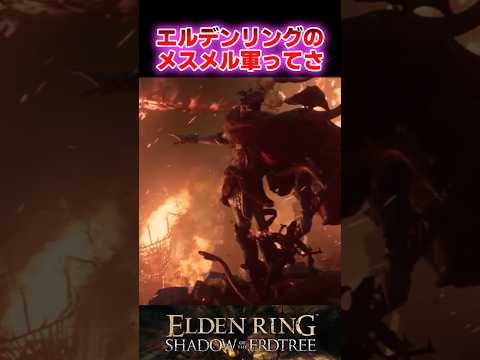
▶ Watch the original YouTube video
Elden Ring’s Messmer Army boss encounter has sparked intense debate within the gaming community, with players offering wildly different assessments of its difficulty and design philosophy. This analysis explores why a single boss fight has become a flashpoint for deeper conversations about game design, player skill diversity, and what makes challenging content fair versus frustrating.
What Happened
The Messmer Army, a multi-enemy boss encounter in Elden Ring, has generated unusually diverse player reactions ranging from “impossible” to “easily manageable,” depending on the player’s experience level, build, and tactical approach. Unlike most boss fights that receive relatively consistent difficulty assessments, Messmer Army has become a focal point for philosophical disagreements about game design itself. Players across Twitter, YouTube, and Reddit have engaged in substantive debates about whether the encounter represents innovative design or flawed difficulty balancing.
Why It Matters
The Messmer Army controversy reveals fundamental tensions in modern game design: how do developers create challenging content that remains accessible to diverse skill levels? The varied reactions to this single encounter demonstrate that “difficulty” is not an objective property but rather a function of player experience, build optimization, and preferred playstyle. Understanding these reactions provides valuable insights into how future games might better serve players with different gaming philosophies and skill backgrounds. The debate also highlights the growing importance of community feedback in shaping game design discourse.
Background
Elden Ring, released in February 2022, represents the culmination of FromSoftware’s “Souls” series design philosophy. The Messmer Army encounter exemplifies a design evolution visible across the studio’s catalog: from Dark Souls’ “Four Kings” (criticized as unfair multi-enemy combat) to Dark Souls III’s “Champion Gundyr” (single enemy with multiple attack patterns) to Sekiro’s “Seven Spears” (cooperative multi-enemy design). Messmer Army synthesizes these approaches by combining multiple distinct enemies, varied attack patterns, and environmental elements into a single encounter. This represents the most complex iteration of multi-enemy boss design in the series to date.
Key Points
- Difficulty Assessment Varies Dramatically: The same boss receives evaluations ranging from “manageable” to “impossible,” with no consensus difficulty rating among players
- Multiple Viable Strategies Exist: Players successfully employ magic, melee combat, summons, and terrain exploitation, indicating the encounter supports diverse tactical approaches
- Summon System Creates Design Ambiguity: The availability of summons enables multiple difficulty experiences, raising questions about whether the encounter’s intended difficulty is clearly defined
- Underlying Game Philosophy Conflicts: Player reactions reveal three distinct gaming philosophies—”pure challenge,” “player choice,” and “narrative focus”—that interpret the encounter’s value differently
- Community Debate Extends Beyond Difficulty: Discussions have evolved into broader critiques of game design philosophy, accessibility, and how developers should balance diverse player needs
- Player Skill Diversity Determines Experience: A player’s previous experience with Souls games, understanding of game mechanics, and tactical flexibility significantly influence their encounter outcome
Timeline
- 2011: Dark Souls introduces “Four Kings” multi-enemy boss, receives widespread criticism for unfair difficulty
- 2016: Dark Souls III releases “Champion Gundyr,” shifting design toward single enemy with multiple attack patterns rather than true multi-enemy encounters
- 2019: Sekiro introduces “Seven Spears,” implementing cooperative multi-enemy design where enemies work together tactically
- February 2022: Elden Ring releases, featuring Messmer Army as synthesis of previous multi-enemy design approaches
- March 2022 onward: Community debate intensifies as players share varied experiences and difficulty assessments across social platforms
Perspectives
The “Pure Challenge” Philosophy: This group of players believes encounters should be overcome through individual skill and mastery alone. From their perspective, summon systems and item usage diminish the achievement and represent a departure from the core Souls experience. They view Messmer Army as a test of personal capability that should not be circumvented through assistance mechanics.
The “Player Choice” Philosophy: This group values flexibility and multiple valid approaches to challenges. They view Messmer Army as exemplary design because it accommodates various strategies—summons, magic, melee, terrain usage—allowing players to find their own solution. They argue that providing multiple difficulty experiences through different tactical choices represents sophisticated design.
The “Narrative Focus” Philosophy: This group prioritizes story progression and world exploration over mechanical challenge. For these players, Messmer Army represents an obstacle to narrative enjoyment rather than a meaningful test. They view difficulty spikes as design problems that impede their primary gaming motivation.
Game Designer Perspective: FromSoftware’s apparent intent was to create an encounter that forces players to reconsider their established tactics and strategies. The multi-enemy composition, varied attack patterns, and environmental elements suggest deliberate design to prevent reliance on single strategies. The inclusion of summon systems indicates intentional support for multiple difficulty experiences.
Insights
The Messmer Army debate illuminates a critical challenge in contemporary game design: creating content that meaningfully challenges diverse player populations without becoming gatekeeping or exclusionary. The encounter’s controversial status is not a design failure but rather evidence of its complexity and the genuine diversity of player skill levels and preferences.
The varied reactions demonstrate that “difficulty” cannot be objectively calibrated because it emerges from the intersection of encounter design, player experience, tactical knowledge, and preferred playstyle. A player with 200 hours of Souls series experience encounters fundamentally different content than a player attempting their first action RPG, even though they face identical mechanics.
The community’s engagement with Messmer Army suggests that future game design should prioritize transparency about difficulty scaling and available assistance options. Clear communication about encounter design intent—whether summons are encouraged, what tactical approaches are viable, or what skill prerequisites exist—could reduce frustration while preserving challenge for experienced players.
Ultimately, Messmer Army’s divisive reception reflects the gaming industry’s ongoing evolution toward serving increasingly diverse audiences. The encounter represents one attempted solution to this challenge: providing multiple valid approaches and difficulty experiences within a single design. Whether this approach succeeds depends not on objective metrics but on individual player philosophy regarding what games should be and how they should be experienced.