▶ Watch the original YouTube video
JoJo’s Bizarre Adventure Steel Ball Run Anime Reveals Shocking New Cast: Fan Reactions Analyzed
The announcement of additional voice cast members for the highly anticipated Steel Ball Run anime adaptation has sent shockwaves through the JoJo fan community. After 15 years of following the franchise’s anime evolution, one longtime observer breaks down what makes this casting reveal so significant and what it means for the series’ future.
What Happened
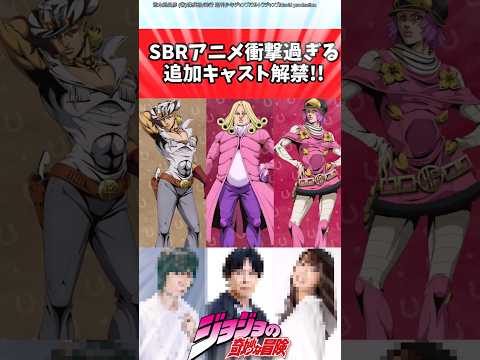
The production team behind the Steel Ball Run (SBR) anime adaptation has released additional voice cast announcements, triggering widespread discussion and debate among fans across social media platforms including Twitter, Reddit, and YouTube. The casting decisions have generated both enthusiasm and concern within the existing JoJo fanbase, with reactions ranging from excitement about the selections to questions about whether the chosen voice actors can adequately represent the complex characters from the original manga.
Why It Matters
Steel Ball Run is widely regarded as one of the finest arcs in the entire JoJo’s Bizarre Adventure series, and its anime adaptation represents a critical moment for the franchise. The voice casting process is not merely a technical detail—it fundamentally shapes how audiences perceive and connect with characters. Past JoJo anime adaptations have demonstrated that initial fan skepticism about casting choices often transforms into appreciation once viewers experience the actual performances. The SBR anime’s success will likely influence how future installments of the series are adapted, making these casting decisions strategically important for the franchise’s long-term direction.
Background
JoJo’s Bizarre Adventure began its anime adaptation journey in 2009, with the first part receiving critical acclaim. Since then, the franchise has seen multiple successful anime seasons covering Parts 1 through 5. Steel Ball Run, originally serialized from 2004 to 2011, stands apart as one of the most structurally complex and narratively sophisticated arcs in the entire series. The announcement of an SBR anime adaptation in 2023 represented a major milestone for the franchise, as fans had waited nearly two decades for this particular story to receive animation treatment.
The voice casting process for JoJo anime has evolved significantly over the years. Early adaptations (Parts 1-2, 2012-2013) featured relatively unknown voice actors, while later seasons (Part 3, 2014-2015) began incorporating more established talent. This progression reflects both the franchise’s growing budget and the industry’s recognition of JoJo’s cultural significance.
Key Points
- Additional voice cast information for the SBR anime has been officially released, generating substantial discussion within the fan community
- The casting selections reflect careful consideration of character complexity, existing fan expectations, and the series’ distinctive tone
- Fan reactions display a mix of optimism and uncertainty, with many drawing comparisons to past JoJo casting announcements
- Social media discussions reveal that initial skepticism about voice actor selections often transforms after viewers experience actual performances
- The SBR anime represents a strategic decision to revitalize interest in a 13-year-old manga arc while appealing to both longtime fans and new audiences
- Character complexity, particularly protagonist Johnny Joestar’s psychological development, presents unique casting challenges that require experienced voice talent
Timeline
- 2004-2011: Steel Ball Run serializes in Weekly Shonen Jump, establishing itself as a critically acclaimed arc
- 2009: JoJo anime adaptation begins with Part 1
- 2012-2015: Parts 1-3 receive anime adaptations with evolving casting strategies
- 2023: Steel Ball Run anime adaptation officially announced
- 2024: Additional voice cast members revealed, triggering widespread fan discussion
Perspectives
The fan response to the SBR anime casting announcement reveals multiple interpretations of what constitutes appropriate voice acting choices. Some fans express confidence that the selected voice actors possess the range and experience necessary to handle the arc’s psychological complexity. These supporters point to the voice actors’ previous work in similarly demanding roles and express optimism about the production quality.
Conversely, other fans voice concerns about whether the chosen actors can authentically represent characters as they exist in the original manga. These skeptics worry that certain casting decisions deviate too significantly from their personal mental images of the characters, though they acknowledge that such concerns have proven unfounded in previous JoJo anime adaptations.
A third perspective emphasizes the importance of trusting the production team’s expertise. Observers with extensive experience following anime adaptations note that initial casting skepticism has repeatedly given way to appreciation once viewers experience the actual performances. This group argues that premature judgments about casting quality are counterproductive and that final evaluation should wait until the anime actually airs.
Insights
The SBR anime casting announcement represents more than a simple personnel decision—it reflects broader industry trends and strategic franchise management. The decision to adapt Steel Ball Run now, thirteen years after its manga conclusion, positions the series within the contemporary trend of high-quality adaptations of established manga properties. This timing allows the production to leverage an existing, dedicated fanbase while simultaneously introducing the story to audiences unfamiliar with the original work.
The casting process itself demonstrates how modern anime marketing operates. By releasing cast information in stages rather than all at once, the production team maintains sustained media attention and gradually builds audience anticipation. Each announcement serves as a touchpoint for fan engagement and discussion, extending the promotional period across months rather than days.
Perhaps most significantly, the fan response to the SBR casting announcement illustrates a fundamental pattern in anime fandom: the gap between initial reactions to casting news and ultimate appreciation for actual performances. This pattern has repeated consistently across multiple successful anime adaptations, suggesting that fan skepticism about voice acting choices, while understandable, frequently proves temporary. The SBR anime will likely follow this established trajectory, with current concerns potentially transforming into praise once viewers experience the voice actors’ interpretations of these complex characters.
For the broader JoJo franchise, the success or failure of the SBR anime will significantly influence how subsequent parts receive adaptation treatment. The series’ remaining unannimated arcs—particularly Parts 7 and 8—will benefit from whatever production infrastructure and audience goodwill the SBR adaptation establishes. In this sense, the current casting decisions carry implications extending far beyond the Steel Ball Run arc itself.