▶ Watch the original YouTube video
Why Dr. Stone’s America Arc Became a Nightmare for Fans: A Critical Analysis
After two critically acclaimed seasons, Dr. Stone’s America arc has drawn widespread criticism from viewers and online communities, with fans describing the arc as a “nightmare.” This analysis examines the structural failures in pacing, character development, and thematic consistency that caused the sharp decline in quality, comparing it to other successful long-running anime adaptations.
What Happened
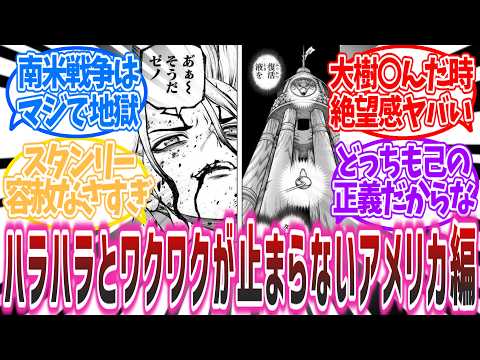
Dr. Stone, a beloved anime series that premiered in summer 2019, maintained exceptional quality through its first two seasons by blending scientific education with compelling storytelling. However, the America arc—the third major story segment—has faced overwhelming negative reception from the fanbase. Across Twitter, Reddit, 5channel, and YouTube, viewers have repeatedly used the word “hell” to describe their experience watching this arc, marking a dramatic shift from the enthusiastic reception of previous seasons.
Why It Matters
The Dr. Stone America arc represents a critical case study in anime adaptation failures. The sharp quality decline demonstrates how even well-established franchises can lose audience engagement when fundamental storytelling principles are compromised. For anime producers and studios, this serves as a cautionary example of how pacing decisions, character development priorities, and thematic consistency directly impact viewer retention and satisfaction. The gap between fan expectations and delivered content reveals broader structural issues in how long-form manga is adapted into episodic television.
Background
Dr. Stone originally captivated audiences with its unique premise: in a world where humanity has been mysteriously petrified, protagonist Senku uses scientific knowledge to solve problems and rebuild civilization. The first two seasons succeeded by maintaining a consistent focus on science-based problem-solving, with careful character development and clear thematic coherence. The Empire arc, in particular, introduced antagonist Mozu with nuanced psychological depth that rivaled character writing in acclaimed series like Attack on Titan. This established high viewer expectations for subsequent story arcs.
Key Points
- Pacing Collapse: Critical plot developments from the source material were compressed excessively, resulting in insufficient character psychology and emotional depth
- Shallow New Characters: American arc characters lack adequate backstory and motivation, appearing as one-dimensional antagonists rather than complex individuals
- Shift Away from Core Theme: The series’ foundational element—using scientific knowledge to overcome obstacles—was replaced with conventional action sequences and gunfights
- Loss of Character Growth: Neither new characters nor existing characters received meaningful development or new dimensions explored through their interactions
- Narrative Discontinuity: The transition from the Empire arc to the America arc felt abrupt and unconvincing, breaking the natural story flow established in previous seasons
- Inconsistent Quality Standards: Unlike acclaimed adaptations such as Jujutsu Kaisen, which allocates production quality proportionally to scene importance, Dr. Stone’s America arc fails to differentiate between critical and minor moments
Structural Problems Analyzed
Character Development Failure: The Empire arc’s antagonist Mozu succeeded because his opposition to Senku was rooted in comprehensible ideology and emotional depth. The America arc’s antagonists lack this complexity. While source material readers understand their motivations, anime-only viewers see them as generic enemies, indicating a failure in adaptation strategy.
Thematic Dilution: Dr. Stone’s original appeal lay in its educational-entertainment fusion. Episodes like the early “gunpowder manufacturing” sequence demonstrated how scientific problem-solving could be both entertaining and instructive. The America arc replaces this with conventional combat scenes, abandoning the series’ distinctive identity. This mirrors how Demon Slayer’s film succeeded through exceptional action choreography—Dr. Stone’s action sequences lack equivalent quality, making the thematic shift doubly damaging.
Narrative Pacing Issues: The compressed timeline prevents proper exposition of new characters’ backgrounds. Comparisons to Jujutsu Kaisen’s strategy of inserting original anime scenes to strengthen character psychology reveal that Dr. Stone’s production team failed to employ similar compensatory techniques. The result is a story that feels rushed and emotionally hollow.
Comparative Analysis with Other Long-Running Anime
Attack on Titan: Maintained thematic consistency across all seasons by centering narrative around “mystery revelation.” Viewers remained engaged because new information continuously answered fundamental questions. Dr. Stone’s America arc lacks equivalent narrative momentum—the core question “why are we fighting?” remains ambiguous.
My Hero Academia: Succeeds through character-centric storytelling where each character’s “quirk” (ability) directly connects to personal identity and life trajectory. The villain arc in Season 4 deepened emotional investment by thoroughly exploring antagonist backgrounds. Dr. Stone’s America arc abandons this character-first approach entirely.
Jujutsu Kaisen: Employs a deliberate strategy of allocating production resources proportionally to scene importance. Critical moments receive exceptional animation and direction; minor scenes receive adequate but unremarkable treatment. Dr. Stone’s America arc shows no such differentiation, treating all scenes with uniform mediocrity.
| Series | Character Development | Thematic Consistency | New Character Integration | Pacing Quality |
|---|---|---|---|---|
| Dr. Stone (Seasons 1-2) | Meticulous | Highly Consistent | Excellent | Well-Balanced |
| Dr. Stone (America Arc) | Superficial | Inconsistent | Inadequate | Rushed |
| Attack on Titan | Meticulous | Exceptionally Consistent | Excellent | Deliberate |
| Jujutsu Kaisen | Meticulous | Highly Consistent | Excellent | Rhythmic Variation |
Fan Reception and Online Response
The term “hell” appearing repeatedly across social media platforms signifies more than casual criticism—it reflects the magnitude of the expectation-reality gap. On Twitter, common complaints include “the series lost half its appeal once America started” and “I watch out of obligation now, not enjoyment.” These statements indicate a loss of viewer immersion, a critical metric for series success.
On 5channel forums, users repeatedly asked “Did the production studio change?” Despite identical studio involvement, this question’s frequency demonstrates how pronounced the quality shift appeared. YouTube comments frequently noted that “the source material is excellent, but the anime adaptation ruins it,” suggesting that the problem lies specifically in adaptation decisions rather than source material quality.
A recurring observation across platforms compares the America arc’s antagonists unfavorably to the Empire arc’s Mozu, noting that while Mozu possessed ideological depth and mutual respect with Senku, the America arc’s enemies function merely as obstacles rather than characters. This distinction highlights a fundamental failure in character writing strategy.
Insights and Implications
The Dr. Stone America arc failure demonstrates that production quality alone cannot compensate for structural storytelling problems. The series’ earlier success derived from its unique identity—the fusion of scientific education with adventure narrative. By abandoning this distinctive approach in favor of conventional action sequences, the production team eliminated the very element that differentiated Dr. Stone from competing anime.
The severity of fan disappointment stems directly from the height of prior expectations. Had Dr. Stone maintained mediocre quality throughout, the America arc’s decline would be less noticeable. The sharp contrast between the exceptional first two seasons and the America arc’s execution creates a psychological impact that exceeds what the absolute quality level alone would suggest.
However, the failure appears rooted in production judgment rather than creative incapacity. The source material itself remains strong; the problem lies in adaptation decisions regarding pacing, character focus, and thematic prioritization. If the production team had allocated sufficient time to develop new characters and maintain the science-focused problem-solving approach, the arc could have succeeded.
Moving forward, Dr. Stone’s potential for recovery depends on whether producers acknowledge these structural failures and implement corrective measures in subsequent seasons. A return to the series’ foundational principles—emphasizing scientific problem-solving, character psychology, and thematic consistency—could restore audience engagement and validate the franchise’s earlier promise.