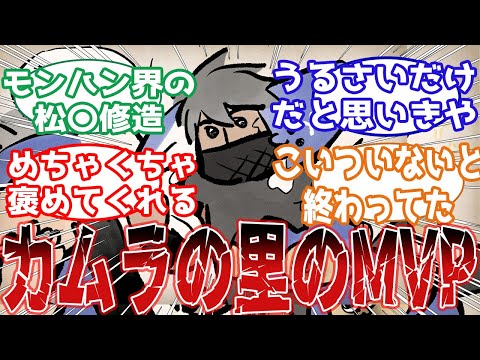
▶ Watch the original YouTube video
Why Utsushi Instructor Is Stronger Than Players: A 15-Year Monster Hunter Analysis
Monster Hunter Rise’s Utsushi Instructor stands as one of gaming’s most perfectly designed mentor characters, combining overwhelming combat prowess with a supporting role that never undermines the player’s journey. Despite his “lovable fool” personality, he demonstrates capabilities that far exceed those of any hunter, raising questions about character design, narrative justification, and what makes an ideal instructor in modern gaming.
What Happened
Utsushi Instructor, the primary mentor figure in Monster Hunter Rise, has become the subject of extensive fan analysis regarding his combat capabilities. Unlike typical NPC instructors in games, Utsushi is explicitly shown to possess combat strength that surpasses the player character. During key story moments—particularly in the Rampage battles and encounters with apex monsters—he demonstrates the ability to single-handedly manage threats that require players multiple attempts to overcome. This contradiction between his cheerful, seemingly incompetent personality and his exceptional abilities has sparked widespread discussion within the Monster Hunter community about intentional character design versus narrative oversight.
Why It Matters
Utsushi Instructor represents a significant evolution in how game developers approach mentor characters. Rather than relegating instructors to background support roles, Monster Hunter Rise integrates Utsushi directly into both the game’s mechanical systems and its narrative framework. His character demonstrates that a mentor can be simultaneously stronger than the player, psychologically supportive, and narratively justified without creating logical inconsistencies. This approach has implications for character design across the gaming industry, showing how to balance mentor authority with player agency.
Background
Monster Hunter Rise launched on Nintendo Switch in 2021, marking the series’ first major entry on Nintendo’s platform. This shift required the game to appeal to a broader audience, including players new to the franchise. Utsushi Instructor serves as the primary guide for these players, offering constant encouragement and mechanical instruction throughout the campaign. However, his role extends far beyond simple tutorial functions. He is established as the developer of the “Switch Skills” system—the game’s revolutionary weapon mechanic that fundamentally altered how all 14 weapon types function. This dual role as both mentor and system architect provides narrative justification for his exceptional capabilities.
The character’s design also incorporates a crucial limitation: he lacks an official Hunter’s License, which prevents him from participating in hunts as a full member of the hunter’s guild. This constraint serves as the logical explanation for why he doesn’t simply solve all the game’s challenges himself, preserving the player’s central role in the narrative.
Key Points
- Combat Superiority: Utsushi demonstrates the ability to control and defeat multiple apex monsters simultaneously—tasks that require players numerous attempts to accomplish individually.
- System Architecture: He is the in-universe creator of Switch Skills, the foundational mechanic that defines Monster Hunter Rise’s combat system, establishing him as a technical genius within the game world.
- Narrative Justification: His lack of a Hunter’s License provides a logical reason for his absence from direct combat, preventing him from overshadowing the player while maintaining his established strength.
- Psychological Support: His constant encouragement and high-energy personality serve a mechanical function, supporting players through difficult encounters and reinforcing their progression.
- Character Consistency: Unlike many mentor characters in games, Utsushi’s strength, personality, and role are perfectly integrated without contradictions or plot holes.
- Fan Reception: Community response has been overwhelmingly positive, with players praising his character design as the ideal balance between mentor authority and player agency.
Character Design Analysis
Utsushi Instructor represents a departure from three traditional mentor archetypes found in gaming. Support-type mentors, exemplified by characters like Professor Oak from Pokémon, provide guidance without demonstrating clear combat capability. Strong-type mentors, such as the Fire King from Dark Souls, display power but experience defeat within the narrative. Mystery-type mentors, like Shaxx from Destiny, maintain ambiguous strength with potential narrative inconsistencies.
Utsushi transcends these categories by establishing clear, demonstrable strength while maintaining logical consistency. His Hunter’s License restriction is neither a physical limitation nor a power-dampening device—it is a professional constraint. He is not prevented from fighting; rather, his position as an instructor makes direct combat participation inappropriate. This distinction grants the character humanity and professionalism while preserving narrative logic.
The contrast between his appearance and personality amplifies his appeal. His clean, composed visual design suggests competence and authority, yet his enthusiastic, sometimes overbearing encouragement creates an approachable mentor figure. This gap between expectation and reality makes him memorable and endearing to players.
Broader Implications for Game Design
Utsushi Instructor’s success demonstrates that mentor characters need not be weak or absent from the game’s power structure. Instead, developers can integrate mentors directly into mechanical and narrative systems, creating characters who are simultaneously stronger than players and supportive of their growth. This approach requires careful consideration of in-game justifications and clear communication of character roles, but the results—as evidenced by community response—can be highly effective.
The character also exemplifies how to handle “overpowered” characters without sacrificing narrative tension. Rather than allowing Utsushi to trivialize player challenges, his professional constraints ensure that players remain the central agents of the story. His strength becomes aspirational rather than diminishing, encouraging players to improve their own skills.
Community Reception and Future Prospects
Online communities have responded to Utsushi with overwhelming enthusiasm. Social media discussions frequently praise him as an ideal mentor figure, with even critical comments about his loud personality being reframed as endearing character traits rather than flaws. This universal approval suggests that the character successfully fulfills multiple player needs simultaneously: mechanical support, narrative guidance, and emotional encouragement.
Looking forward, Utsushi’s character arc remains incomplete. He is confirmed to travel to Elgado in future expansions, suggesting potential for significant story development. Should he ever obtain a Hunter’s License—a possibility hinted at in community discussions—it would represent a major narrative event that could fundamentally alter the Monster Hunter world’s power dynamics. Such a development would likely serve as a climactic moment in future mainline entries, fully unleashing his capabilities within the game’s systems.
Insights
Utsushi Instructor succeeds because he resolves a fundamental tension in game design: how to create a mentor character who is simultaneously authoritative, supportive, and non-trivializing of player agency. His strength is not incidental or poorly explained—it is architecturally integrated into both the game’s mechanics and narrative. He invented the systems players use, he demonstrates mastery of those systems, and his professional constraints prevent him from overshadowing the player’s role.
The character also demonstrates the value of meta-textual awareness in game design. When Utsushi speaks of training the player to become a master hunter, he references the actual time players have spent engaging with the game. This creates a bridge between game world and player experience, making the mentor’s encouragement feel personally directed rather than generic.
Perhaps most importantly, Utsushi shows that mentor characters can be complex, flawed, and multifaceted without losing their supportive function. His loud personality, his occasional foolishness, and his unshakeable optimism make him human rather than idealized. This humanity, combined with his demonstrated competence, creates a character that players respect and appreciate rather than resent or dismiss.