▶ Watch the original YouTube video
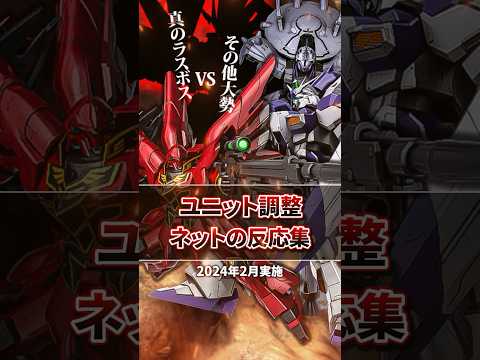
Battle Operation 2’s February balance patch has ignited controversy within the player community, with significant nerfs to popular mobile suits triggering widespread debate about game balance philosophy. Drawing on 15 years of online gaming analysis, this article examines why balance adjustments remain one of the most contentious challenges in modern game development.
- What Happened
- Why It Matters
- Background
- Key Points
- Timeline of Balance Adjustment Patterns
- Perspectives
- Comparative Analysis: Balance Patch Success and Failure Cases
- The Psychology of Balance Patch Backlash
- Evaluation Framework: Assessing Balance Patch Quality
- Practical Guidance for Continuing Players
- Community Reaction Analysis
- Insights and Future Outlook
What Happened
Battle Operation 2 released a major balance patch in February that significantly weakened several dominant mobile suits, fundamentally shifting the game’s competitive meta. The adjustments resulted in a complete overhaul of which units dominate the battlefield, leaving many players who invested time and money into specific machines feeling their investments had become obsolete. The patch sparked heated discussions across social media, YouTube, and gaming forums, with reactions ranging from cautious optimism about environmental diversity to outright condemnation of the development team’s approach.
Why It Matters
Balance patches represent one of the most delicate aspects of live-service game management. When executed poorly, they can drive away thousands of players; when handled well, they extend a game’s lifespan indefinitely. The Battle Operation 2 situation reflects broader industry challenges in maintaining player satisfaction while ensuring competitive integrity. The community’s response reveals critical gaps between developer intent and player perception—a problem that has plagued other major titles including Overwatch and Gundam Online.
Background
Battle Operation 2 launched in 2018 as a mobile Gundam game, inheriting the complex challenge of balancing iconic mecha with competitive gameplay. The February adjustment represents the latest in a series of meta-shifting updates. The patch specifically targeted units that had achieved dominance in the competitive environment, with certain machines exceeding 50% usage rates—a threshold most game developers consider indicative of severe balance failure.
This situation echoes historical precedents in other Gundam titles. Gundam Online, which launched in 2015, faced similar balance crises in 2016-2017 when the Zaku II F-Type dominated the meta so thoroughly that alternative unit choices became non-viable. That game ultimately shut down in 2016, partly due to persistent balance issues and player frustration over wasted investments.
Key Points
- Multiple popular mobile suits received significant nerfs, fundamentally altering the competitive landscape
- Environmental meta shifted dramatically, creating opportunities for previously underutilized units
- Players who invested heavily in now-weakened units reported feeling their time and money were wasted
- Simultaneously, some players praised the patch for creating meta diversity and fresh strategic possibilities
- The development team’s failure to clearly communicate adjustment rationale amplified community backlash
- Player satisfaction correlates directly with understanding the “why” behind balance changes, not just the changes themselves
Timeline of Balance Adjustment Patterns
- 2015 and earlier: Industry standard approach of simply nerfing overpowered units, resulting in widespread player exodus
- 2016-2019: Paradigm shift toward buffing weak units instead of nerfing strong ones, improving player satisfaction
- 2020 onwards: Advanced multi-unit simultaneous adjustments designed to create diverse, sustainable metas
- 1-2 weeks post-patch: New meta stabilizes; previously overlooked units gain prominence
- 1 month post-patch: Developers typically identify unexpected balance consequences requiring follow-up adjustments
- 3 months post-patch: Multiple adjustment cycles typically yield genuinely balanced environments
Perspectives
The Player Investment Perspective: Many players view balance patches through the lens of sunk costs. They invested significant resources—both monetary and temporal—into specific units, and sudden nerfs feel like a betrayal of that investment. This psychological phenomenon, known as the sunk cost fallacy, explains why players often react with disproportionate anger to balance changes, even when those changes are objectively necessary.
The Competitive Integrity Perspective: From a game design standpoint, the February patch was arguably necessary. When specific units achieve 50%+ usage rates, the game ceases to offer genuine strategic choice. Players are essentially forced to use dominant units to remain competitive, which contradicts the fundamental appeal of a game featuring dozens of distinct mobile suits.
The Meta Evolution Perspective: Experienced players recognize that balance patches create temporary disruption followed by new strategic opportunities. Those who maintain multiple trained units report less frustration, as they can adapt to shifting metas. This perspective suggests the issue isn’t the patch itself, but rather the game’s design encouraging single-unit specialization.
The Communication Failure Perspective: Across all player segments, a common complaint emerges: insufficient explanation of adjustment rationale. Games like League of Legends publish detailed patch notes explaining not just what changed, but why those changes were necessary. Battle Operation 2’s relative lack of transparency amplified negative reactions that might have been mitigated through better communication.
Comparative Analysis: Balance Patch Success and Failure Cases
Apex Legends (Success): Implements seasonal multi-character adjustments using incremental nerfs rather than dramatic overhauls. Maintains 15-25% usage rates for top-tier characters—the industry standard for healthy metas. Result: 5+ years of continuous growth and player retention.
League of Legends (Success): Publishes exhaustive patch notes explaining adjustment philosophy, numerical changes, and strategic implications. Implements small, iterative adjustments rather than sweeping changes. Result: 13+ years of operation, world’s largest esports ecosystem.
Overwatch (Failure): Made sudden, dramatic character adjustments including role changes and severe stat modifications. Provided minimal explanation for changes. Result: Significant player exodus and eventual service discontinuation.
Gundam Online (Failure): Repeatedly nerfed dominant units without buffing alternatives, creating a cycle of “new dominant unit emerges, gets nerfed, repeat.” Minimal communication with community. Result: Service shutdown in 2016.
The Psychology of Balance Patch Backlash
Player anger toward balance patches operates on three distinct psychological levels:
Economic Loss: The most obvious layer involves perceived financial waste. Players who spent money acquiring or upgrading units experience genuine economic loss when those units become non-viable. This triggers loss aversion psychology, where potential losses loom larger in perception than equivalent gains.
Competence Erosion: Players derive self-esteem from mastery. When a unit they’ve mastered becomes weak, they experience what psychologists call “competence threat.” Their accumulated skill becomes partially irrelevant, creating a destabilizing psychological effect that extends beyond the game itself.
Community Fragmentation: Balance patches create winners and losers, fragmenting previously unified communities. Players whose units were buffed and those whose units were nerfed develop opposing interests, leading to toxic community dynamics that persist long after the patch’s immediate effects fade.
Evaluation Framework: Assessing Balance Patch Quality
Based on 15 years of gaming analysis, successful balance patches share five measurable characteristics:
Transparency (40 points): Clear explanation of adjustment rationale. Players should understand not just what changed, but why those changes were necessary. League of Legends excels here; Battle Operation 2 falls short.
Gradualism (30 points): Incremental adjustments rather than dramatic overhauls. Apex Legends implements this effectively; Overwatch’s sudden changes triggered backlash.
Comprehensiveness (20 points): Multiple units adjusted simultaneously to create diverse viable strategies. Battle Operation 2’s multi-unit approach scores well here.
Compensation (5 points): Tangible rewards for players negatively affected by changes. Few games implement this; those that do see significantly reduced backlash.
Follow-up Commitment (5 points): Publicly announced plans for monitoring and adjusting post-patch balance. Transparency about future adjustments builds player trust.
Evaluated against these criteria, Battle Operation 2’s February patch scores approximately 60-70 points. The multi-unit approach and meta diversity goals are commendable, but transparency and compensation mechanisms are insufficient.
Practical Guidance for Continuing Players
Adopt a Long-Term Perspective: Balance patches follow predictable cycles. Units weakened in one patch frequently receive buffs 3-6 months later. Rather than viewing current nerfs as permanent, consider them temporary meta shifts. This mindset reduces emotional distress and enables more rational decision-making.
Diversify Unit Investment: Maintain 3-5 trained units rather than specializing in one. This risk-distribution approach minimizes patch impact and provides psychological stability. Players who maintain diverse rosters report significantly higher long-term satisfaction.
Study Official Rationale: Thoroughly read patch notes and developer communications. Understanding the reasoning behind adjustments transforms anger into comprehension. When you understand why a change was necessary, acceptance follows naturally.
Explore New Strategies: Balance patches create opportunities to discover previously overlooked units and strategies. Approaching patches as exploration rather than loss reframes the experience positively.
Distinguish Signal from Noise: Social media amplifies extreme reactions. Separate emotional outbursts from substantive criticism. Form independent judgments through personal gameplay rather than adopting community consensus.
Community Reaction Analysis
Twitter Response: Dominated by emotional reactions, particularly “my favorite unit is ruined” sentiment. However, players maintaining multiple units expressed significantly more positive responses, suggesting roster diversity correlates with patch acceptance.
YouTube Comments: Mixed between criticism (“developers don’t understand their own game”) and constructive analysis (“after playing the new meta, it’s actually more interesting”). Notably, players who invested time testing new strategies posted more favorable assessments than those who dismissed changes immediately.
Gaming Forums: Hosted more sophisticated analysis, including meta predictions and comparative references to other games’ balance philosophies. Forum discussions revealed that informed players generally supported the patch’s direction while criticizing its execution.
A clear pattern emerges: player satisfaction correlates strongly with understanding patch rationale. Players who comprehended the reasoning behind adjustments proved significantly more accepting than those left to speculate.
Insights and Future Outlook
The February balance patch was objectively necessary. Allowing specific units to dominate at 50%+ usage rates contradicts the fundamental appeal of a game featuring diverse mobile suits. The patch’s direction was sound.
However, execution faltered in critical areas. Insufficient transparency about adjustment rationale left players confused and frustrated. Lack of compensation mechanisms for negatively affected players amplified resentment. These are correctable failures.
The gaming industry has evolved significantly since 2015. Modern best practices—exemplified by League of Legends and Apex Legends—demonstrate that transparent, incremental, well-communicated balance adjustments generate player acceptance even when those adjustments create short-term disadvantages. Battle Operation 2’s development team possesses the knowledge and tools to implement these practices.
The critical question isn’t whether the February patch was necessary—it clearly was. The question is whether the development team will learn from this experience and implement superior communication and compensation strategies in future adjustments. Games that master this balance—maintaining competitive integrity while respecting player investment—achieve decade-long lifespans and thriving communities. Those that don’t face declining engagement and eventual shutdown.
For Battle Operation 2 players: view this patch not as an ending, but as a beginning. New metas present opportunities for strategic innovation and discovery. The units you’ve invested in remain valuable; they’ve simply shifted in the strategic hierarchy. Embrace the exploration phase, maintain perspective, and judge the patch’s success not by immediate reaction, but by the game’s health three months hence.