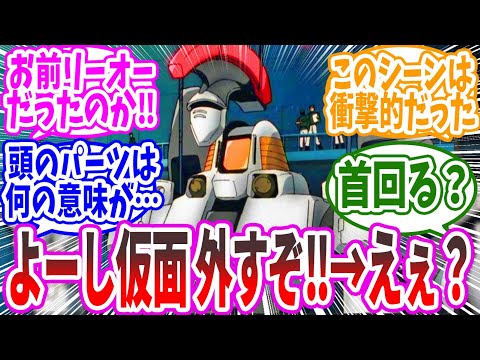
▶ Watch the original YouTube video
Is the Tallgeese’s Head Unit Really Necessary? A 15-Year Gundam Fan’s Deep Dive into Mecha Design Philosophy
The Tallgeese’s distinctive head-covering component has sparked ongoing debate within the Gundam fan community about whether it serves a genuine functional purpose or exists purely for visual impact. After 15 years of analyzing Gundam series mecha designs and comparing them across multiple generations, the answer reveals deeper truths about how anime production balances aesthetics with mechanical logic.
What Happened
The question “Is the Tallgeese’s head unit really necessary?” has become a recurring discussion point among Gundam fans online. The Tallgeese, the protagonist mobile suit from Mobile New Century Gundam Wing (1995), features a distinctive external head-covering component that differs markedly from other Gundam designs. This has led fans to question whether the part serves an actual mechanical function or exists primarily as a design choice. The debate encompasses technical specifications, design philosophy, and the evolution of mecha design across the Gundam franchise.
Why It Matters
This seemingly niche discussion about a single mecha component reveals fundamental questions about how anime production handles mechanical design: Should functionality dictate aesthetics, or can visual impact justify design choices retroactively? The Tallgeese represents a pivotal moment in Gundam’s design philosophy—the transition from function-first design to aesthetics-first design with post-hoc mechanical justification. Understanding this shift illuminates how the anime industry balances creative vision with technical consistency, and how fan communities engage with design contradictions in beloved franchises.
Background
The Tallgeese first appeared in Mobile New Century Gundam Wing, which aired in 1995. Designed by mechanical designer Katoki Hajime, the mobile suit introduced a visual approach that distinguished it from earlier Gundam designs. The external head-covering component—officially called a “face guard” or “head shelter”—integrates multiple claimed functions: pilot head protection, aerodynamic drag reduction during high-speed movement, sensor unit consolidation, and stabilization during high-output beam rifle discharge.
However, when compared to other contemporary Gundam mobile suits, these design justifications reveal inconsistencies. The original Gundam achieves equivalent functionality without such a component. The Double Zeta Gundam features far more complex internal head structures without external covering. Gundam X, from the same era as Gundam Wing, achieves similar performance specifications without adopting this design approach.
The Tallgeese’s design represents a shift in mecha design philosophy that occurred between the 1980s and 1990s. Earlier Gundam designs prioritized mechanical logic—form followed function. By the mid-1990s, the industry began adopting a visual-first approach, with mechanical justifications added afterward to support design decisions already made on aesthetic grounds.
Key Points
- The Tallgeese’s head unit is officially described as having multiple functions (cooling, sensor integration, pilot protection, aerodynamic efficiency), but these claims contain logical inconsistencies when compared to other Gundam designs
- The component represents a transitional moment in Gundam mecha design, marking the shift from function-first to aesthetics-first design philosophy
- Fan skepticism about the part’s necessity reflects legitimate questions about design consistency and the evolution of mechanical design standards across the franchise
- The head unit can be removed, as shown in Gundam Wing: Endless Waltz, suggesting the design team itself recognized it as an external component rather than integral structure
- Mechanical designer Katoki Hajime described the Gundam Wing designs as pursuing a “more refined, more weapon-like” aesthetic, prioritizing visual sophistication over strict mechanical logic
- This design choice influenced subsequent Gundam series, establishing a precedent for prioritizing visual impact and narrative symbolism over mechanical consistency
Design Philosophy Evolution
First Era (1979-1983): Function-first design. Mechanical specifications are rigorous with minimal contradictions.
Second Era (1984-1990): Balance between function and visual appeal. Design complexity increases; setting inconsistencies begin appearing.
Third Era (1995-2000): Visual appeal prioritized. Post-hoc mechanical justifications become standard practice. The Tallgeese exemplifies this transition.
Fourth Era (2000-present): Visual design established first; mechanical settings constructed to support predetermined aesthetics. Contradictions are accepted as inherent to the creative process.
Comparative Analysis: Design Approaches Across Mobile Suits
| Mobile Suit | Head Structure | Design Philosophy | Visual Impact |
|---|---|---|---|
| Original Gundam | Simple head + antenna | Function-first | Moderate |
| Z Gundam | Complex internal structure | Function-first + transformation mechanism | High |
| Tallgeese | External covering component | Aesthetics-first + post-hoc justification | Very High |
| Gundam X | Simple + dual optical sensors | Balance of function and simplicity | High |
The Tallgeese’s external covering approach stands unique among these designs. This design method—applying external components to achieve visual distinction—subsequently influenced later Gundam series, though with different applications. Gundam 00‘s Exia, for example, adopted the opposite approach: prioritizing visual impact through exposed internal components rather than external covering.
Perspectives from the Fan Community
Technical Skeptics: Many fans question the functional necessity of the head unit. Common criticisms include: “If cooling is the function, why only the head?” “If aerodynamic efficiency is the goal, why not cover the entire frame?” “If pilot protection is paramount, why concentrate it only around the cockpit?” These represent legitimate design consistency questions.
Visual Advocates: Other fans argue the component is essential precisely because it distinguishes the Tallgeese visually from other mobile suits and strengthens the protagonist machine’s identity. The distinctive silhouette contributes meaningfully to the suit’s iconic status within the franchise.
Narrative Interpreters: Some fans propose the head unit carries symbolic weight beyond mechanics. In Gundam Wing‘s narrative, protagonist Heero Yuy begins the series emotionally guarded and gradually opens up. The removable head covering could symbolize this emotional arc—the “covering” of hidden feelings gradually exposed throughout the story. This interpretation gains support from Endless Waltz, where the Tallgeese appears without the component during scenes depicting Heero’s emotional growth.
Design Evolution Scholars: Some fans contextualize the component as evidence of the anime industry’s transition from strict mechanical consistency to visual-narrative-first design. Rather than viewing it as a flaw, they see it as a natural evolution reflecting production realities and changing audience expectations.
Mechanical Designer Intent
Katoki Hajime, the mechanical designer responsible for Gundam Wing’s mobile suits, stated in interviews that the designs pursued “a more refined, more weapon-like aesthetic” compared to earlier Gundam series. This phrasing—”more weapon-like”—suggests the intent was creating designs that balanced visual sophistication with functional appearance, similar to real military hardware.
Design documentation indicates multiple Tallgeese variations were considered during development, including versions without the head covering. The final design with the external component was selected to maximize visual distinctiveness and strengthen the protagonist machine’s identity. This decision-making process suggests the component was chosen primarily for visual and narrative purposes, with mechanical justifications developed afterward to rationalize the aesthetic choice.
The fact that the Tallgeese Infinite in Endless Waltz features a removable head unit further suggests the design team recognized this component as external rather than integral to the mobile suit’s core structure. This design flexibility indicates awareness that the component, while visually important, was not mechanically essential.
Broader Implications for Mecha Design
The Tallgeese’s head unit represents a pivotal moment in anime mecha design philosophy. It marks the point where the industry began prioritizing visual storytelling over strict mechanical consistency. This shift reflects practical production realities: anime production operates under significant time constraints, and visual impact often takes precedence over technical accuracy.
More importantly, this evolution demonstrates how creative media handles the tension between internal consistency and aesthetic vision. Rather than viewing design contradictions as failures, modern anime production increasingly treats them as acceptable trade-offs—visual and narrative impact justifies mechanical inconsistencies.
Recent Gundam series like Mobile Suit Gundam: The Witch from Mercury continue this trend, pushing further toward aesthetics-first design while explicitly acknowledging that mechanical consistency may be secondary to visual storytelling. The Tallgeese represents an early, somewhat uncertain step in this direction—a design that questions its own necessity while establishing a precedent for future visual-first decisions.
Viewing Recommendations
For viewers encountering Mobile New Century Gundam Wing for the first time, consider approaching the Tallgeese’s head unit not as a mechanical component requiring functional justification, but as a visual representation of protagonist Heero Yuy’s emotional state. The covering symbolizes his guarded nature and hidden feelings. As the narrative progresses and Heero’s emotional barriers gradually dissolve, the head unit becomes less visually prominent.
In Endless Waltz, scenes where the Tallgeese operates without the head covering gain additional significance when viewed as metaphors for Heero’s emotional openness. This interpretive approach transforms a potential design inconsistency into a meaningful narrative element.
Comparing the Tallgeese to Gundam X from the same era provides valuable perspective on design diversity. Despite similar performance specifications and contemporary development, these mobile suits adopted fundamentally different aesthetic approaches. This comparison illuminates how design choices reflect character and narrative rather than purely mechanical requirements.
Future Directions in Mecha Design
Current trends suggest mecha design will continue prioritizing visual and narrative coherence over strict mechanical logic. Future Gundam designs will likely feature increasingly explicit symbolic meanings—armor configurations reflecting character psychology, equipment changes marking narrative progression, and visual transformations representing thematic development.
The Tallgeese’s head unit, viewed from this perspective, was a prototype for this approach—an early attempt to integrate visual design with narrative meaning, even at the cost of mechanical consistency. As the industry matures in this direction, such design choices will become more intentional and thematically integrated rather than appearing as inconsistencies requiring explanation.
Conclusion
The question “Is the Tallgeese’s head unit really necessary?” ultimately has two answers: mechanically, probably not; narratively and visually, absolutely. The component represents a pivotal moment in anime mecha design—the transition from function-first to aesthetics-first design philosophy. Rather than viewing this as a design flaw, it should be understood as a natural evolution reflecting production realities, audience expectations, and the medium’s unique demands.
The Tallgeese stands as a fascinating case study in how creative industries balance internal consistency with visual impact. Its head unit—questioned by fans, removable in the narrative, and mechanically inconsistent with other designs—ultimately succeeds because it serves purposes beyond mechanics: it creates visual distinctiveness, strengthens protagonist identity, and potentially carries narrative symbolism about emotional growth and vulnerability.
After 15 years of analyzing Gundam designs, the conclusion is clear: the Tallgeese’s head unit is necessary not because it makes mechanical sense, but because it makes narrative and visual sense. And in anime, where the medium is fundamentally about moving images and storytelling, that justification is entirely sufficient.