▶ Watch the original YouTube video
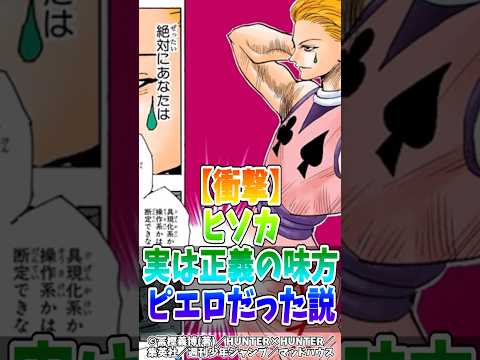
After 15 years of following Hunter x Hunter, a deep analysis reveals that Hisoka—the series’ most morally ambiguous character—may actually function as a hero, not through intention, but through the tangible results of his actions that consistently aid the protagonist Gon and his allies.
What Happened
A comprehensive character analysis of Hisoka from Hunter x Hunter examines whether this seemingly villainous figure can be classified as a “hero” based on his actions throughout the series. The analysis traces Hisoka’s behavior across multiple story arcs—from the Heavens Arena, through the Hunter Exam, to the Chimera Ant arc—revealing a pattern of conduct that, despite his violent nature and unpredictable morality, consistently results in aiding Gon and his companions.
Why It Matters
Hisoka represents a critical evolution in anime and manga character design: the morally ambiguous figure whose actions defy simple categorization as “good” or “evil.” Understanding Hisoka’s character challenges viewers to reconsider what constitutes heroism and justice. Rather than relying on stated intentions or social morality, this analysis suggests that results-based morality—where actions are judged by their outcomes rather than their motivations—offers a more nuanced framework for understanding complex characters. This approach has become increasingly prevalent in modern anime and manga, making Hisoka’s character type essential to contemporary storytelling analysis.
Background
Hunter x Hunter, created by Yoshihiro Togashi, is renowned for its morally complex characters and ambiguous narrative structure. The series deliberately avoids clear distinctions between good and evil, instead presenting characters whose motivations remain partially obscured. Hisoka, introduced early in the series, initially appears as an antagonist—a dangerous, unpredictable fighter with unclear allegiances. However, across the series’ major arcs, his actions repeatedly benefit the protagonists, creating a contradiction between his apparent nature and his actual impact on the story.
Key Points
- Heavens Arena Arc: Hisoka deliberately trains Gon, pushing him from the 200th to 300th floor, directly contributing to Gon’s growth and subsequent success in the Hunter Exam.
- Hunter Exam Arc: Despite being positioned as a threat, Hisoka repeatedly saves Killua from dangerous situations, contradicting typical antagonist behavior.
- Chimera Ant Arc: Hisoka engages in combat with the Royal Guard with no direct personal benefit (“zero return”), suggesting motivations beyond self-interest.
- Personal Code: Hisoka maintains an unspoken rule of not killing ordinary civilians, indicating an internal ethical framework despite his violent nature.
- Character Ambiguity: Togashi’s deliberate narrative design leaves Hisoka’s true intentions unclear, allowing multiple interpretations of his character.
- Fan Discourse: Online communities regularly debate the “Hisoka is actually good” theory, with substantial evidence supporting both supportive and critical interpretations.
Detailed Analysis
The Heavens Arena: Architect of Gon’s Development
The Heavens Arena arc provides the foundation for the “Hisoka as hero” thesis. Rather than simply defeating Gon, Hisoka systematically elevates his opponent’s abilities. This behavior contradicts conventional antagonist logic, where enemies typically seek to eliminate or weaken protagonists. Instead, Hisoka invests in Gon’s development, pushing him to fight stronger opponents and refine his combat techniques.
This pattern suggests a calculated strategy: by strengthening Gon, Hisoka ensures a more formidable future opponent. However, the practical result remains unchanged—Gon becomes significantly stronger, directly enabling his subsequent success in the Hunter Exam. Intent and outcome diverge, yet the outcome unambiguously favors the protagonist.
The Hunter Exam: Protecting the Protagonist’s Ally
During the Hunter Exam, Killua faces multiple life-threatening situations. Hisoka intervenes repeatedly, saving Killua from danger. This behavior is particularly significant because eliminating Killua would logically weaken Gon, providing Hisoka with a strategic advantage. Instead, Hisoka preserves Killua’s life.
Comparative analysis with other anime antagonists reveals the uniqueness of this pattern. In Attack on Titan, the Beast Titan actively eliminates allies of the protagonists. In Demon Slayer, the Upper Moons pursue systematic destruction of the heroes’ support network. Hisoka’s behavior diverges fundamentally—he protects rather than eliminates.
The Chimera Ant Arc: Action Without Personal Gain
The Chimera Ant arc presents perhaps the most compelling evidence for Hisoka’s heroic function. When engaging the Royal Guard, Hisoka participates in combat with no direct personal benefit. This represents a significant departure from his established pattern of seeking strong opponents for personal satisfaction.
The absence of self-interest in this arc suggests a shift in motivation. Hisoka’s participation reduces the burden on Gon and his allies, increasing their survival probability. While his ultimate intentions remain unclear, the measurable impact of his actions unambiguously supports the protagonists.
The Contradiction: Killer and Protector
The Unspoken Code
Hisoka maintains a clear ethical boundary: he does not kill ordinary civilians. This self-imposed rule distinguishes him from purely malevolent characters. Compared to figures like Lelouch from Code Geass or Light from Death Note—both willing to sacrifice civilians for their goals—Hisoka demonstrates restraint grounded in personal ethics rather than social morality.
This code suggests an internal moral framework, albeit one divorced from conventional justice. Hisoka operates by his own rules rather than society’s, yet those rules contain genuine ethical content.
The Violence Paradox
Hisoka’s indiscriminate killing during the Hunter Exam presents a direct contradiction to the “hero” interpretation. His violence is real, his victims numerous, and his methods brutal. This cannot be reconciled away through narrative reframing.
However, the results-based analysis reveals a paradox: his violence, while morally indefensible in isolation, produces outcomes that benefit the protagonists. His victims are primarily other exam candidates, reducing competition for Gon and his allies. The action remains ethically questionable, yet its consequences align with protagonist interests.
This pattern mirrors characters like Erwin Smith from Attack on Titan or Major Armstrong from Fullmetal Alchemist—figures who employ morally questionable methods while ultimately serving justice. The distinction lies in intent: Erwin and Armstrong consciously pursue justice through difficult means, while Hisoka pursues personal satisfaction through means that coincidentally serve justice.
Creator Intent and Character Design
Togashi’s Philosophy of Ambiguity
Yoshihiro Togashi deliberately constructs Hunter x Hunter around moral ambiguity. The series resists clear categorization of characters as good or evil, instead presenting figures whose motivations remain partially concealed. Hisoka exemplifies this design philosophy—he is simultaneously antagonist and ally, threat and benefactor, selfish and oddly principled.
This ambiguity serves a narrative function: it compels readers to engage in active interpretation rather than passive consumption. Characters become subjects of debate rather than fixed entities, extending the series’ intellectual engagement beyond the page.
The Jester Archetype
Hisoka’s characterization as a clown or jester carries symbolic weight. In classical literature, from Shakespeare onward, the jester speaks truth while appearing foolish. Hisoka similarly operates outside social convention while maintaining an internal logic that, while unconventional, contains genuine consistency.
The jester archetype suggests that Hisoka’s apparent chaos masks calculated behavior. His “game-playing” may represent a more honest engagement with reality than the social pretense of conventional morality. From this perspective, his actions reflect authentic choice rather than social conditioning.
Comparative Character Analysis
| Series | Character | Moral Position | Action Pattern | Outcome |
|---|---|---|---|---|
| Hunter x Hunter | Hisoka | Ambiguous | Self-interest with ethical boundaries | Incidentally aids protagonists |
| Attack on Titan | Erwin Smith | Justice-oriented | Strategic and calculated | Serves humanity’s interests |
| Code Geass | Lelouch | Rebel/Utilitarian | Ends justify means | Collateral damage to civilians |
| Demon Slayer | Muzan Kibutsuji | Evil | Domination and exploitation | Harm to humanity |
This comparison reveals Hisoka’s unique position: he occupies a category of “results-based hero” distinct from both intentional justice-seekers and pure antagonists. Unlike Erwin, he does not consciously pursue justice. Unlike Lelouch, he does not deliberately harm innocents. His position is genuinely singular.
Industry Trends and Character Evolution
Over the past five years, anime and manga have increasingly featured morally ambiguous characters as central figures. Zeke Yeager from Attack on Titan, Gojo Satoru from Jujutsu Kaisen, and Armin Arlert from Attack on Titan all demonstrate complex motivations that resist simple moral categorization. Hunter x Hunter pioneered this character type in the early 2000s, predating the current trend by nearly two decades.
Hisoka’s character design anticipated a fundamental shift in how audiences engage with narrative. Rather than expecting clear moral frameworks, contemporary viewers have learned to tolerate and even appreciate ambiguity. This evolution reflects broader cultural shifts toward moral relativism and away from absolute ethical categories.
Perspectives
The Supportive Interpretation
Proponents of the “Hisoka is a hero” thesis emphasize measurable outcomes: Gon’s development in Heavens Arena, Killua’s survival during the Hunter Exam, and Hisoka’s participation in the Chimera Ant conflict. They argue that regardless of motivation, results constitute the truest measure of moral worth. From this perspective, Hisoka functions as a hero because his actions produce heroic outcomes.
The Critical Interpretation
Critics counter that intention matters fundamentally to moral evaluation. Hisoka’s violence during the Hunter Exam, his indifference to civilian casualties (within his stated boundaries), and his apparent self-interest in seeking strong opponents disqualify him from heroic status. They argue that coincidental benefit does not constitute heroism, and that Hisoka should be understood as a morally corrupt individual whose actions happen to align with protagonist interests.
The Nuanced Position
A third perspective acknowledges both dimensions: Hisoka is neither hero nor villain in conventional terms, but rather a character whose existence challenges the adequacy of these categories. He demonstrates that moral reality may be more complex than binary frameworks allow, and that individuals can simultaneously embody contradictory qualities.
Online Community Response
The “Hisoka is actually good” thesis generates consistent engagement across online platforms. Twitter discussions under #HisokaJusticeTheory regularly attract substantial participation. Reddit’s r/HunterxHunter community features periodic threads debating Hisoka’s moral status, with evidence marshaled from across the series’ narrative.
5channel’s Hunter x Hunter threads frequently spawn discussions questioning whether Hisoka functions as a de facto ally. YouTube comments on analysis videos demonstrate divided opinion, with thoughtful arguments presented on both sides of the debate.
This sustained engagement reflects the series’ deliberate narrative design. Togashi’s refusal to fully clarify character motivations creates interpretive space that audiences actively inhabit. Hisoka’s ambiguity is not accidental but structural—a feature rather than a bug.
Insights
The Hisoka analysis reveals fundamental questions about morality, heroism, and narrative meaning. If a character’s actions consistently produce heroic outcomes, does motivation matter? Can someone be a hero without intending to be? Does results-based morality offer a more honest framework than intention-based systems?
Hisoka suggests that these questions lack simple answers. He functions as a hero in practice while remaining morally suspect in principle. This contradiction is not resolvable through conventional ethical frameworks—it requires acceptance of genuine ambiguity.
The character also demonstrates how modern storytelling has evolved beyond binary moral categories. Contemporary audiences increasingly recognize that real human behavior resists simple classification, and that fictional characters reflecting this complexity offer more sophisticated engagement with ethical questions.
Ultimately, whether Hisoka qualifies as a “hero” depends on which definition of heroism one accepts. If heroism means producing beneficial outcomes, he qualifies. If it requires moral intention, he does not. The series’ refusal to resolve this ambiguity may be its most important statement: that moral reality is genuinely complex, and that simplistic categorization often obscures rather than illuminates truth.
Future narrative developments—particularly a potential confrontation between Gon and Hisoka—may clarify his true motivations. Until then, Hisoka remains what Togashi designed him to be: a character whose meaning remains genuinely open to interpretation, inviting continued analysis and debate.