▶ Watch the original YouTube video
Why Kamille Bidan’s “Newtype Supreme” Is About Empathy, Not Combat Power
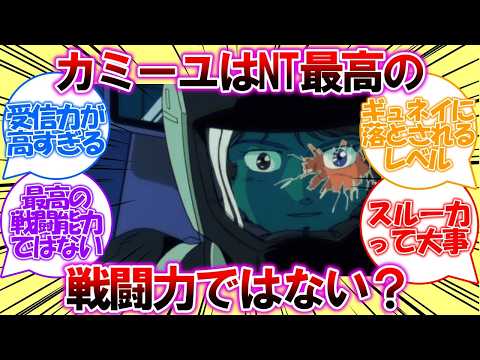
In Mobile Suit Z Gundam, protagonist Kamille Bidan’s declaration of “Newtype supreme” is widely misunderstood as a statement of combat superiority. However, director Tomino Yoshiyuki intended it to express something far more tragic: the extreme vulnerability that comes from unlimited empathic capacity. This analysis explores how Kamille’s greatest strength—his ability to directly sense others’ emotions—becomes his deepest weakness.
What Happened
Mobile Suit Z Gundam presents Kamille Bidan, a young Newtype pilot whose exceptional abilities are fundamentally different from previous Newtype protagonists like Amuro Ray. While Amuro’s Newtype power enables him to understand and communicate with others, Kamille’s manifests as an overwhelming capacity to directly absorb the emotions and experiences of those around him. This distinction is crucial: Kamille doesn’t merely understand others—he becomes emotionally merged with them, losing his psychological boundaries in the process.
The phrase “Newtype supreme” appears in the series as a statement of Kamille’s exceptional status, but director Tomino uses it ironically. Rather than celebrating combat prowess, the phrase encapsulates the tragedy of a human being whose natural psychological defenses have been stripped away, leaving him vulnerable to emotional devastation.
Why It Matters
Understanding Kamille’s character reveals Tomino’s sophisticated exploration of human psychology and the dangers of unlimited empathy. In contemporary society, the concept of “empathic fatigue”—the mental exhaustion that results from over-identifying with others’ suffering—has become increasingly relevant. Kamille’s portrayal predates modern psychological research on this phenomenon by decades, yet captures its essence perfectly.
The analysis also demonstrates how Tomino deliberately subverts the typical mecha anime formula, where protagonist strength is measured by combat capability. By making Kamille’s greatest ability simultaneously his greatest liability, Tomino creates a more nuanced and psychologically realistic portrayal of human limitation. This approach influenced how subsequent Gundam series would conceptualize Newtype abilities.
Background
Mobile Suit Z Gundam (1985-1986) continues the Universal Century timeline established by the original Mobile Suit Gundam. The series introduces Kamille Bidan as a young civilian who becomes a Newtype pilot for the AEUG resistance movement. Unlike Amuro Ray, who was trained as a soldier, Kamille develops his Newtype abilities organically and without formal military conditioning.
Tomino has stated that Z Gundam’s character relationships were modeled on workplace dynamics, emphasizing the complexity of human interaction over simple heroic narratives. This approach extends to how Newtype abilities are portrayed: rather than serving as a path to enlightenment or superiority, they become a source of psychological torment.
The series culminates in Kamille’s mental breakdown, a rare and controversial ending for a mecha anime protagonist. This outcome was not accidental but rather the logical conclusion of Tomino’s thematic exploration of empathy’s limits.
Key Points
- Newtype redefined: Kamille’s Newtype ability represents the extreme of empathic capacity—the direct sensing of others’ emotions—rather than combat superiority or strategic advantage.
- Psychological vulnerability: Kamille lacks the psychological defense mechanisms that normally protect humans from emotional overwhelm. His mind functions as an open “security hole,” absorbing others’ feelings without filtration.
- Contrast with Amuro: While Amuro’s Newtype power enables understanding and dialogue, Kamille’s leads to emotional merger and loss of self. These represent fundamentally different interpretations of what Newtype consciousness means.
- The Haman comparison: Haman Karn, another Newtype, interprets her abilities as combat tools and actively resists emotional connection. Her rejection of empathy contrasts sharply with Kamille’s inability to establish boundaries.
- Information filtering: As humans mature, they develop the ability to process and disregard irrelevant information. Kamille never acquires this skill, remaining perpetually overwhelmed by emotional input.
- Thematic purpose: Kamille’s suffering is not a character flaw but rather the central point of Z Gundam—an exploration of how unlimited empathy destroys individual identity.
Comparative Analysis: Newtype Across Gundam Series
The definition of “Newtype” varies significantly across Gundam series and directors. Amuro Ray’s interpretation emphasizes mutual understanding and the possibility of peace through communication. Char Aznable’s version focuses on revolutionary potential and human evolution. Kamille’s represents something entirely different: the tragedy of emotional permeability.
Garrod Ran from Mobile Suit Gundam X shares Kamille’s empathic nature but develops what might be called “information filtering ability”—the capacity to feel others’ pain while maintaining psychological boundaries. This crucial difference allows Garrod to survive and grow, whereas Kamille experiences mental collapse.
Kira Yamato from Mobile Suit Gundam SEED possesses Newtype-like intuitive combat abilities, but these manifest as tactical superiority rather than empathic connection. This represents yet another interpretation of Newtype consciousness, one focused on physical capability rather than emotional sensitivity.
| Character | Newtype Ability Definition | Combat Capability | Psychological State |
|---|---|---|---|
| Amuro Ray | Understanding and dialogue | Very High | Relatively Stable |
| Kamille Bidan | Emotional merger with others | Moderate | Severely Unstable |
| Garrod Ran | Empathy with information filtering | High | Progressively Stable |
| Kira Yamato | Intuitive combat ability | Very High | Conflicted but Stable |
Haman Karn: The Alternate Path
Haman Karn represents what might have been Kamille’s fate had he received military conditioning. Both are Newtypes capable of sensing others’ emotions, but Haman interprets this ability as a tactical tool and actively rejects emotional connection. Where Kamille is overwhelmed by others’ feelings, Haman weaponizes them.
Haman’s response to Kamille’s empathic nature is to exploit it—she deliberately projects her own emotional pain into his consciousness, knowing his inability to establish boundaries will result in psychological destruction. This cruel strategy succeeds precisely because Kamille cannot filter or reject what he receives.
The contrast between these two characters illustrates Tomino’s argument: Newtype ability itself is morally neutral. What determines its outcome is whether the individual develops psychological defenses and maintains individual identity. Haman survives through emotional compartmentalization; Kamille is destroyed by his inability to do so.
Psychological Interpretation: Empathy and Identity
Kamille’s condition parallels the psychological phenomenon of “empathic fatigue” or “compassion fatigue,” where individuals who over-identify with others’ suffering experience severe mental health consequences. Modern psychology recognizes that healthy empathy requires the ability to feel others’ pain while maintaining psychological boundaries—a skill Kamille never develops.
The series suggests that this is not merely a personal failing but rather the inevitable consequence of Newtype consciousness taken to its extreme. If Newtype ability means the dissolution of psychological barriers between individuals, then unlimited Newtype capacity necessarily results in the loss of individual identity.
This interpretation aligns with Tomino’s stated approach of modeling character relationships on workplace dynamics. In any human relationship, the ability to “let things pass”—to receive information without being overwhelmed by it—is essential for psychological health. Kamille’s inability to develop this skill makes him fundamentally unsuited to human interaction, despite his extraordinary sensitivity to others’ needs.
Insights
Tomino’s portrayal of Kamille Bidan challenges fundamental assumptions about strength and superiority in mecha anime. By making the protagonist’s greatest ability simultaneously his greatest vulnerability, Tomino creates a psychologically sophisticated narrative about the limits of human connection.
The phrase “Newtype supreme” becomes deeply ironic: Kamille possesses the most developed empathic capacity in the series, yet this supremacy destroys him. Tomino suggests that unlimited empathy, without the psychological mechanisms to process and compartmentalize it, is not a path to enlightenment but to annihilation.
The series also demonstrates Tomino’s humanistic philosophy. Rather than portraying Kamille’s breakdown as final and absolute, the narrative suggests the possibility of recovery. This reflects Tomino’s belief that human consciousness, while fragile, possesses resilience. Kamille is broken but not irreparably destroyed—a conclusion that balances psychological realism with hope.
For contemporary audiences, Kamille’s struggle resonates with modern discussions of mental health, emotional labor, and the dangers of over-identification with others’ suffering. Tomino’s 1985 analysis of these issues remains remarkably relevant, demonstrating how serious science fiction can explore psychological and philosophical questions with greater depth than conventional drama.
Ultimately, Z Gundam uses the science fiction framework of Newtype abilities to examine a fundamentally human question: How do we maintain individual identity while remaining connected to others? Kamille’s tragic answer—that unlimited empathy destroys the self—remains one of anime’s most profound meditations on human limitation and psychological vulnerability.