▶ Watch the original YouTube video
Battle Operation 2’s Gouf Flight Type Sparks Community Debate: How a Forgotten Mobile Suit Became Relevant Again
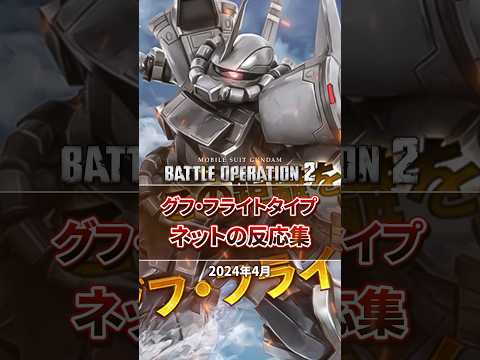
The Gouf Flight Type, a classic low-cost mobile suit in Battle Operation 2, has recently gained significant attention across the gaming community. With over 500 hours invested in the game and 15 years of mobile gaming experience, one veteran player analyzes why this once-overlooked unit is experiencing a renaissance and what it reveals about modern game balance design.
What Happened
The Gouf Flight Type, a low-cost mobile suit in the tactical mobile game Battle Operation 2, has become the subject of widespread online discussion and positive re-evaluation. Players across Twitter, YouTube, Reddit, and dedicated forums have begun sharing success stories and tactical guides for the unit, marking a significant shift from its previous status as an underutilized option. This resurgence reflects broader changes in the game’s meta and player understanding of unit mechanics.
Why It Matters
The Gouf Flight Type’s revival illustrates a fundamental principle in live-service game design: unit viability is determined not solely by raw statistics, but by player perception, meta shifts, and tactical knowledge. This phenomenon demonstrates how games maintain long-term engagement by creating opportunities for players to “discover” hidden strengths in existing content. For Battle Operation 2 specifically, the Gouf Flight Type’s renewed relevance signals the developer’s commitment to maintaining diversity in the low-cost unit category and ensuring new players have viable options that align with their favorite Gundam series units.
Background
Battle Operation 2 launched as a free-to-play tactical mobile game based on the Gundam franchise. The game emphasizes team-based combat with units organized by cost brackets, each serving distinct tactical roles. The Gouf Flight Type was implemented as a low-cost generalist unit (estimated 350–400 cost) but initially received minimal attention from the player base.
The author began playing Battle Operation 2 seriously in late 2020, approximately two years after launch, and has accumulated over 500 hours of gameplay. During this period, the author witnessed a similar phenomenon with the Gm Light Armor unit, which was initially dismissed as “trash tier” but proved viable through optimized tactics and playstyle adaptation. This prior experience provides context for understanding the Gouf Flight Type’s current trajectory.
Between 2023 and 2024, Battle Operation 2 underwent significant balance adjustments favoring low-cost units. This period coincided with increased community discussion about previously overlooked units becoming competitively viable.
Key Points
- The Gouf Flight Type represents a “comeback” for a classic Gundam series unit, capitalizing on player nostalgia while offering genuine tactical viability in the current meta.
- Unit evaluation in Battle Operation 2 is driven by player perception and tactical knowledge rather than raw performance statistics alone.
- The low-cost unit category has expanded to include multiple viable playstyles: high-mobility units (Zaku II, Gouf Flight Type), firepower-focused units (Gm Command, Gm Light Armor), and balanced units (Gm II, Dom Tropen).
- The Gouf Flight Type excels in high-mobility gameplay, rewarding players who prioritize positioning and evasion over direct engagement.
- Community-driven discovery of unit strengths creates psychological satisfaction for players, encouraging continued engagement and experimentation.
- The resurgence follows a predictable pattern: initial underutilization → player discovery → content creator coverage → mainstream adoption → potential balance adjustments.
Timeline
- Late 2020: Author begins serious Battle Operation 2 gameplay following two years of post-launch development.
- 2021 (mid-year): Gm Light Armor unit implemented; initially receives poor community reception but proves viable through tactical optimization.
- 2023–2024: Battle Operation 2 implements comprehensive low-cost unit balance improvements; Gouf Flight Type benefits from meta shifts.
- Recent period: Gouf Flight Type gains significant community attention across social media, forums, and video platforms.
Perspectives
Community Perception: Twitter users report positive experiences with the Gouf Flight Type, with phrases like “stronger than expected” and “surprisingly fun” becoming common. Initial skepticism persists among some players who correctly identify the unit as skill-dependent, requiring strong positioning and mobility management. YouTube comments increasingly feature personal success stories, while dedicated forum threads discuss optimal loadouts and tactical approaches.
Game Design Perspective: The Gouf Flight Type’s resurgence reflects intentional design decisions by the development team. The unit’s strength was not dramatically altered; rather, players developed deeper understanding of its optimal usage. This suggests the developers designed the unit to reward tactical mastery while remaining accessible to new players. The unit serves multiple strategic objectives: diversifying low-cost options, appealing to new players through recognizable Gundam series units, and maintaining meta-game cycles that prevent stagnation.
Competitive Context: The Gouf Flight Type occupies a specific niche within the low-cost unit ecosystem. Its high mobility makes it superior to comparable units in speed-focused gameplay, though it sacrifices firepower compared to dedicated damage dealers. This specialization creates meaningful choices for players rather than establishing a single optimal unit.
Insights
The Gouf Flight Type’s renaissance reveals several important truths about live-service game design. First, unit viability exists at the intersection of objective performance and subjective player knowledge. The Gouf Flight Type did not fundamentally change; players simply developed better understanding of how to employ it effectively. This demonstrates that game developers can extend content lifespan through balance adjustments that shift meta conditions rather than requiring constant new unit releases.
Second, the phenomenon illustrates the psychological appeal of discovery in games. Players derive satisfaction not from using objectively strongest units, but from discovering hidden strengths that others have overlooked. This emotional investment creates community engagement that extends far beyond raw competitive advantage. The Gouf Flight Type benefits from this dynamic: early adopters experience the satisfaction of “finding” a strong unit before mainstream recognition, while later players enjoy the social validation of joining a growing community.
Third, the unit’s success reflects broader industry trends in mobile gaming. Games like Puzzle & Dragons and Granblue Fantasy maintain engagement by periodically strengthening early-game units, combining nostalgia with contemporary balance. Battle Operation 2 follows this proven model, leveraging the Gundam franchise’s extensive unit roster to create recurring discovery moments.
Looking forward, the Gouf Flight Type’s trajectory will likely follow a predictable pattern. Increased usage rates will attract professional players and content creators, generating tactical guides and strategy videos. This mainstream attention may eventually prompt balance adjustments if the unit becomes overutilized. However, the ideal outcome would involve parallel strengthening of competing low-cost units, ensuring players maintain genuine choice rather than facing a single dominant option.
The Gouf Flight Type ultimately exemplifies how thoughtful game design creates emergent moments of player discovery. Rather than dictating unit viability through patch notes, the developers created conditions where players could independently recognize value in existing content. This approach generates organic community discussion, extends content relevance, and maintains the psychological engagement that sustains long-term player investment in live-service games.