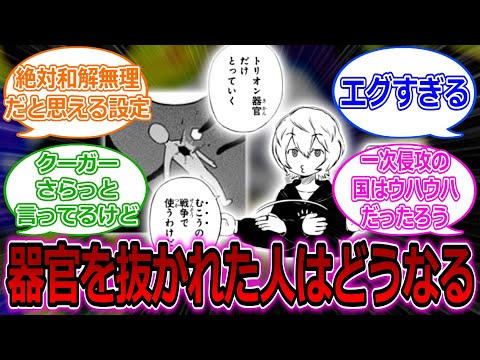
▶ Watch the original YouTube video
World Trigger presents itself as a conventional battle shonen manga about defending humanity from interdimensional invaders, but deeper analysis reveals a dystopian narrative centered on resource exploitation, forced conscription of minors, and the commodification of human life. Fan communities have begun dissecting the series’ disturbing implications, uncovering a world where survival depends on extracting life-force organs and where young soldiers are treated as expendable military assets.
- What Happened
- Why It Matters
- Background
- Key Points
- The Expedition Arc as Narrative Turning Point
- Border as a Militaristic Institution
- Trion Organs and Biological Control
- Neighbor Nations and Resource Scarcity Economics
- Fan Community Response and Coping Mechanisms
- Broader Implications for Shonen Manga
- Insights
What Happened
A video essay examining World Trigger’s underlying worldbuilding has sparked widespread discussion within fan communities about the series’ genuinely dark themes. The analysis focuses on how the manga normalizes practices that would constitute war crimes in any realistic context: the extraction of Trion organs (which results in death), the forced conscription of teenagers, and the systematic exploitation of conquered territories. Fans have responded by developing increasingly sophisticated interpretations of the series’ implicit commentary on militarism, resource scarcity, and human expendability.
Why It Matters
World Trigger represents a rare example of a mainstream shonen manga that embeds profound ethical questions within an ostensibly conventional adventure narrative. Unlike works such as Attack on Titan, which explicitly critiques authoritarian systems, World Trigger presents its dystopian elements as natural consequences of its world’s logic. This approach forces readers to independently recognize the moral bankruptcy of the systems depicted. The fan response demonstrates how sophisticated modern manga audiences have become in identifying and analyzing implicit ideological content. Understanding these reactions provides insight into how contemporary readers engage with complex narratives and extract meaning from subtext.
Background
World Trigger follows Border, an organization ostensibly dedicated to protecting humanity from invasions by creatures called Neighbors from parallel dimensions. The series begins as a conventional military academy narrative but gradually reveals the horrifying infrastructure underlying its world. The Neighbor nations practice systematic organ extraction (Trion organs, which are essential to human survival), maintain populations through resource-based population control, and treat conquered territories as resource extraction zones. Border itself, while presented as humanity’s protector, conscripts teenagers without parental consent and deploys them in life-threatening combat situations. The series’ expedition arc—where Border plans to invade a Neighbor territory—threatens to escalate the narrative from school-based combat to full-scale warfare with predictable casualties.
Key Points
- Trion Organ Extraction as Murder: In Neighbor nations, extracting a person’s Trion organ—the biological source of life force—is functionally equivalent to execution, yet treated as a standard military practice.
- Resource-Based Population Management: Neighbor societies face chronic Trion resource scarcity, leading to systematic population control where warfare serves as a mechanism for reducing civilian populations.
- Militarization of Minors: Border recruits and deploys teenagers in combat roles, often without parental knowledge or consent, treating young soldiers as military assets rather than protected minors.
- Systemic Brainwashing and Coercion: Captured populations are forced into compliance through threats of Trion organ extraction, creating a biological system of enslavement.
- Neo-Colonial Exploitation: Multiple Neighbor nations compete for resources and human populations in conquered territories, establishing a multi-layered system of exploitation comparable to historical colonialism.
- Normalization of Atrocity: The series presents these dystopian elements as inevitable features of its world rather than moral failures, compelling readers to recognize and question systems they might otherwise accept.
The Expedition Arc as Narrative Turning Point
Fan analysis identifies the upcoming expedition arc as a critical moment where World Trigger may transition from school-based adventure to genuine war narrative. Readers predict that after 30 volumes of developing emotional attachment to B-rank Border members, the expedition will introduce significant character deaths. This structure parallels successful narrative transitions in works like Hunter x Hunter, where the shift from Greed Island to the Chimera Ant arc fundamentally altered the series’ tone and thematic focus. Some fans speculate that certain characters, such as Shinoda, may be absent from the expedition due to precognitive knowledge of their own deaths—a narrative device that would reinforce the series’ exploration of inevitable sacrifice.
Border as a Militaristic Institution
Fan communities have identified fundamental contradictions within Border’s institutional structure. Superficially, Border functions as a defensive organization protecting humanity. Operationally, it conscripts teenagers into military service, deploys them in combat, and treats soldiers as expendable assets. Ethically, it operates without parental consent or oversight. Strategically, it abandons soldiers in enemy territory when tactically advantageous. This contradiction mirrors critiques of militarism in works like Metal Gear Solid, but World Trigger presents these contradictions implicitly rather than explicitly, requiring readers to recognize the moral failure independently. The observation that “parents would absolutely oppose this” highlights how Border’s operations depend on secrecy and the absence of civilian oversight—hallmarks of authoritarian military structures.
Trion Organs and Biological Control
The Trion organ system represents World Trigger’s most disturbing innovation in depicting human exploitation. Unlike conventional organs, Trion organs lack visible physical form yet are absolutely essential to survival. Their extraction functions simultaneously as murder, enslavement (through the threat of extraction), and resource extraction. This creates a biological mechanism of control more absolute than conventional coercion: resistance becomes literally impossible when the threat is death through organ removal. Fan analysis recognizes this as more totalizing than the slavery systems depicted in Attack on Titan, where resistance remains theoretically possible. The Trion organ system eliminates even the possibility of resistance, making it a perfect metaphor for absolute state control over human bodies and lives.
Neighbor Nations and Resource Scarcity Economics
World Trigger’s Neighbor nations operate under chronic Trion resource scarcity, which structures their entire social and military organization. This scarcity produces three interconnected consequences: population limitation (only sustainable populations can be supported), resource competition (nations must extract resources from rivals and conquered territories), and human instrumentalization (individuals with Trion capacity become strategic resources). This system parallels the food scarcity mechanisms in Attack on Titan but operates more systematically and with greater ideological naturalization. Readers have identified this as a form of neo-colonialism, where multiple imperial powers compete for resources and populations in peripheral territories. The Unreleased Trigger territories function as extraction zones where multiple Neighbor nations compete for human and material resources, with Border participating in this exploitation while maintaining a veneer of humanitarian concern.
Fan Community Response and Coping Mechanisms
Fan communities engage with World Trigger’s dark implications through humor and ironic distance. Readers propose increasingly absurd scenarios—such as territories shrinking until the world itself ceases to exist—as a means of processing the series’ genuinely disturbing worldbuilding. This represents a common coping mechanism in fan communities discussing works with dystopian or ethically compromised premises: converting serious analysis into jokes creates psychological distance from disturbing implications. However, beneath this humor lies sophisticated textual analysis. Fans demonstrate complete understanding of the series’ implicit commentary while simultaneously maintaining ironic detachment, suggesting that modern manga audiences are capable of holding multiple interpretive positions simultaneously.
Broader Implications for Shonen Manga
World Trigger occupies a unique position within contemporary shonen manga. Most works in the genre present clear moral binaries: heroes oppose villains, good fights evil, justice prevails. World Trigger instead presents a world where atrocity has become normalized, where exploitation functions as natural law, and where the protagonist’s own organization participates in systematic human rights violations. This approach forces readers to develop critical consciousness rather than passive consumption. The series demonstrates that shonen manga—a genre ostensibly aimed at young readers—can embed sophisticated political and ethical critique within conventional narrative structures. The fan response indicates that contemporary audiences recognize and appreciate this layered approach, suggesting a maturation of both the medium and its readership.
Insights
World Trigger’s true achievement lies not in depicting dystopian elements explicitly, but in normalizing them. By presenting resource scarcity, militarization of minors, and systematic exploitation as inevitable features of its world rather than moral failures, the series accomplishes something more sophisticated than conventional dystopian critique. It trains readers to recognize how systems of oppression naturalize themselves, how atrocity becomes routine, and how institutions rationalize the indefensible through appeals to necessity. The fan community’s response demonstrates that this approach succeeds: readers have independently identified the series’ implicit commentary and begun articulating its ethical implications. The upcoming expedition arc will determine whether World Trigger merely depicts these dystopian systems or actively critiques them. If the series presents character deaths as tragic consequences of systemic failure rather than inevitable sacrifices, it will elevate itself from sophisticated worldbuilding to genuine war literature. The fan anticipation surrounding this narrative turning point suggests that contemporary manga audiences are prepared for and actively seeking works that challenge their moral assumptions rather than confirm their existing values.