▶ Watch the original YouTube video
How Danbine’s Tokyo Destruction Scene Became a Turning Point in Mecha Anime History
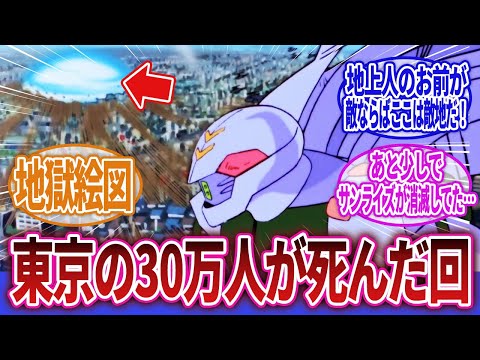
A pivotal scene in the 1983 mecha anime “Saint Seiya Danbine” depicts a catastrophic battle over Tokyo that kills 300,000 people—a moment that fundamentally challenges the genre’s typical glorification of combat. Through detailed analysis of character psychology, narrative structure, and thematic depth, this scene emerges as one of anime’s most unflinching examinations of war’s human cost and the question of responsibility.
What Happened
In “Saint Seiya Danbine,” a mecha anime directed by Yoshiyuki Tomino, a critical turning point occurs when protagonist Shou Zama and antagonist Gallia Nyanheim engage in an Aura Battler combat sequence directly above Tokyo. The battle results in 300,000 casualties—a figure that becomes central to the narrative’s moral reckoning. Unlike typical mecha anime that treat combat destruction as abstract spectacle, Danbine forces both characters and viewers to confront this death toll as a concrete, quantifiable tragedy. The scene reveals deeper structural problems within Byston Well, the parallel world from which the Aura Battlers originate, including factional conflict, merit-based competition among leaders, and a fundamental lack of accountability for actions taken on Earth.
Why It Matters
The Tokyo destruction scene represents a watershed moment in mecha anime storytelling. For decades, the genre had depicted large-scale combat with visual spectacle while remaining vague about human casualties. Danbine breaks this convention by explicitly stating a death toll and repeatedly referencing it throughout the narrative, forcing characters to grapple with moral consequences. This approach challenges the fundamental premise of mecha anime—that battles between giant robots are justified by heroic narratives—by demonstrating that such conflicts produce real, measurable suffering. The scene’s impact extends beyond its original 1983 broadcast; it continues to resonate in online discussions and influences how subsequent mecha anime address the ethics of warfare. For contemporary viewers and critics, the scene serves as a benchmark for how seriously anime can engage with the human cost of conflict.
Background
“Saint Seiya Danbine” follows Shou Zama, a teenager mysteriously summoned from Earth to the parallel world of Byston Well, where he becomes a pilot of an Aura Battler—a mecha powered by psychic energy called Aura. Byston Well operates under a complex political system dominated by competing factions and leaders motivated by personal gain rather than collective welfare. Gallia Nyanheim, a Byston Well native, becomes increasingly radicalized after being persecuted by Earth-origin inhabitants, eventually adopting the logic that Earth itself is enemy territory and therefore legitimate target for destruction. The Aura Battlers possess a critical limitation: within Byston Well, an Aura Barrier restricts their destructive power to maintain world stability. However, on Earth, this barrier does not function, allowing the machines’ full, unrestricted power to manifest. This technical detail becomes crucial to understanding how the Tokyo battle produces such catastrophic results.
Key Points
- Explicit casualty figures: The battle over Tokyo results in 300,000 deaths and injuries—a number repeatedly referenced throughout the narrative, forcing characters and viewers to confront concrete human cost rather than abstract destruction.
- Gallia’s psychological radicalization: Persecuted and cornered by Earth-origin inhabitants, Gallia rationalizes mass destruction through distorted logic, exemplifying how victimization can paradoxically transform victims into perpetrators.
- The Aura Barrier’s function: Within Byston Well, the Aura Barrier limits Aura Battler destructive capacity to preserve world stability; on Earth, this restraint vanishes, unleashing full destructive potential that even nuclear weapons cannot counter.
- Institutional irresponsibility: Byston Well leaders, including the character Jacoban, demonstrate systematic avoidance of accountability, sending Aura Battlers to Earth while disclaiming responsibility for consequences.
- Todd’s ultimate evasion: The character Todd attempts to escape moral responsibility by claiming extraterrestrial origin (“I am from the 28th planet system of Cassiopeia”), embodying the ultimate refusal to acknowledge complicity in mass death.
- Philosophical integration of consciousness and world: Byston Well operates under a principle that human consciousness and world condition are directly interconnected; therefore, escalating warfare inevitably destroys the world itself.
Narrative Analysis: The Psychology of Destruction
Gallia as a Complex Antagonist: Gallia Nyanheim functions not as a simple villain but as a tragic figure whose descent into destructive behavior mirrors real-world patterns of radicalization. Having experienced systematic persecution based on her origin, she develops what psychological theory terms “cognitive dissonance resolution”—reconciling the contradiction between viewing herself as a victim and her role as a mass killer by redefining Earth as inherently hostile territory. This psychological mechanism reflects actual patterns observed in historical and contemporary conflicts, where victimization narratives become justifications for retaliatory violence.
Shou’s Incomplete Accountability: The protagonist Shou Zama ostensibly represents the counterpoint to Todd’s evasion—a character willing to face consequences of his actions. However, the narrative remains deliberately ambiguous about whether Shou truly accepts responsibility or ultimately escapes it. The series concludes with Shou described as having “flown away somewhere,” leaving unresolved the question of whether he genuinely confronted accountability or merely evaded it through different means than Todd employed.
Institutional Failure: Byston Well’s leadership structure—characterized by factional competition, merit-based advancement, and individual self-interest—systematically produces irresponsible decision-making. Leaders dispatch Aura Battlers to Earth to advance personal agendas while maintaining psychological distance from consequences. This institutional dynamic mirrors real-world bureaucratic structures where decision-makers are insulated from direct experience of their policies’ effects.
Thematic Implications: Power Without Restraint
The Aura Barrier concept carries profound philosophical significance. Within Byston Well, the barrier functions as both literal restraint and metaphorical representation of social contract—a system of mutual limitation that preserves collective stability. When Aura Battlers operate on Earth, this restraint vanishes, and raw power becomes uncontrollable. This mirrors philosophical concepts explored in other significant anime: the AT Fields in “Neon Genesis Evangelion” represent individual boundaries that, when removed, lead to existential dissolution; the Net in “Ghost in the Shell” represents collective consciousness where individual identity dissolves. Danbine’s Aura Barrier operates similarly—it represents the social and psychological structures that prevent unlimited destruction. Its absence on Earth symbolizes the collapse of restraint when power operates without social accountability.
The principle that “Aura power and world condition are directly interconnected” reflects Eastern philosophical traditions viewing consciousness and material reality as inseparable. Within this framework, escalating warfare inevitably destroys the world because human consciousness and environmental condition are fundamentally unified. This perspective transforms warfare from a localized conflict into an existential threat to reality itself.
Internet Reception and Viewer Response
Online discussions of the Tokyo destruction scene reveal consistent thematic patterns. Viewers repeatedly question why characters survive despite causing 300,000 deaths, expressing expectation of moral consequence that the narrative deliberately withholds. This reflects viewers’ internalized moral frameworks expecting “karmic justice”—the principle that actions produce proportional consequences. Danbine’s refusal to provide this satisfaction forces confrontation with a more pessimistic reality: responsibility often remains diffuse and unpunished.
Regarding Todd specifically, viewers express complex ambivalence. Online communities frequently discuss “saving Todd” in Super Robot Wars crossover games, suggesting viewers recognize Todd as simultaneously villain, victim, and perpetrator. This multivalent response indicates sophisticated audience engagement with moral ambiguity rather than simple hero-villain binaries.
Notably, viewers recognize that Tokyo represents only one destruction among many: Paris, Las Vegas, and other cities also burn. This awareness indicates viewers comprehend the Tokyo scene not as isolated episode but as symbolic representation of global-scale warfare consequences.
Comparative Context: Danbine’s Unique Position
Within 1980s mecha anime, Danbine occupies a distinctive position regarding warfare’s human cost. “Mobile Suit Gundam,” the genre’s foundational work, depicts combat casualties but maintains greater narrative distance from specific death figures. Danbine’s explicit quantification of casualties—and repeated narrative reference to this figure—represents escalation in unflinching realism. Later works like “Mobile Suit Gundam 0080: War in the Pocket” explore similar psychological territory regarding how conflict transforms individuals, but Danbine’s focus on institutional irresponsibility and systemic avoidance of accountability distinguishes it within the genre.
The related work “Rean’s Wings” (“Rean no Tsubasa”) continues narrative threads from Danbine’s conclusion, allowing viewers to trace director Tomino’s sustained interrogation of warfare’s ethics across multiple works. Understanding Danbine as part of this larger artistic project clarifies Tomino’s consistent thematic preoccupations with responsibility, power, and the impossibility of genuine accountability within systems designed to diffuse it.
Viewing Recommendations
For viewers encountering Danbine for the first time, sequential viewing from episode one proves essential. The series deliberately establishes Byston Well’s daily life and social structures before depicting Earth-based warfare, allowing viewers to understand how abnormal and catastrophic the Tokyo battle represents. Without this foundation, Gallia appears as simple antagonist rather than tragic figure whose persecution produced radicalization.
Particular attention to Gallia’s character arc before the Tokyo scene proves crucial. Viewers who understand her progressive marginalization and persecution develop simultaneous sympathy and moral condemnation regarding her actions—a complex emotional response that deepens engagement with the narrative’s moral ambiguity.
Following Danbine with “Rean’s Wings” provides essential context for understanding Tomino’s artistic intentions. The narrative continuation clarifies what questions the original series posed and how subsequent events address (or fail to address) those questions.
Insights: Why Danbine Endures
Danbine’s continued resonance across decades reflects its fundamental rejection of mecha anime’s typical aesthetic—the glorification of combat as cathartic spectacle. Most mecha anime present battle sequences as moments of triumph where protagonists overcome obstacles and restore order. Danbine inverts this formula: combat produces 300,000 deaths, and responsibility remains perpetually unresolved. This tragic vision distinguishes Danbine within the genre.
The series’ ambiguity regarding whether Shou genuinely accepts responsibility or merely escapes it mirrors real-world patterns where powerful actors evade accountability through various mechanisms. Todd’s explicit denial of responsibility through extraterrestrial origin claims represents one evasion strategy; Shou’s mysterious departure represents another. Neither character achieves genuine moral resolution, reflecting the series’ pessimistic assessment of whether accountability is achievable within systems designed to diffuse it.
For contemporary viewers, Danbine offers crucial perspective: when consuming mecha anime or any narrative depicting large-scale conflict, viewers should ask “who suffers as a result of these battles?” and “who bears responsibility for that suffering?” Danbine provides no comforting answers to these questions, instead insisting that viewers confront the human cost of warfare without narrative resolution or moral satisfaction. This refusal to provide cathartic closure distinguishes Danbine as a work of genuine artistic seriousness within a genre often content with surface spectacle.