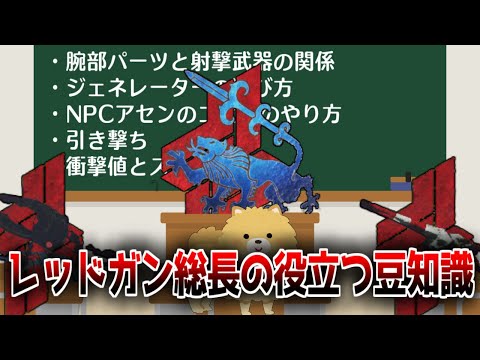
▶ Watch the original YouTube video
Armored Core 6 Beginner’s Guide: Michigan’s Commander Teaching Philosophy and Combat Techniques Explained
Armored Core 6 features a distinctive educational approach through its character Michigan’s Commander, who delivers harsh but effective guidance to new players. This analysis explores how the game’s teaching methodology combines strict instruction with practical combat mechanics, drawing parallels to FromSoftware’s design philosophy and modern gaming trends.
What Happened
Armored Core 6, developed by FromSoftware, introduces a character named Michigan’s Commander who provides beginner guidance through a harsh, critical teaching style. Rather than offering gentle tutorials, the Commander delivers blunt criticism and demands that players understand core game mechanics independently. This approach has resonated with players and sparked discussion about effective game design pedagogy.
Why It Matters
The Commander’s teaching method represents a significant shift in how modern games approach player education. In an industry that has increasingly relied on lengthy tutorials and hand-holding, Armored Core 6 reverts to a philosophy that respects player autonomy while delivering essential information. This strategy reflects broader industry trends toward player agency and self-directed learning, particularly following the success of titles like Elden Ring. Understanding this approach offers insights into contemporary game design philosophy and player expectations.
Background
FromSoftware has long championed a design philosophy centered on learning through failure rather than explicit instruction. This approach traces back to the King’s Field series and was refined through the Dark Souls franchise. Armored Core 6 extends this philosophy by introducing a character who explicitly critiques player performance while providing framework-based guidance rather than direct solutions. The game’s design encourages players to experiment, fail, and ultimately develop mastery through their own problem-solving efforts.
Key Points
- Target Assist Mechanics: Activate by pressing R3; avoid moving the camera while active to maintain lock-on effectiveness
- Generator Selection: Choose based on weapon configuration—Dafon for low-energy ammunition builds, Arquebus for energy-based weapons, and VE2020C for heavy weapons
- Stagger System Fundamentals: Stability rating is critical; use high-impact weapons like handguns, shotguns, and needle guns to break enemy posture
- Weapon Hanger Strategy: Switch weapons during reload animations to maintain continuous offense—a technique borrowed from action game design principles
- Relative Velocity Concept: Moving in the same direction as enemies reduces apparent projectile speed; moving opposite increases it
- Philosophical Approach: The Commander teaches frameworks for thinking rather than providing direct answers, encouraging independent decision-making
The Commander’s Teaching Philosophy
Michigan’s Commander employs a counterintuitive educational strategy. Rather than explaining every mechanic, the Commander provides critical feedback that forces players to engage deeply with game systems. This harsh tone serves a psychological function—it captures player attention and embeds information more effectively than conventional tutorials.
The approach mirrors Dark Souls’ design principle of learning through failure. When the Commander advises on target assist mechanics, players must experience the consequences of ignoring this guidance before understanding its importance. This experiential learning creates stronger retention than passive instruction.
Notably, the Commander teaches conceptual frameworks rather than prescriptive solutions. When discussing generator selection, the guidance provides criteria for decision-making rather than declaring a single correct choice. This respects player agency while ensuring they understand the underlying system logic.
Comparative Analysis: Game Design Across Franchises
| Game | Teaching Method | Characteristic |
| Armored Core 6 | Character-driven critical instruction | Strong emotional impact through harsh feedback |
| Dark Souls | Learning through failure | Minimal direct guidance; trial-and-error emphasis |
| Monster Hunter | Tutorial plus progressive difficulty | Structured learning with gradual challenge escalation |
| Metal Gear Solid 3 | Preparation phase with free choice | Emphasizes player judgment and strategic planning |
| Sekiro: Shadows Die Twice | Framework-based boss guidance | Provides strategic direction without prescriptive solutions |
Armored Core 6 synthesizes elements from multiple design traditions. It incorporates Dark Souls’ failure-based learning, Monster Hunter’s progressive difficulty structure, and Metal Gear Solid’s emphasis on player decision-making. The result is a hybrid approach that maintains challenge while providing strategic scaffolding.
Industry Context and Modern Gaming Trends
The 2010s saw most games adopt player-guidance-focused design, featuring lengthy tutorials and explicit objectives. However, the 2020s have witnessed a reaction against this approach. The massive success of Elden Ring demonstrated that players actively desire autonomy and challenge.
Armored Core 6 positions itself at the forefront of this trend reversal. The Commander’s harsh guidance respects player intelligence while maintaining accessibility through framework-based instruction. This balances the industry’s competing demands: supporting new players without insulting experienced ones.
The game also incorporates physics-based concepts into its teaching. Explanations of relative velocity ground game mechanics in real-world physics principles, helping players understand that the game world operates according to consistent logical rules. This approach, similar to Breath of the Wild’s physics-centric design, deepens player comprehension and enables creative problem-solving.
Practical Recommendations for New Players
Mission Progression: Complete missions in order. The difficulty curve is deliberately structured to introduce concepts progressively.
Generator Selection Priority: Invest time in understanding generator mechanics early. Matching generators to weapon configurations dramatically improves combat effectiveness. For ammunition-focused builds, select Dafon (dfgn083) for its high capacity and low recharge delay. For energy weapon builds, choose Arquebus (VE202) for its superior energy weapon compatibility.
Stagger System Mastery: Understanding stagger mechanics creates a 3x+ performance difference between informed and uninformed players. Prioritize learning which weapons generate high impact values and practice breaking enemy posture consistently.
Supplementary Learning: Playing Armored Core 5 provides valuable context, as AC6 inherits most of its core mechanics from its predecessor.
Community Reception and Analysis
Online communities have responded positively to the Commander’s teaching approach. Twitter users frequently report that while the harsh tone initially seemed off-putting, following the advice consistently improved their performance. YouTube comments emphasize the method’s effectiveness, with many players reporting successful completion of difficult missions after implementing the Commander’s guidance.
Consensus on forums and discussion boards suggests that the Commander’s advice should be taken seriously, particularly regarding stagger mechanics. Players widely acknowledge that understanding these systems fundamentally changes difficulty perception.
This positive reception stems from the advice’s substance rather than its delivery. The Commander doesn’t simply explain mechanics; the guidance promotes genuine understanding of game systems. Players initially confused by the approach report satisfaction upon realizing its practical value.
Insights: The Future of Game Education
Armored Core 6’s teaching methodology represents an effective solution to a difficult design challenge: respecting player autonomy while delivering essential information. The approach succeeds because it provides frameworks for thinking rather than prescriptive answers, allowing players to feel ownership over their discoveries.
The game’s success suggests that players are ready for more sophisticated educational approaches. The industry’s historical risk aversion—favoring gentle tutorials to avoid alienating players—may be unnecessarily conservative. Armored Core 6 demonstrates that challenging but fair instruction can enhance rather than diminish player satisfaction.
However, this approach is not universally applicable. Different games and player populations may require different pedagogical strategies. Within Armored Core 6’s specific context, the harsh-but-effective method proves optimal.
Looking forward, the game’s approach may influence how other challenging titles approach player education. The balance between respecting player intelligence and providing necessary guidance represents a model worth studying and potentially adapting across the industry.