▶ Watch the original YouTube video
Analyzing Kara’s Design: Why Gundam SEED FREEDOM’s Final Boss Mobile Suit Captivates Fans
After 15 years of studying the Gundam franchise, one pattern becomes clear: the design of a final boss mobile suit can define an entire series. Kara, the non-Gundam-type antagonist mecha in Gundam SEED FREEDOM, represents a masterclass in mechanical design philosophy, combining visual impact with thematic depth that resonates with longtime fans and newcomers alike.
- What Happened
- Why It Matters
- Background
- Key Points
- Design Philosophy: Kara as Final Boss Perfection
- Design Lineage: Sazabi, Beginner Gndam, and Kara
- Ideological Transformation in SEED FREEDOM
- Fan Reception and Design Intent
- Performance Analysis: Disrupt and Kara Compared
- Antagonist Evaluation in SEED FREEDOM
- Practical Guidance for Appreciating Kara
- Broader Implications and Future Prospects
What Happened
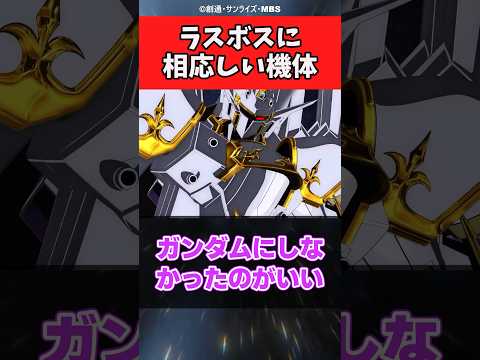
Gundam SEED FREEDOM introduced Kara as its primary antagonist mobile suit, a design choice that sparked widespread discussion among the fanbase. Unlike previous SEED series final bosses, Kara breaks from the traditional Gundam-type design philosophy, instead presenting a unique aesthetic that combines elements of past antagonist designs while establishing its own visual identity. The machine’s striking appearance—featuring black armor, red accents, gold decorative elements, and distinctive red wing-like dragoon weapons—has generated significant debate about both its visual appeal and thematic significance.
Why It Matters
Mobile suit design in Gundam serves a purpose beyond aesthetics. Each mechanical design functions as a visual representation of its pilot’s ideology, the faction’s philosophy, and the narrative themes of the entire work. Kara’s design choices—from its non-Gundam classification to its color palette to its weapon systems—communicate specific messages about the antagonistic force in SEED FREEDOM. Understanding these design decisions provides insight into the film’s thematic concerns and the evolution of the SEED franchise’s storytelling approach. For fans invested in mechanical design analysis and narrative symbolism, Kara represents a sophisticated approach to antagonist characterization through design.
Background
The Gundam franchise has a long history of iconic final boss mobile suits. The original Mobile Suit Gundam featured the Zeong, a non-Gundam-type design. Zeta Gundam’s The O and Char’s Counterattack’s Sazabi similarly eschewed Gundam-type designs for their final antagonists. However, Gundam SEED DESTINY broke this pattern by making the Destiny Gundam—a Gundam-type unit—its primary antagonist mecha. This context makes SEED FREEDOM’s choice to return to a non-Gundam-type final boss particularly significant, suggesting a deliberate narrative and thematic decision by the production team.
The SEED franchise has consistently explored themes of conflict between different ideologies, the nature of warfare, and the ambitions of various factions. SEED introduced the conflict between Naturals and Coordinators, SEED DESTINY escalated this into a quest for global unification, and SEED FREEDOM appears to present yet another ideological evolution in its antagonistic force.
Key Points
- Non-Gundam Classification as Strategic Choice: Kara’s design as a non-Gundam-type unit establishes clear ideological separation from the protagonist faction, symbolizing an independent philosophical system distinct from the heroes’ values.
- Visual Differentiation from Strike Freedom: While Kara’s design acknowledges the Strike Freedom Gundam’s influence, it establishes its own aesthetic through deliberate color choices and decorative elements that suggest power and dominance rather than freedom and elegance.
- Dragoon Deployment and Red Wings: The dramatic deployment of red wing-shaped dragoon weapons creates maximum visual impact, establishing Kara as a formidable threat while the red coloration connects it to Char Aznable’s legacy of rebellion and danger within the franchise.
- Gold Decoration as Intentional Design Choice: The seemingly poor taste gold decorative elements function as character development through design, suggesting the pilot or faction behind Kara possesses ideological emptiness and an obsession with power rather than refined philosophy.
- Design Lineage Analysis: Kara synthesizes design elements from both the Sazabi (personal ambition expressed through design) and Beginner Gndam (organizational power symbolism), creating a new aesthetic that represents a more systematic and abstract threat.
- Thematic Evolution of Antagonism: Kara’s design reflects the SEED franchise’s progression from relative ideological legitimacy (SEED) through imperial ambition (SEED DESTINY) to abstract systemic control (SEED FREEDOM).
Design Philosophy: Kara as Final Boss Perfection
The Strategic Choice of Non-Gundam Classification
The decision to make Kara a non-Gundam-type unit carries significant narrative weight. Throughout Gundam history, non-Gundam final bosses have consistently represented ideologically independent antagonistic forces. The Zeong, The O, and Sazabi all embodied complete philosophical systems opposed to the protagonist’s values. By choosing this path for SEED FREEDOM, the production team signals that Kara’s pilot and the faction behind this machine represent not merely a different military force, but a fundamentally different worldview from Kira Yamato and the protagonist faction.
This design choice mirrors the ideological clarity achieved in Mobile Suit Gundam 0083: Stardust Memory, where the Cyberaster’s non-Gundam classification emphasized the philosophical gulf between the Federation and Zeon forces. Kara achieves the same effect within the SEED universe.
Armor Design and Differentiation from Strike Freedom
Kara’s design clearly acknowledges the Strike Freedom Gundam’s aesthetic influence, yet the two machines represent opposing philosophical poles. Strike Freedom embodies Kira’s pursuit of freedom through elegant, refined armor design that balances functionality with beauty. Kara, by contrast, emphasizes power and dominance through ostentatious decoration and aggressive styling. Where Strike Freedom suggests liberation, Kara suggests control and subjugation. The armor’s flashiness functions not as aesthetic refinement but as a display of force and authority—a visual manifestation of “might makes right” philosophy.
This design strategy parallels the Sinanju from Gundam Unicorn, where the red and gold color scheme and lavish decoration visually represented Full Frontal’s idealistic ambitions for a new order. Kara employs similar techniques to express the ideology of its pilot and the faction it represents.
Dragoon Deployment and Red Wings: Excellence in Visual Storytelling
The moment when Kara’s red wing-shaped dragoons deploy represents a crucial narrative beat. In Gundam storytelling, the simultaneous deployment of multiple weapons systems symbolizes the release of a machine’s true power. This visual language, established through series like Mobile Suit Gundam Wing, communicates to viewers that they are witnessing something genuinely threatening.
The choice of red for these weapons carries additional symbolic weight. Red consistently represents Char Aznable’s legacy within Gundam—rebellion, ambition, and danger. By coloring Kara’s dragoons red, the design team visually communicates that this antagonist poses a threat equivalent to Char’s historical significance. The psychological effect combines visual spectacle with narrative weight, making Kara simultaneously impressive and unsettling.
Gold Decoration: Intentional Expression of Ideological Emptiness
Perhaps the most sophisticated design choice involves Kara’s gold decorative elements. Fan commentary noting that the “bad taste” gold decoration functions as character development reveals the production team’s subtle approach to antagonist characterization. This technique mirrors the design philosophy employed in Mobile Suit Gundam SEED DESTINY, where the Destiny Gundam’s refined aesthetics contrasted with its pilot Shin’s internal confusion and immaturity, heightening the work’s tragic dimensions.
Kara’s “poor taste” gold decoration expresses the pilot’s (or the faction’s) ideological poverty—an obsession with power and authority devoid of mature philosophical grounding. This mirrors the design approach seen in Mobile Suit Gundam: Iron-Blooded Orphans, where machines like Gremory and the Hyprototype Gundam Dantalion combined lavishness with spiritual emptiness. The design choice is not a production error but an intentional expression of the antagonist’s intellectual and spiritual bankruptcy.
Design Lineage: Sazabi, Beginner Gndam, and Kara
Understanding Kara requires examining its relationship to previous antagonist designs. The Sazabi, piloted by Char in Char’s Counterattack, represents the culmination of one man’s ambition to dominate the Universal Century. Its red and gold coloring, lavish decoration, and overwhelming armament all express Char’s personal ideology of conquest. The Beginner Gndam, piloted by Chairman Djibril in SEED DESTINY, combines military functionality with the symbolism of authoritarian power, representing organizational rather than individual ambition.
Kara synthesizes both approaches while establishing its own direction. The comparison reveals three key distinctions:
| Element | Sazabi | Beginner Gndam | Kara |
|---|---|---|---|
| Color Scheme | Red and Gold | White and Gold | Black, Red, and Gold |
| Decorative Purpose | Personal ambition expression | Power structure symbolism | Integration of both approaches |
| Armament Focus | High-mobility weapons | Large-scale weaponry | Remote weapons (dragoons) |
| Ideological Background | Individual ambition | Organizational control | Construction of new order |
Rather than serving as a mere compromise, Kara represents a new aesthetic appropriate to SEED FREEDOM’s narrative context—a visual expression of a more systematic and abstract threat than previous antagonists.
Ideological Transformation in SEED FREEDOM
Fan commentary noting “Cosmo Babylonia-like qualities” in Kara’s design points toward a deeper truth about SEED FREEDOM’s thematic concerns. The SEED franchise has consistently explored how antagonistic forces evolve ideologically across installments. In the original SEED, Zaft’s goals possessed relative legitimacy—establishing Coordinator rights. SEED DESTINY transformed this into imperialistic ambition for global unification. SEED FREEDOM introduces yet another evolution: a new antagonistic force pursuing abstract systemic control.
Kara’s design perfectly expresses this ideological transformation. Black coloring suggests order and control, red symbolizes rebellion and danger, and gold represents authority. These three elements unified in a single machine express the new antagonistic force’s essence—a threat more complex and dangerous than simple military opposition or individual ambition.
Fan Reception and Design Intent
Analysis of fan commentary across multiple platforms reveals an interesting pattern. Positive reactions emphasize visual appeal: “Kara looks genuinely cool,” “The red wings deploying is incredibly stylish.” These comments confirm Kara’s success in visual impact. More sophisticated commentary demonstrates fans intuitively grasping design intent: “The bad-taste gold decoration works as character development,” “The unlit eyes suggest an empty suit—no substance inside.”
This pattern indicates that effective mechanical design communicates character information without explicit explanation. Kara’s “unlit eyes” design choice generates the interpretation of “an empty suit with no substance,” which in turn suggests the pilot’s spiritual emptiness. This mirrors the analytical approach to Gundam Unicorn’s Sinanju, where the machine’s “loss of humanity” in design expressed Full Frontal’s spiritual degradation.
Performance Analysis: Disrupt and Kara Compared
Fan commentary comparing Kara’s performance to the Disrupt requires nuanced analysis. The Disrupt’s “overwhelming” performance derives from extreme specialization in a single weapon system—its Disrupt Field excels at breakthrough tactics but lacks versatility. Kara’s dragoon armament enables multi-directional attacks, suggesting superior tactical flexibility and sustained combat capability.
Performance comparison cannot reduce to simple firepower metrics. Tactical flexibility, sustained combat duration, defensive capability, and mobility all factor into overall assessment. Analysis of SEED series mobile suits suggests Kara possesses superior overall performance, though the Disrupt may exceed Kara in single-moment destructive output.
Critically, this performance differential carries narrative significance. The Disrupt’s overwhelming specialization expresses its pilot’s “breakthrough” ideology, while Kara’s balanced performance reflects its pilot’s systematic control philosophy. Machine performance becomes an extension of ideological expression.
Antagonist Evaluation in SEED FREEDOM
Fan commentary suggesting that “the protagonist being too pure-hearted undermines this installment” requires careful consideration. SEED DESTINY’s protagonist Shin suffered criticism for excessive naivety, which ultimately led to tragic consequences. SEED FREEDOM’s protagonist Kira Yamato has matured through SEED DESTINY’s experiences, developing more sophisticated philosophy. The antagonistic force in SEED FREEDOM is not “underestimated” but rather represents a more sophisticated threat.
Kara’s evaluation as “poor taste” and “an empty suit” suggests the antagonist represents not pure malevolence but ideological emptiness—a more complex and dangerous threat than SEED DESTINY’s straightforward villainy. This represents narrative evolution rather than diminishment.
Practical Guidance for Appreciating Kara
Compare with Previous Works
Fully appreciating Kara requires comparing it with SEED DESTINY’s Destiny Gundam. This comparison illuminates the ideological transformation between installments and clarifies SEED FREEDOM’s thematic concerns.
Examine Design Details
Understanding Kara demands asking: Why this color? Why this decoration? Why this armament? Each design choice carries narrative weight. Detailed analysis of Gundam Unicorn’s Sinanju revealed how color choices directly connected to thematic content—the same principle applies to Kara.
Infer Pilot Psychology
Kara’s “unlit eyes” design suggests the pilot’s psychological state. The “empty suit” interpretation hints at spiritual emptiness. Exploring these inferences reveals the narrative’s deeper thematic layers.
Engage with Related Works
Viewing SEED and SEED DESTINY provides essential context. Additionally, Gundam Unicorn and Mobile Suit Gundam: Iron-Blooded Orphans—both exploring “ideological evolution of antagonistic forces”—deepen understanding of SEED FREEDOM’s approach.
Broader Implications and Future Prospects
Kara represents SEED FREEDOM’s thematic ambitions. Through this single machine, the production team expresses the franchise’s evolution in exploring warfare’s nature, human ambition, and ideological conflict. The design succeeds as both visual spectacle and narrative symbol.
However, questions remain. Kara’s pilot’s identity and the faction’s complete philosophical system require fuller exposition. If Kara truly symbolizes “ideological emptiness,” shouldn’t the pilot’s emptiness receive more explicit development? The design’s sophistication raises expectations for equally sophisticated narrative exploration.
Should SEED FREEDOM receive sequels, deeper exploration of Kara’s pilot and faction would reveal the design’s complete intent. Until then, Kara stands as a masterwork of mechanical design—a machine that communicates complex narrative information through visual language alone, inviting fans to decode its meaning through careful analysis.
The red wings deploying, the gold decorations gleaming, the unlit eyes staring blankly—Kara communicates everything necessary about SEED FREEDOM’s antagonistic philosophy without a single word of dialogue. That achievement alone justifies its place among Gundam’s most significant final boss designs.