▶ Watch the original YouTube video
Mobile Suit Gundam SEED FREEDOM: Analyzing Kira and Shin’s Hand-to-Hand Combat Scene
A pivotal hand-to-hand combat sequence between Kira and Shin in Mobile Suit Gundam SEED FREEDOM reveals critical insights into Coordinator physiology and the psychological dimensions of combat. This scene, which departs from typical mobile suit warfare, exposes the true nature of genetic enhancement and the role of mental state in determining combat effectiveness.
- What Happened
- Why It Matters
- Background
- Key Points
- Detailed Analysis: Hidden Meanings in the Combat Sequence
- Comparative Analysis: Hand-to-Hand Combat in Gundam Franchises
- Military Training: Effectiveness and Limitations
- Coordinator Physiology Comparison
- Directorial Intent and Narrative Purpose
- Viewer Reception and Interpretation
- Broader Implications for SEED Universe Understanding
- Recommendations for Deeper Understanding
- Conclusion
What Happened
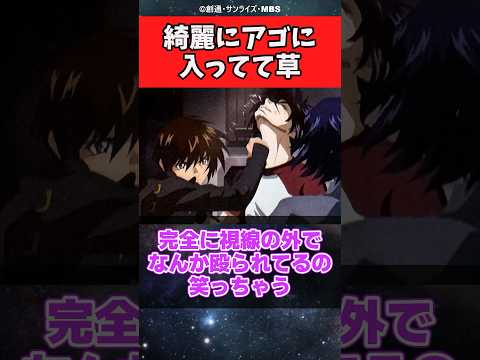
In Mobile Suit Gundam SEED FREEDOM, protagonists Kira and Shin engage in direct physical combat after exiting their mobile suits. The sequence features Kira delivering a devastating no-look punch to Shin’s jaw while maintaining eye contact with Athrun. Despite being knocked back, Shin recovers immediately without visible disorientation and attempts to counterattack. This scene stands out as a rare depiction of unarmed combat between Coordinators—genetically enhanced humans in the SEED universe—showcasing their superhuman physical capabilities in raw, unmediated form.
Why It Matters
This scene is significant because it strips away mobile suit technology and weaponry to reveal the fundamental nature of Coordinator physiology and combat psychology. Unlike typical Gundam battles that emphasize mechanical performance, this sequence demonstrates how psychological state directly influences physical combat effectiveness. The scene also provides concrete evidence of how military training translates into real-world combat performance, and how experience-based adaptability can overcome theoretical physical advantages. For longtime Gundam fans, this represents a rare opportunity to observe the true extent of genetic enhancement without technological mediation.
Background
The SEED universe establishes that Coordinators are genetically engineered humans designed with superior physical capabilities—approximately 1.5 to 2 times stronger than natural humans according to official setting materials. Shin is characterized as a Zaft soldier who received specialized close-combat training, while Kira is portrayed as a more “complete” Coordinator with extensive real-world combat experience spanning multiple conflicts. The confrontation between these two characters carries narrative weight due to their complex history and opposing allegiances, making their physical engagement a manifestation of deeper ideological and personal conflicts.
Key Points
- No-Look Strike Effectiveness: Kira’s unguarded punch connects cleanly with Shin’s jaw, demonstrating that psychological awareness matters more than physical capability in determining combat success.
- Coordinator Recovery Physiology: Shin’s ability to recover instantly from being knocked backward without stumbling reflects the enhanced physical resilience of genetically engineered humans.
- Military Training Validation: Shin’s Zaft close-combat training enables rapid recovery and immediate counterattack capability, proving the effectiveness of systematic military conditioning.
- Psychological Dominance Over Physical Ability: Kira’s mental focus on Athrun rather than Shin—expressed through the no-look attack—reveals that psychological state and attention allocation directly impact combat effectiveness.
- Experience vs. Enhancement: The scene suggests that Kira’s extensive real-world combat experience provides greater tactical advantage than Shin’s formal military training, despite both being Coordinators.
- Directorial Intent: The production team uses this sequence to express character relationships and psychological states rather than simply demonstrating physical prowess.
Detailed Analysis: Hidden Meanings in the Combat Sequence
The Impact of the No-Look Punch
The most striking aspect of this scene is not that Kira strikes Shin, but how he does so. The no-look punch—delivered while Kira’s gaze remains fixed on Athrun—represents a deliberate directorial choice rarely seen in anime combat choreography. This technique has precedent in other Gundam works, such as the hand-to-hand sequence between Setsuna and Alejandro in Gundam 00 Season 2, but SEED FREEDOM executes it with greater precision and narrative purpose.
The psychological implication is profound: Kira is not fully conscious of Shin as an opponent. His attention is entirely directed toward Athrun, rendering Shin merely an obstacle to be removed without conscious engagement. This directorial choice communicates character psychology more effectively than dialogue could. Viewer reactions noting the humor in being struck “completely outside one’s line of sight” actually reflect the production’s sophisticated narrative intent—the comedy emerges from the psychological reality being expressed.
Shin’s Remarkable Recovery Capacity
Shin’s response to the impact is equally significant. Despite being knocked backward with considerable force, he stabilizes immediately and prepares a counterattack without hesitation or disorientation. This behavior reflects his characterization as a Zaft-trained soldier with specialized close-combat capabilities. Official SEED DESTINY character materials confirm that Shin received intensive near-combat training, and this scene provides visual confirmation of that training’s effectiveness.
However, it is crucial to understand that Shin is not ignoring the damage—rather, his Coordinator physiology and military conditioning enable him to absorb and recover from impacts that would incapacitate ordinary humans. According to SEED setting documentation, Coordinator muscle density and skeletal structure are engineered to withstand significantly greater trauma. Shin’s rapid recovery is not inconsistent with realistic physics within the SEED universe; it is instead a demonstration of genetic enhancement functioning as designed.
Asymmetrical Damage Distribution
An important detail emerges when comparing damage sustained by both combatants. Kira displays visible facial injury following his exchange with Athrun, while Shin shows no comparable damage despite the force of Kira’s punch. This asymmetry does not indicate that Shin is physically superior; rather, it reflects their psychological states during the encounter.
Kira is psychologically destabilized by his confrontation with Athrun at this moment. His mental burden manifests as physical vulnerability, with psychological stress translating into reduced damage resilience. Conversely, Shin, despite receiving a direct blow, maintains psychological stability and thus demonstrates superior damage recovery. This inversion—where the physically superior combatant shows greater injury—illustrates how mental state directly modulates physical performance.
Comparative Analysis: Hand-to-Hand Combat in Gundam Franchises
SEED FREEDOM’s approach to depicting close combat differs meaningfully from other recent Gundam works. In Gundam 00, the hand-to-hand sequence between Setsuna and Alejandro emphasizes technical skill and experience as roughly equivalent factors, with combat presented as a competition of technique. In Gundam Unicorn, pilot physiology becomes secondary to mobile suit performance, with mechanical capability determining combat outcomes.
SEED FREEDOM instead prioritizes psychological state as the primary determinant of combat effectiveness. Both Kira and Shin possess comparable genetic enhancements and military training, yet the outcome is decided by psychological factors: Kira’s mental focus and Shin’s lack of anticipation. This represents a sophisticated synthesis of SEED’s defining characteristic—genetic enhancement—with the franchise’s traditional emphasis on human relationships and psychological complexity.
Military Training: Effectiveness and Limitations
The scene provides concrete evidence regarding the practical effectiveness of Zaft military training. Shin’s ability to absorb impact, maintain balance, and immediately prepare counterattack demonstrates that systematic military conditioning produces measurable real-world results. Specifically, three training outcomes are evident:
- Physical Resilience Enhancement: Systematic training has increased Shin’s tolerance for impact trauma beyond baseline Coordinator levels.
- Reflex Optimization: Shin’s instantaneous response to unexpected attack reflects trained reflexive responses to combat situations.
- Psychological Fortitude: Despite receiving an unanticipated strike, Shin maintains psychological stability and combat readiness.
However, these training benefits have clear limitations. Kira’s punch succeeds precisely because Shin did not anticipate it. No amount of training can prepare a combatant for completely unpredictable attacks. This suggests that while systematic military training provides substantial advantages, it cannot overcome the limitations of human prediction and awareness.
Coordinator Physiology Comparison
| Factor | Kira | Shin |
|---|---|---|
| Physical Capability (Design) | Superior (more complete Coordinator design) | Standard (conventional Coordinator design) |
| Real-World Combat Experience | Extensive (multiple major conflicts) | Moderate (primarily SEED DESTINY era) |
| Combat Effectiveness in Scene | High (successful no-look strike) | Low (unable to predict attack) |
| Damage Recovery Speed | Moderate (visible facial injury) | Rapid (no visible disorientation) |
Directorial Intent and Narrative Purpose
The production team’s decision to include this sequence serves multiple narrative functions. First, it directly expresses the relationship dynamic between Kira and Shin: Kira’s complete lack of conscious engagement with Shin—expressed through the no-look attack—communicates that Shin is not a primary concern. This psychological dismissal is more effective than explicit dialogue.
Second, the scene demonstrates the practical limits of Coordinator enhancement. Regardless of genetic superiority, unpredictable circumstances can neutralize physical advantages. This reinforces a central SEED theme: that human factors—psychology, experience, relationships—ultimately determine outcomes more than biological capability.
Third, the sequence showcases Kira’s psychological strength and tactical adaptability. His ability to strike Shin while maintaining focus on Athrun demonstrates superior mental compartmentalization and situational awareness. This represents the true source of Kira’s combat effectiveness: not superior genetics, but superior psychological control.
Viewer Reception and Interpretation
Online responses to this scene revealed several consistent interpretations. The most common reaction—”Shin took a harder punch than expected”—indicates that viewers recognized the impact’s effectiveness despite Shin’s rapid recovery. Comments noting the humor of being struck “completely outside one’s field of vision” reflect appreciation for the directorial sophistication, as the comedy emerges from the psychological reality being depicted.
Some viewers questioned whether Shin’s immediate recovery was physically plausible, suggesting it seemed “wrong” for someone to recover so quickly from such a blow. However, this criticism misinterprets the scene’s purpose. The recovery speed is not inconsistent with SEED setting materials regarding Coordinator physiology; rather, it demonstrates genetic enhancement functioning as designed.
Notably, viewers also recognized that both Kira and Shin demonstrate superhuman recovery capacity, with comments like “both of them getting hit hard and recovering instantly is crazy.” This observation correctly identifies that both characters are operating at levels far beyond ordinary human capability, a fundamental aspect of the SEED universe that this scene makes visually explicit.
Broader Implications for SEED Universe Understanding
This scene provides crucial insight into how the SEED universe’s defining characteristic—genetic enhancement—actually functions in practice. Throughout the SEED and SEED DESTINY series, Coordinators are discussed in theoretical terms. This scene makes their enhancement concrete and observable.
The sequence also reinforces that SEED’s central conflict is not fundamentally about genetic superiority, but about how enhanced humans navigate complex relationships, ideological differences, and psychological conflicts. The fact that Kira’s advantage over Shin stems not from superior genetics but from superior psychological focus suggests that the series’ true subject is human psychology and relationships, not biological capability.
Furthermore, the scene raises important questions about the relationship between training and experience. Shin represents the current generation of Zaft soldiers, trained according to modern military doctrine. Kira represents an earlier generation with extensive real-world combat experience. The scene suggests that experience-based adaptability may ultimately provide greater advantage than systematic training, though both contribute meaningfully to combat effectiveness.
Recommendations for Deeper Understanding
To fully appreciate this scene’s significance, several approaches are recommended:
Revisit SEED DESTINY Episodes 40-50: The relationship between Kira and Shin in the original series provides essential context. Observing how their psychological dynamic developed will clarify why Kira’s psychological dismissal of Shin in SEED FREEDOM is narratively significant.
Examine Frame-by-Frame Analysis: Reviewing the punch sequence in detail—observing the angle of approach, velocity, and point of impact—reveals the production team’s meticulous choreography and reinforces the directorial intent behind the no-look execution.
Compare with Other Gundam Hand-to-Hand Sequences: Viewing similar scenes from Gundam 00, Gundam Unicorn, and Gundam: The Witch from Mercury provides comparative context that highlights SEED FREEDOM’s unique approach to depicting close combat.
Review SEED Setting Materials: Official documentation regarding Coordinator physiology, genetic enhancement specifications, and military training protocols provides factual grounding for interpreting what the scene depicts.
Conclusion
The hand-to-hand combat sequence between Kira and Shin in Mobile Suit Gundam SEED FREEDOM represents one of the most narratively sophisticated moments in recent Gundam animation. By stripping away mobile suit technology and focusing on unarmed combat, the scene reveals fundamental truths about the SEED universe and its characters.
The no-look punch communicates psychological dominance more effectively than any dialogue could. Shin’s rapid recovery validates his military training while simultaneously demonstrating the limits of training against unpredictable circumstances. The asymmetrical damage distribution illustrates how psychological state modulates physical performance. Collectively, these elements demonstrate that in the SEED universe, as in reality, psychological factors ultimately determine combat outcomes more decisively than genetic enhancement or formal training.
This scene confirms that SEED FREEDOM is not merely a sequel to previous SEED works, but a work that engages deeply with the fundamental themes of the SEED universe: the relationship between genetic enhancement and human agency, the primacy of psychological factors in determining outcomes, and the enduring importance of human relationships and psychological complexity in a world of genetic engineering.