▶ Watch the original YouTube video
Kamen Rider Birth Strength Analysis: Transformation Requirements and Performance Explained
Kamen Rider Birth represents a revolutionary approach to mass-produced rider systems in the Kamen Rider franchise, combining complex transformation mechanics with resource-based limitations. This analysis examines how Birth’s design embodies the core themes of Kamen Rider OOO through its multi-user capability, medal dependency, and performance variations based on user skill.
What Happened
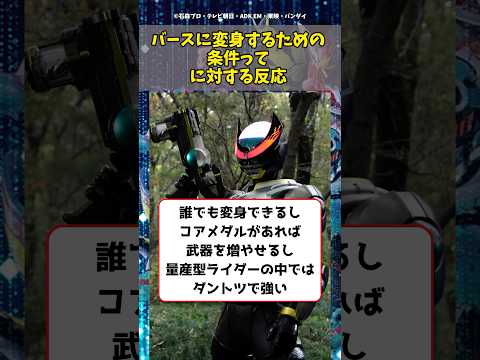
Kamen Rider Birth emerged during the 2010 broadcast of Kamen Rider OOO as a mass-produced rider system fundamentally different from traditional rider designs. Unlike previous Kamen Rider transformations limited to specific individuals, Birth introduced a multi-user framework where transformation capability depends on medal availability rather than inherent compatibility. This system allows multiple individuals to transform into Birth, though their combat effectiveness varies significantly based on user skill and system familiarity.
Why It Matters
Birth’s design philosophy represents a significant shift in how the Kamen Rider franchise approaches mass-produced combat systems. Rather than treating mass-production as a limitation, Birth reframes it as a resource-management challenge. This design choice directly reflects OOO’s central thematic concern: the balance between desire and constraint. Birth embodies the constraint side of this equation, contrasting sharply with the protagonist’s nearly unlimited transformation capability. Understanding Birth’s mechanics provides insight into how modern tokusatsu series integrate thematic elements into mechanical design, influencing subsequent Kamen Rider productions including Fourze and Wizard.
Background
Kamen Rider OOO introduced the concept of Greeds—multiple entities with distinct powers—requiring a counter-system with adaptability. Birth was developed as this counter-system, featuring multiple armor configurations to address different Greed threats. The rider’s transformation requires medals, creating an economic constraint absent from traditional rider systems. This design parallels earlier multi-rider systems like Kamen Rider Ryuki, which limited transformation access through mirror world permissions, but Birth’s resource-based limitation proved more thematically resonant with OOO’s narrative framework.
The system’s complexity extends beyond simple transformation mechanics. Birth exists in multiple variants—prototype versions, leased models, and standard production units—each occupying different tiers within the rider hierarchy. This stratification mirrors the multi-layered nature of Greed existence itself, suggesting intentional design symmetry between threat and counter-measure.
Key Points
- Medal Dependency: Birth transformation requires medals as an absolute prerequisite, creating resource-based access restrictions rather than physical incompatibility
- Multi-User Framework: Multiple individuals can transform into Birth, with combat effectiveness varying significantly based on user skill and system comprehension
- Makoto Shintomi’s Dominance: As Birth’s developer and primary operator, Shintomi demonstrates the highest combat capability within the Birth team, exemplifying how system mastery translates to battlefield effectiveness
- Birth Buster Inefficiency: The signature weapon exhibits poor fuel efficiency, consuming excessive medals relative to output—a deliberate design choice reflecting OOO’s resource-scarcity theme
- Performance Variance: Combat capability fluctuates based on user training level and tactical understanding, establishing a direct correlation between operator competence and system output
- Prototype Hierarchy: Trial and limited-edition variants exist above standard production models, suggesting intentional performance stratification within the mass-production framework
Thematic Integration
Birth’s design functions as the thematic counterpoint to protagonist Eiji Hino’s OOO transformation. Where OOO grants near-unlimited power through Greed integration, Birth operates within finite resource constraints. This contrast structures OOO’s fundamental narrative tension: unlimited desire versus constrained reality. Eiji’s journey involves repeatedly experiencing power’s corrupting influence, while Birth users navigate the opposite challenge—maximizing limited resources through skill and understanding.
The multi-user aspect reinforces this thematic framework. Eiji’s transformation remains essentially singular despite his power variations, while Birth’s transferability emphasizes that systematic constraints affect all users equally. No individual can transcend the medal limitation through willpower alone; the system itself enforces scarcity. This design choice elevates Birth beyond mere mechanical function into philosophical statement about desire’s relationship with limitation.
Design Precedents and Industry Context
Birth’s conceptual framework reflects broader tokusatsu and anime industry trends circa 2010. Contemporary works including Mobile Suit Gundam 00 and Code Geass similarly reconsidered mass-produced systems, granting them substantial narrative weight rather than treating them as background elements. Birth represents this industry-wide reassessment of production-model significance, positioning mass-manufacture not as inferiority marker but as distinct design philosophy.
The system’s influence extended beyond OOO. Subsequent Kamen Rider productions adopted Birth’s multi-user framework as standard practice. Kamen Rider Fourze’s driver and Kamen Rider Wizard’s system both incorporated multi-user capability, suggesting Birth successfully established new franchise conventions. This legacy indicates Birth’s design achieved both thematic coherence within OOO and practical applicability for future productions.
User Capability Variance
Birth’s performance ceiling depends critically on operator competence. Makoto Shintomi, as the system’s architect, demonstrates maximum effectiveness through comprehensive technical understanding. Other users achieve proportionally lower results despite identical equipment, establishing clear correlation between knowledge and output. This mechanic grounds Birth in realistic constraints: superior technology cannot compensate for insufficient operator training.
The Birth Buster exemplifies this principle. While theoretically powerful, its excessive medal consumption limits practical deployment. Users must calculate tactical value against resource cost, introducing strategic depth absent from unlimited-power systems. This economic dimension transforms combat from simple power-comparison into resource-management exercise, adding narrative complexity to action sequences.
Structural Limitations and Narrative Implications
Despite Birth’s sophisticated design, the series underutilized its multi-user potential. While the framework theoretically supported multiple Birth operators with distinct personalities, the narrative developed this concept minimally. Expanded exploration of different operators’ tactical approaches and personality-driven combat styles could have enriched OOO’s storytelling. This represents a missed opportunity within an otherwise carefully constructed system.
The prototype hierarchy similarly received limited development. Trial versions and limited-edition variants suggested deeper performance tiers, yet the narrative rarely explored these distinctions meaningfully. Greater emphasis on variant capabilities and their strategic applications could have enhanced both mechanical complexity and plot development.
Comparative Analysis Framework
Birth’s design excellence emerges through evaluation across five critical dimensions: setting consistency, character expression, narrative contribution, audience comprehension, and expansion potential. Birth performs exceptionally across all categories. Its medal-based mechanics align seamlessly with OOO’s world-building. The system effectively expresses individual character traits through performance variations. Birth’s resource limitations organically drive plot developments. The design remains sufficiently clear for general audiences while supporting deeper analytical engagement. The framework accommodates future expansion through variant exploration and multi-user development.
Community Reception and Interpretation
Fan discussions reflect nuanced appreciation for Birth’s complexity. Consensus positions Birth as powerful within mass-production rankings while acknowledging prototype superiority. Makoto Shintomi’s dominance receives broad acceptance, with fans recognizing developer status as justification for peak performance. Birth Buster criticism focuses on impracticality, yet simultaneous acknowledgment of its narrative impact suggests recognition of design intentionality.
Notably, fans frequently question Birth’s “baseline” combat capability, highlighting the system’s conceptual ambiguity. Since Birth’s power derives substantially from medal availability, defining inherent capability proves difficult. This interpretive challenge itself demonstrates design sophistication—the system’s power-source ambiguity mirrors thematic concerns about desire’s relationship with resource availability.
Insights
Kamen Rider Birth represents tokusatsu design at its most thematically integrated. Rather than treating mechanical systems as separate from narrative concerns, Birth’s every element—multi-user framework, medal dependency, performance variance, weapon inefficiency—directly expresses OOO’s central themes. The system embodies constraint as philosophical position rather than mere limitation, suggesting that meaningful power operates within boundaries rather than transcending them.
Birth’s influence on subsequent Kamen Rider productions demonstrates successful design transcends individual series, establishing conventions that persist across multiple productions. The multi-user framework Birth pioneered became franchise standard, indicating the design solved fundamental problems in rider-system conceptualization.
For viewers approaching OOO, Birth merits careful attention from initial episodes onward. The system’s complexity unfolds gradually, with full significance emerging only through sustained engagement. Makoto Shintomi’s introduction through Birth’s development establishes the connection between technical mastery and combat effectiveness, a principle recurring throughout the series. Birth Buster’s initial deployment demonstrates how resource constraints create narrative tension distinct from simple power-scaling.
Ultimately, Birth exemplifies how mass-production need not indicate inferiority. Through sophisticated constraint-based design, Birth achieves thematic depth rivaling protagonist systems while maintaining mechanical distinctiveness. Fifteen years after OOO’s broadcast, Birth’s design remains analytically rich, rewarding continued examination with new interpretive insights. The system’s enduring relevance suggests successful design transcends immediate context, establishing principles applicable across tokusatsu and broader science fiction media.