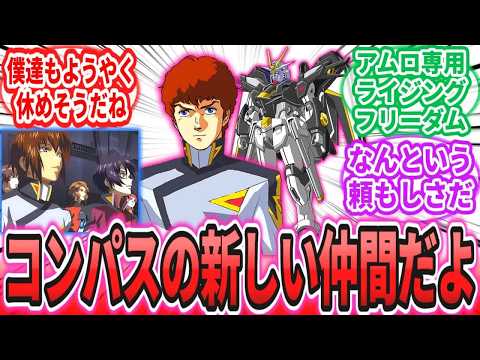
▶ Watch the original YouTube video
What If Amuro Ray Was Deployed to the Gundam SEED Universe? Fan Theories Explored
Following the theatrical success of Gundam SEED FREEDOM, online communities have engaged in heated speculation about a hypothetical scenario: what would happen if Amuro Ray, the legendary pilot from the Universal Century timeline, were deployed to the Cosmic Era world? This thought experiment has sparked discussions about pilot philosophy, technological compatibility, and the fundamental nature of warfare across Gundam’s parallel universes.
What Happened
The theatrical release of Gundam SEED FREEDOM has reignited fan discussions about cross-universe scenarios within the Gundam franchise. A viral video compilation of online reactions has brought particular attention to a specific hypothetical: the deployment of Amuro Ray—protagonist of the original Mobile Suit Gundam and pilot of the Nu Gundam—into the Cosmic Era (CE) timeline where Gundam SEED takes place. Rather than being dismissed as mere fan fiction, this scenario has evolved into a sophisticated technical and philosophical debate within fan communities, examining everything from mobile suit technology compatibility to fundamental differences in pilot combat philosophy.
Why It Matters
This thought experiment reveals something fundamental about how Gundam fans engage with the franchise: they use hypothetical scenarios to explore deeper questions about warfare, technology, and human potential. The Amuro-in-CE scenario is not simply about comparing two powerful pilots—it’s a framework for examining whether technological advancement or individual skill determines combat effectiveness, and whether different philosophical approaches to warfare can coexist. With Gundam SEED FREEDOM achieving over 10 billion yen in box office revenue and renewed interest in both the CE and Universal Century timelines, these discussions have become increasingly sophisticated and widespread.
Background
The Gundam franchise spans multiple parallel universes with distinct technological systems and philosophical frameworks. The Universal Century (UC) timeline, home to Amuro Ray, is built on Newtype theory—the concept that human evolution produces individuals with psychic abilities. Mobile suits in this universe, particularly the Nu Gundam, incorporate Psychoframe technology that allows a pilot’s consciousness to directly interface with the machine. The Cosmic Era timeline, where Gundam SEED occurs, operates on entirely different principles: Coordinators are genetically enhanced humans whose superior physical abilities are the primary advantage, and the world is shaped by the Neutron Jammer—a weapon that renders nuclear fission inoperable, forcing reliance on alternative energy sources.
Amuro Ray, now in his 30s across various UC continuities, has evolved from a teenage hothead into an experienced military commander. Kira Yamato, the protagonist of Gundam SEED, operates under a philosophy of non-lethal combat whenever possible, shaped by personal trauma and a desire to end warfare without taking lives. These two characters represent fundamentally different approaches to conflict resolution.
Key Points
- Technological Incompatibility: The Psychoframe technology of UC mobile suits and the Neutron Jammer of the CE timeline represent opposing technological philosophies. Amuro bringing UC technology to CE could potentially circumvent the Neutron Jammer’s limitations through nuclear fusion applications.
- Pilot Philosophy Clash: Amuro’s approach emphasizes extracting maximum performance from available equipment through superior piloting skill, while Kira’s philosophy centers on non-lethal resolution and understanding enemies. These approaches could either complement or conflict depending on operational context.
- Combat Effectiveness Disparity: Fan analysis suggests Amuro’s piloting mastery could enable existing CE mobile suits to operate beyond their designed parameters, potentially destabilizing the military balance of the CE world.
- Energy System Revolution: The introduction of UC nuclear fusion technology could bypass CE’s Neutron Jammer constraints, fundamentally altering the technological landscape and military capabilities of the CE universe.
- Leadership and Mentorship Potential: Rather than purely combat deployment, Amuro’s greatest value might lie in his experience as a military commander and mentor, capable of training the next generation of CE pilots.
- Cross-Timeline Technology Fusion: Combining Psychoframe technology with CE’s Mirage Colloid stealth systems and other indigenous technologies could produce entirely new capabilities.
Fan Theories and Online Reactions
Online communities have proposed numerous specific scenarios regarding Amuro’s hypothetical CE deployment. Several fans suggested mobile suit modifications that would blend UC and CE technologies—for example, integrating Psychoframe components into a Gundam SEED-era frame while maintaining Dragoon remote weapons systems. Others proposed that Amuro could effectively command Yamato Squadron in place of Kira, leveraging his extensive command experience.
A recurring technical discussion centered on the Neutron Jammer’s limitations. Multiple commenters noted that while the Jammer suppresses nuclear fission reactions, it cannot suppress nuclear fusion. This creates a theoretical pathway for Amuro to introduce UC fusion reactor technology to the CE world, potentially revolutionizing available energy sources and military capabilities.
One particularly insightful observation suggested that Amuro’s value might lie not in direct combat but in data collection and technological research. The theory proposes that CE military leadership would be intensely interested in studying Psychoframe technology and Newtype theory, potentially leading to collaborative research initiatives.
Other fans emphasized the practical consideration of Amuro’s age. At 30 years old, continuous combat operations would be physically demanding. This led to proposals that Amuro would be most effectively deployed as a tactical commander, technical advisor, educator for new pilots, and diplomatic intermediary—roles leveraging his experience rather than raw combat capability.
Technical Analysis: Two Technological Philosophies Converge
The core of this debate centers on fundamental differences in how the UC and CE universes approach mobile suit design and warfare. UC technology prioritizes the amplification of Newtype psychic abilities through mechanical means, creating a system where pilot consciousness and machine performance are deeply integrated. CE technology, conversely, focuses on optimizing mobile suit performance for genetically enhanced human pilots, creating a more direct relationship between individual physical capability and combat effectiveness.
Amuro’s combat strength derives from his ability to extract 100% of a mobile suit’s performance potential through superior piloting technique and tactical awareness. This represents a fundamentally different approach from Kira’s strength, which relies on Coordinator genetic advantages combined with mobile suit optimization for those specific abilities. If Amuro were deployed to CE, he would likely enable existing mobile suits to operate beyond their design specifications, creating a significant military advantage.
The introduction of Psychoframe technology to CE raises profound questions about compatibility. Psychoframe functions through the pilot’s consciousness directly interfacing with the machine—a capability that might be enhanced or diminished depending on whether Coordinators possess Newtype-equivalent abilities. Similarly, the potential application of UC nuclear fusion technology to CE mobile suits could fundamentally alter the energy constraints that have shaped CE military doctrine.
Philosophical Dimensions: “Assured Destruction” vs. “Non-Lethal Resolution”
Beyond technical considerations, this scenario raises profound philosophical questions about warfare and conflict resolution. Amuro’s combat philosophy, developed through years of UC warfare, emphasizes decisive action and assured enemy neutralization. Kira’s philosophy, shaped by personal tragedy and moral conviction, seeks to end conflicts through non-lethal means whenever possible.
These approaches are not necessarily contradictory—both pilots ultimately seek to end warfare and reduce human suffering. However, their methodologies differ significantly. Amuro has learned through military hierarchy and command structure, developing deep respect for leadership and organizational discipline. Kira operates more from personal conviction and individual moral judgment.
If Amuro were to command Yamato Squadron, he would likely maintain Kira’s non-lethal philosophy while introducing more structured tactical doctrine and command hierarchy. This could represent a synthesis of two approaches: the moral conviction to minimize casualties combined with the tactical sophistication to achieve military objectives efficiently.
Broader Implications for the Gundam Franchise
This thought experiment illuminates why the Gundam franchise has remained culturally significant for over three decades. The series succeeds not through perfect narrative closure but through its capacity to inspire fan imagination and speculation. The hypothetical deployment of Amuro to CE is not merely entertainment—it’s a framework for exploring fundamental questions about technology, human capability, and the nature of warfare.
The timing of this discussion is significant. The theatrical success of Gundam SEED FREEDOM has brought renewed attention to the CE timeline, while simultaneous distribution of UC content like Gundam Unicorn RE:0096 has maintained interest in the original timeline. This dual focus creates an environment where cross-universe speculation becomes particularly engaging and productive.
Fan communities have demonstrated sophisticated analytical capabilities, moving beyond simple power comparisons to examine technological systems, energy constraints, pilot psychology, and strategic doctrine. This level of engagement suggests that Gundam’s enduring appeal lies in its complexity and the space it provides for intellectual speculation.
Insights
The Amuro-in-CE scenario represents more than fan speculation—it’s a window into how audiences engage with complex fictional universes. By placing a legendary character in an unfamiliar context, fans can explore deeper questions: What determines combat effectiveness—equipment or skill? Can different philosophical approaches to warfare coexist? How do technological systems shape military doctrine and strategic possibilities?
Amuro Ray’s hypothetical deployment to the Cosmic Era would likely prove most valuable not as a combat pilot but as a mentor, commander, and technological bridge between universes. His 30 years of experience, accumulated wisdom, and understanding of military hierarchy could fundamentally reshape CE military culture and capabilities. The introduction of UC technology, particularly nuclear fusion systems and Psychoframe principles, could revolutionize CE’s technological landscape.
Ultimately, this thought experiment reveals that the Gundam franchise’s strength lies not in definitive answers but in the questions it inspires. The hypothetical fusion of Amuro’s Newtype philosophy with Kira’s non-lethal conviction might represent an idealized approach to ending warfare—one that combines technological sophistication with moral conviction. Whether such a synthesis is possible remains an open question, one that fans will likely continue exploring for years to come.