▶ Watch the original YouTube video
World Trigger’s Makoto Katori: Why Fans Are Divided on This Complex Support Character
A detailed analysis of Makoto Katori from World Trigger reveals why this seemingly “good woman” character generates sharply divided fan opinions. Through 15 years of anime analysis, experts have identified the psychological complexity behind her contradictory behavior—low self-evaluation paired with emotionally-driven assessments of others—that makes her one of anime’s most nuanced support characters.
What Happened
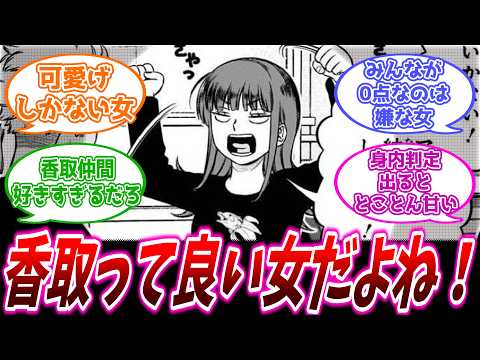
Online discussions surrounding Makoto Katori from the anime World Trigger have revealed a striking pattern: fans are deeply divided in their assessment of her character. While some praise her as a “good woman” and reliable team member, others criticize her for being difficult to get along with and emotionally inconsistent. This division stems from a video analysis that examined Katori’s scoring system during a closed-environment test, where she gave herself zero points while assigning much higher scores to teammates—particularly 50 points to Osamu Sasori, despite rating others like “Glasses” at 50 points based purely on personal preference rather than objective criteria.
Why It Matters
Katori’s character represents a significant departure from typical anime support characters. Rather than embodying the “ideal supporter” archetype—someone who selflessly prioritizes others while suppressing personal emotions—she exhibits contradictory traits that mirror real human behavior. This complexity makes her a valuable case study in character design and audience reception. Understanding why Katori generates such polarized reactions reveals how anime audiences interpret and evaluate characters based on different frameworks: team contribution versus individual personality, idealism versus realism, and emotional versus logical assessment criteria.
Background
Makoto Katori is a support-type character in World Trigger, a team-based tactical anime about combatants defending Earth from invaders. Her primary role involves maintaining team morale and providing psychological support rather than direct combat contribution. However, her character design incorporates psychological depth that complicates the typical “supportive teammate” trope. She demonstrates extremely low self-evaluation—assigning herself zero points in team assessments—while simultaneously making emotionally-driven judgments about others that contradict objective standards. This contradiction between her self-perception and her evaluation of teammates forms the core of her character complexity.
Key Points
- Extreme Self-Devaluation: Katori consistently rates herself at zero points, suggesting a psychological defense mechanism rather than simple modesty, potentially rooted in her background as a naturally talented individual who never had to develop through effort.
- Emotion-Based Evaluation System: Her scoring of teammates is heavily influenced by personal feelings rather than objective criteria, as evidenced by her 50-point rating for Sasori versus lower scores for others based on subjective preference.
- Morale and Psychological Support Value: Despite low combat ability, Katori is valued by her team primarily for her role as a morale-booster and emotional stabilizer, making her contribution measurable in team cohesion rather than tactical effectiveness.
- Complex Relationship Dynamics: Her relationship with Osamu Sasori exists in an ambiguous space between teammate camaraderie and romantic interest, creating interpretive tension among viewers.
- Polarized Fan Reception: Audiences split between those who appreciate her humanity and emotional authenticity versus those who find her personality difficult and her evaluation methods unfair.
- Realistic Psychological Portrayal: Her contradictions—being both supportive and harsh, both self-critical and emotionally-driven—reflect authentic human psychology rather than idealized character archetypes.
Comparative Character Analysis
Katori’s uniqueness becomes apparent when compared to similar support characters across anime. Momo Yaoyorozu from My Hero Academia maintains logical, objective evaluation standards while pursuing perfectionism in her own performance. Armin Arlert from Attack on Titan demonstrates low self-confidence that improves through character development, yet bases his evaluations on analytical thinking rather than emotion. Shoyo Hinata from Haikyuu! combines moderate self-assessment with consistently positive emotional framing. Katori stands alone in combining extreme self-devaluation with emotionally-driven, inconsistent evaluation of others—a position that makes her simultaneously more human and more difficult to categorize.
Perspectives
The Supportive Interpretation: Fans who appreciate Katori view her through the lens of team functionality. They recognize her value as a morale-builder, her genuine care for teammates, and her willingness to support others despite her own insecurities. From this perspective, her emotional inconsistency is not a flaw but evidence of authentic human connection—she cares more about people she’s closer to, which is natural rather than problematic.
The Critical Interpretation: Detractors focus on her individual personality traits and interpersonal dynamics. They point to her harsh judgments, emotional volatility, and unfair evaluation system as character flaws that would make her difficult to work with in reality. This perspective prioritizes logical consistency and objective fairness over emotional authenticity.
The Psychological Interpretation: Analysis suggests Katori’s behavior stems from a specific psychological pattern: self-worth denial combined with emotional-based worldview. This pattern likely developed from her natural talent—never requiring effort, she may have internalized the belief that her contributions lack value. Her emotional evaluation system reflects a self-centered cognitive framework, yet paradoxically, she remains aware of this tendency and attempts to support others despite it, creating a complex psychological profile that is neither purely selfish nor purely selfless.
Insights
Makoto Katori represents a deliberate creative choice to move away from idealized character archetypes toward psychologically authentic representation. Rather than portraying the “perfect support character” who selflessly prioritizes others while maintaining emotional equilibrium, the creators designed someone whose contradictions reflect real human behavior. This approach generates the observed fan division precisely because it abandons the comfort of clear moral categorization.
The polarized reception reveals how audiences interpret character value differently: some measure it by team contribution and emotional authenticity, others by individual personality consistency and fairness. Neither interpretation is incorrect; both are valid responses to a character intentionally designed to embody human contradiction.
Katori’s character arc suggests potential for future development toward self-acceptance—the moment when she might assign herself a fair evaluation rather than zero points would represent significant psychological growth. Until that moment arrives, she remains a compelling study in how anime can portray realistic human complexity while maintaining narrative functionality within team-based storytelling frameworks.
The broader implication is that complex, contradictory characters generate more engaged discussion and interpretation than simplified archetypes, even when—or perhaps especially when—that complexity makes them difficult to categorize as simply “good” or “bad.”