▶ Watch the original YouTube video
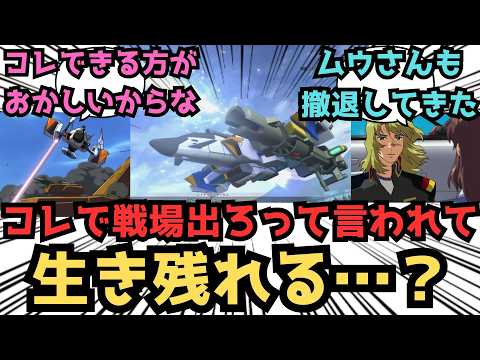
The Sky Grasper, a transformable fighter-type mobile suit from Mobile Suit Gundam SEED, represents one of the franchise’s most interesting design experiments—but also one of its most constrained. Through extensive analysis of the series, this article examines where the Sky Grasper’s true limitations lie, why it ultimately failed to become the primary support unit it was designed to be, and what this reveals about Gundam’s fundamental narrative structure.
What Happened
The Sky Grasper is a fighter-type mobile suit introduced in Gundam SEED that operates using the Striker Pack system—an innovative modular weapon-exchange platform that allows rapid reconfiguration for different combat scenarios. Piloted by Mu La Flaga, one of the series’ most skilled operators, the Sky Grasper initially functioned as a powerful support unit. However, as the narrative progressed into Gundam SEED DESTINY, the introduction of superior mobile suits like the Freedom and Infinite Justice, followed by the Windham fighter, gradually relegated the Sky Grasper to a secondary role.
Why It Matters
The Sky Grasper’s trajectory illuminates a fundamental tension within the Gundam franchise: if support units and fighter-type mobile suits become too powerful, they undermine the narrative focus on mobile suit-to-mobile suit combat that defines the series. Understanding the Sky Grasper’s limitations reveals how production decisions balance mechanical design with storytelling necessity. Additionally, the machine exemplifies how pilot skill can artificially elevate a platform beyond its intended performance ceiling, creating an unsustainable operational model dependent on elite personnel.
Background
Mobile Suit Gundam SEED introduced the Striker Pack system as a revolutionary concept: rather than relying on a single fixed loadout, the Sky Grasper could swap between different weapon configurations to adapt to evolving battlefield conditions. This flexibility was meant to position the fighter as a primary combat asset, not merely a support platform. The machine’s performance under Mu La Flaga’s command initially validated this design philosophy. However, the series’ progression toward increasingly powerful mobile suits—particularly those with independent power systems and superior mobility—gradually exposed the Sky Grasper’s fundamental constraints.
Key Points
- Pilot Dependency: The Sky Grasper’s apparent strength derives almost entirely from Mu La Flaga’s exceptional piloting skill. Average pilots cannot extract the machine’s full potential, making it operationally unreliable for general deployment.
- Power System Limitations: Unlike independent mobile suits, the Sky Grasper depends on Striker Pack batteries for extended operations, severely limiting its autonomous combat duration and requiring constant logistical support.
- Technological Obsolescence: The introduction of the Windham fighter—which offered comparable or superior performance with genuine independent power systems—rendered the Sky Grasper’s modular weapon-exchange advantage largely irrelevant.
- Narrative Constraints: Allowing fighter-type units to dominate combat would fundamentally undermine Gundam’s core appeal: mobile suit warfare. Production decisions intentionally limited the Sky Grasper’s role to prevent this narrative collapse.
- Design Philosophy Conflict: The fighter configuration sacrificed the versatility and durability of traditional mobile suits without providing sufficient performance advantages to justify the trade-off.
- Temporal Relevance: The Sky Grasper’s effectiveness window was restricted to the early-to-mid SEED timeline, before superior mobile suits rendered its advantages obsolete.
Timeline
- Gundam SEED Early-Mid Series: Sky Grasper operates as a primary combat asset with the Striker Pack system providing genuine tactical flexibility.
- Gundam SEED Late Series: Introduction of Freedom and Infinite Justice mobile suits begins to overshadow the fighter’s role.
- Gundam SEED DESTINY Early Series: Windham fighter introduction effectively eliminates the Sky Grasper’s competitive advantages; machine relegated to support operations.
- Gundam SEED DESTINY Mid-Late Series: Sky Grasper operates exclusively as a support platform under Mu La Flaga’s command.
Perspectives
From a mechanical design perspective, the Sky Grasper represents an ambitious attempt to bridge fighter and mobile suit capabilities. Its modular weapon system offered genuine tactical advantages during the early SEED timeline. However, from a narrative standpoint, the production team faced an inherent problem: if fighter-type units proved too effective, they would overshadow mobile suit combat—the franchise’s defining feature. This created an irresolvable tension that ultimately required the Sky Grasper’s deliberate operational limitation.
Viewer analysis reveals two dominant interpretations. Some emphasize the machine’s genuine combat effectiveness, particularly its kill count under Mu La Flaga’s command, viewing its decline as a missed opportunity for the franchise to explore alternative combat paradigms. Others recognize the narrative necessity of the Sky Grasper’s limitation, understanding that allowing fighter-type units to dominate would fundamentally alter Gundam’s identity. The most sophisticated analysis acknowledges that the Sky Grasper was never truly a failure—rather, it was a deliberately constrained design that served its intended purpose within the franchise’s larger narrative structure.
Insights
The Sky Grasper’s true limitation is not mechanical but narrative. The machine represents a design that exceeded the franchise’s tolerance for non-mobile-suit combat effectiveness. Its apparent decline was not a consequence of poor engineering but rather an intentional production decision to preserve Gundam’s core identity.
The machine’s dependence on Mu La Flaga’s exceptional skill reveals a critical principle in military science fiction: elite pilot performance cannot substitute for sustainable platform design. While Mu La Flaga elevated the Sky Grasper beyond its nominal capabilities, this created an unsustainable operational model. The introduction of the Windham—a fighter that achieved comparable results through superior engineering rather than pilot excellence—demonstrated that the franchise’s future lay in mechanical advancement, not individual skill compensation.
The Sky Grasper ultimately succeeded not as a primary combat platform but as a historical artifact: a machine that represented the cutting edge of its era before inevitably being superseded. Its legacy lies not in what it achieved, but in what its limitations reveal about how the Gundam franchise balances mechanical innovation with narrative necessity. For future appearances, the Sky Grasper should be positioned as a historically significant fighter—powerful for its time, but ultimately constrained by the technological and narrative boundaries of its era.