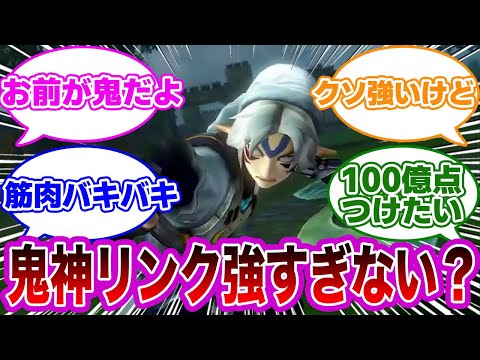
▶ Watch the original YouTube video
Why Fierce Deity Link Is the Strongest Form in The Legend of Zelda: Majora’s Mask
After 15 years of gaming experience and playing over 300 titles, one veteran gamer argues that Fierce Deity Link from The Legend of Zelda: Majora’s Mask represents the ultimate power fantasy in gaming—not just in raw stats, but in how it delivers satisfaction to players who have mastered the game.
What Happened
A gaming enthusiast who has spent 15 years analyzing the Legend of Zelda franchise has published a comprehensive analysis arguing that Fierce Deity Link—the final transformation form in Majora’s Mask—represents the strongest version of Link across all Zelda games. The analysis compares Fierce Deity Link not only to other powerful Link forms like the Triforce-wielding Link from Skyward Sword, but also examines how the form functions across different games, including its implementation in Hyrule Warriors.
Why It Matters
This analysis challenges conventional thinking about what “strength” means in video games. Rather than relying solely on in-game lore and canonical power levels, the author argues that true strength must be measured by how a game actually plays—how easily players can defeat enemies, how satisfying the experience feels, and how well the game design rewards player effort. This perspective is relevant to anyone interested in game design philosophy, the Zelda franchise, or how video games balance narrative power with mechanical balance.
Background
The author first encountered Fierce Deity Link as a sixth-grader playing Majora’s Mask on Game Boy Advance 16 years ago. The experience of collecting all masks and finally obtaining Fierce Deity form—only to effortlessly defeat the final boss by mashing the attack button—left a lasting impression. This moment sparked a 15-year journey of comparative analysis across the Zelda franchise and beyond, examining how different games define and implement “power” for their protagonists.
Majora’s Mask is unique in the Zelda series for its mask-based transformation system. Unlike other Zelda games where Link gains new abilities gradually, Majora’s Mask requires players to collect multiple masks, each granting different powers. Fierce Deity form is the ultimate reward for collecting all masks, transforming Link into a towering demon-like creature capable of firing energy beams and dealing massive damage.
Key Points
- Two Types of Strength: The author distinguishes between “canonical strength” (what the game’s story says) and “mechanical strength” (how the game actually plays). Fierce Deity Link excels at both.
- Perfect Game Design: Fierce Deity form represents ideal game design—it requires effort to obtain (collecting all masks), appears at the climax (before the final boss), and delivers maximum satisfaction (trivializing the final encounter).
- Comparison to Skyward Sword: While the Triforce-wielding Link from Skyward Sword is canonically stronger (wielding all three Triforce pieces), Fierce Deity Link is mechanically superior—players can actually dominate with it.
- Psychological Reward: Fierce Deity’s strength appeals to player psychology—the massive form, powerful beams, and overwhelming attack speed fulfill the fantasy of being unstoppable.
- Hyrule Warriors Implementation: The Fierce Deity costume in Hyrule Warriors receives universal praise for its “perfect” implementation, allowing players to unleash the form’s full potential in a way that feels completely satisfying.
- Narrative Ambiguity: Unlike other masks that transform Link into existing races, Fierce Deity form raises questions about whether it’s truly a “mask” or something more—a mysterious power that adds to its appeal.
Timeline
- ~2007: Author plays Majora’s Mask on Game Boy Advance as a sixth-grader and experiences Fierce Deity form for the first time.
- 2011: Author plays Skyward Sword, comparing its Triforce-wielding Link to Fierce Deity Link.
- 2014: Author revisits Skyward Sword three years after its original 2011 release.
- Recent: Author plays Hyrule Warriors and experiences the Fierce Deity costume implementation.
- Present: Author publishes comprehensive analysis based on 15 years of gaming experience across 300+ titles.
Perspectives
The Canonical Perspective: From a story standpoint, Skyward Sword’s Link is objectively stronger. He wields all three pieces of the Triforce and defeats the origin of all evil in single combat. This makes him the most legendary hero in the entire Zelda timeline.
The Mechanical Perspective: From a gameplay standpoint, Fierce Deity Link dominates. Players can defeat any boss by simply mashing the attack button. The form trivializes difficulty and delivers unmatched satisfaction.
The Design Philosophy Perspective: Fierce Deity form represents superior game design because it perfectly balances effort, reward, and player satisfaction. Collecting all masks requires exploration and mastery; the form appears at the climax; and its power feels earned rather than arbitrary.
The Player Psychology Perspective: Fierce Deity appeals to the fundamental desire to feel powerful. The visual design (towering demon form), audio feedback, and mechanical dominance all reinforce the fantasy of being unstoppable.
The Narrative Ambiguity Perspective: Unlike other masks that clearly represent transformed versions of Link, Fierce Deity form’s true nature remains mysterious. This ambiguity—whether it’s truly a mask or something more—adds to its mystique and power.
Insights
This analysis reveals a fundamental truth about video game design: strength cannot be measured by lore alone. The most powerful form in a game is the one that makes players feel most powerful while playing. Fierce Deity Link achieves this through perfect alignment of narrative reward, mechanical implementation, and psychological satisfaction.
The author’s 15-year perspective demonstrates that games are not static texts—they are experiences that evolve in memory and meaning. The childhood experience of first transforming into Fierce Deity form wasn’t just about defeating a boss; it was about experiencing the culmination of effort rewarded. This emotional resonance, more than any canonical power level, defines true strength in gaming.
The comparison across multiple Zelda games also highlights how different titles approach power fantasy differently. Skyward Sword emphasizes narrative grandeur; Breath of the Wild emphasizes player choice and external equipment; Majora’s Mask emphasizes earned transformation and climactic payoff. Each approach is valid, but Majora’s Mask’s design—where effort directly correlates to reward—may represent the most satisfying implementation of power fantasy in the franchise.
Finally, the persistent mystery surrounding Fierce Deity form—whether it’s truly a mask or something more—adds philosophical depth. In a game about time loops and cyclical destiny, the ambiguity of this ultimate power feels thematically appropriate. It’s not just a tool; it’s a mystery that invites interpretation and discussion, which is precisely why it remains so compelling decades after the game’s release.