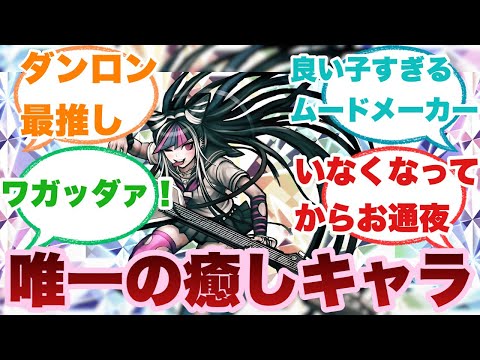
▶ Watch the original YouTube video
Why Mioida Yuki’s Death Creates the Perfect Despair in Danganronpa 2: A 15-Year Fan Analysis
After 15 years of following the Danganronpa series, one character’s death stands out as the most psychologically devastating moment in the franchise: Mioida Yuki, the seemingly cheerful healer of Danganronpa 2. This analysis explores why her death transcends typical “tragic character” tropes and becomes a masterclass in narrative despair.
What Happened
Mioida Yuki, a core character in Danganronpa 2, dies in Chapter 3 after being infected with despair disease and manipulated into suicide. What makes her death particularly impactful is not the manner of death itself, but the psychological foundation the game builds before it occurs. Through the game’s communication notebook system, players discover that Mioida is far more than a simple “healing character”—she is a thoughtful, philosophical presence who offers genuine emotional support to her classmates.
Why It Matters
Mioida’s death represents a critical turning point in Danganronpa 2’s narrative structure. Her absence fundamentally alters the group’s psychological balance, creating a void that cannot be filled by other characters. For players who invested time in understanding her depth through the communication system, her death functions not merely as a tragic event, but as a betrayal of trust. This makes her one of the most effective examples of how character design and narrative pacing can maximize emotional impact in death game narratives.
Background
The Danganronpa series has long explored the archetype of the “healing character”—the emotionally supportive presence that provides psychological relief in otherwise bleak scenarios. However, Mioida distinguishes herself through philosophical depth. Her communication notebook entries reveal someone grappling with questions of identity and self-worth, particularly in her advice to Hinata: “The self that exists right now is the true self.” This statement gains tragic resonance when contextualized against her later manipulation by despair disease.
Voice actress Shimizu Mayu’s performance amplifies this duality, shifting seamlessly between Mioida’s energetic persona and moments of genuine vulnerability. The contrast between her death metal vocals and her composed speaking voice creates a character whose complexity belies her surface-level cheerfulness.
Key Points
- Mioida transcends the “healing character” archetype: Her communication notebook reveals philosophical depth and genuine emotional intelligence, not mere surface-level cheerfulness.
- The game’s structure necessitates her early death: Danganronpa’s design favors eliminating high-ability, well-liked characters early, making Mioida’s demise narratively inevitable.
- Voice acting excellence enhances emotional impact: Shimizu Mayu’s performance range—from death metal screams to composed dialogue—perfectly captures Mioida’s complexity.
- Chapter 4’s silence marks a psychological shift: With both Mioida and Tanaka absent, the group’s dynamic fundamentally changes, creating an atmosphere of loss that extends beyond their deaths.
- The communication system amplifies despair: Players who complete Mioida’s notebook before her death experience her loss as personal betrayal rather than mere plot event.
- Mioida’s universal compassion creates isolation: Her tendency to support everyone equally prevents her from forming deep bonds with specific individuals, leaving her vulnerable and ultimately alone.
Timeline
- 2012: Original author first experiences Danganronpa series during early deep-night anime era
- 2008–2015: Author plays 300+ games, including comparable death game narratives (Fate/stay night, Higurashi, Danganronpa 1, 999)
- Chapter 2–3: Mioida’s communication notebook becomes available; players discover her philosophical depth
- Chapter 3: Mioida dies via despair disease manipulation; her absence reshapes group dynamics
- Chapter 4 onward: The psychological void created by Mioida’s death becomes increasingly apparent through altered character interactions
Perspectives
The Player’s Experience: For those who engage with Mioida’s communication notebook, her death transforms from a scripted event into a personal loss. The game’s design ensures that understanding her character depth directly correlates with experiencing greater psychological impact at her death.
Narrative Design: From a structural standpoint, Danganronpa 2 deliberately positions high-ability, universally liked characters for early elimination. This design choice maximizes despair by removing the emotional anchors that players rely on. Mioida’s death is not accidental—it is the inevitable consequence of her being too valuable to the group’s morale.
Character Dynamics: Mioida’s relationship with other characters, particularly Saionji, reveals a deeper layer. While Saionji appears destructive and Mioida appears supportive, the communication notebook suggests both characters operate from complex, understandable motivations. Mioida’s universal compassion contrasts sharply with Saionji’s selective cruelty, yet neither approach proves entirely “correct.”
Fan Reception: Online responses consistently emphasize both affection for Mioida and bewilderment at her death. Comments like “Why do they always kill the cute ones?” reflect not mere character preference, but existential frustration at the narrative’s targeting of emotionally supportive figures.
Insights
Mioida Yuki represents a sophisticated evolution in death game narrative design. She is not a simple “healing character” whose death shocks through contrast with her cheerfulness. Rather, she is a psychologically complex individual whose depth makes her death feel like a personal betrayal of the player’s trust and investment.
The genius of her characterization lies in the communication system’s structure. By allowing players to voluntarily discover her philosophical nature, the game ensures that emotional impact scales with player engagement. Those who rush through the game experience her death as a plot point; those who invest time experience it as genuine loss.
Furthermore, Mioida’s death demonstrates how character absence reshapes narrative space. Her removal does not simply reduce the cast count—it fundamentally alters how remaining characters interact, creating a psychological void that persists through the rest of the game. The silence of Chapter 4, mentioned repeatedly in fan responses, is not merely the absence of a cheerful voice, but the absence of a psychological anchor.
From a broader perspective, Mioida’s death illustrates why the Danganronpa series has maintained relevance for over 15 years. The franchise understands that despair is not created through shock value alone, but through the systematic destruction of emotional infrastructure. By making players care deeply about a character and then removing that character at the moment of maximum vulnerability, the game creates despair that resonates far beyond the narrative itself.
The question of whether Mioida’s early death was narratively necessary remains open. A longer survival might have allowed deeper exploration of her relationship with Saionji and other characters. However, her death as currently designed achieves something rare in game narratives: it makes players question not just the story, but their own emotional investment in fictional characters.