▶ Watch the original YouTube video
A viral video examining the lives of low-rank hunters in the Monster Hunter universe has sparked widespread discussion about the game’s hidden social hierarchy. A longtime fan with 15 years of series experience breaks down the video’s themes, comparing Monster Hunter’s class system to real-world job markets and analyzing what the game’s developers intended to convey through these overlooked characters.
What Happened
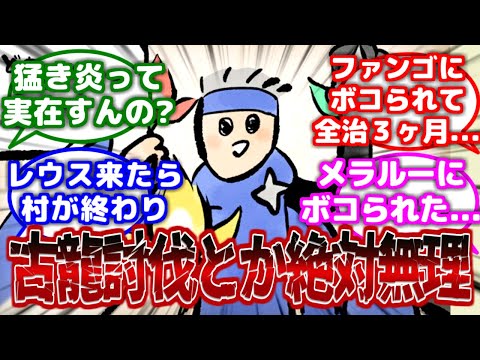
A video compilation showcasing the daily struggles and comedic misfortunes of low-rank hunters in Monster Hunter has gained significant attention online. The video documents hunters who struggle with basic monsters like Anjanath and Rathalos, lack proper equipment, fail guild certification exams, and pursue alternative careers such as gathering, transport work, and monster observation rather than actual hunting. Comments from players reveal shared experiences of frustration, equipment confusion, and the steep learning curve that separates novice hunters from experienced ones.
Why It Matters
Monster Hunter’s world-building extends far beyond what players directly experience. The game’s developers have constructed a detailed social hierarchy where not all hunters succeed at combat, and many pursue alternative livelihoods within the hunter economy. Understanding this hidden layer of game design reveals how Monster Hunter uses its setting to enhance player progression—making advancement feel meaningful by contrasting it against the struggles of those who remain at the bottom. This design philosophy reflects broader themes about effort, social mobility, and the reality that not everyone can reach the top.
Background
The Monster Hunter franchise has evolved significantly since its 2004 PlayStation 2 debut. The series has consistently portrayed a world where hunters operate within a guild system organized by rank: Low Rank, High Rank, G Rank, and Master Rank. Each tier represents exponential increases in monster difficulty and hunter capability. However, the games rarely explicitly acknowledge the existence of hunters who never advance beyond Low Rank or who fail to qualify as official guild members. This video compilation brings attention to these background characters and the implicit class structure they represent.
The video’s focus on “bottom-tier hunters” reveals design details that suggest intentional world-building: hunters who specialize in gathering rather than combat, regional variations in monster difficulty, the existence of hunters who fail certification exams, and the overwhelming power gap between Low Rank and High Rank hunters. These elements create a believable ecosystem where not every person in the world is a capable monster slayer.
Key Points
- Low-Rank Hunter Definition: Hunters at Rank 2 level who die immediately upon encountering monsters like Anjanath or Rathalos, representing the baseline of hunter society.
- Occupational Diversity: Not all hunters pursue combat; many work as gatherers, transport specialists, and monster observers, creating a functional economy beyond hunting.
- Regional Danger Variance: Monster difficulty varies dramatically by location, meaning a hunter celebrated in a remote village might be considered weak in a major city.
- Equipment and Skill Gap: The power disparity between Low Rank and High Rank hunters is presented as nearly insurmountable, with ancient dragons existing in an entirely different tier of threat.
- Guild System Critique: The video raises questions about the New World Research Commission’s actual accomplishments and the guild’s effectiveness in supporting struggling hunters.
- Certification Barriers: Some hunters fail to achieve official guild certification, suggesting institutional standards that exclude certain individuals from formal hunter status.
Structural Analysis: The Hidden Class System
The Monster Hunter world operates as a stratified society with clear hierarchical divisions. Low-rank hunters occupy the bottom tier, struggling with basic survival and equipment. The gap between Low Rank and High Rank represents a fundamental shift in capability—not merely a numerical increase in damage output, but a qualitative transformation in how hunters interact with their environment.
The existence of specialized hunter roles—gatherers, transporters, and observers—demonstrates that the game world acknowledges different skill levels and economic needs. A hunter who cannot defeat monsters can still contribute to society through resource gathering or information collection. This design choice suggests that the developers intentionally created a world where failure at combat does not equal worthlessness.
Ancient dragons occupy a category beyond even High Rank hunters’ capabilities, functioning less as monsters and more as natural disasters. The observation posts dedicated to monitoring these creatures indicate that society has accepted certain threats as uncontrollable, requiring specialized study rather than direct confrontation.
Comparative Analysis with Other Game Worlds
Monster Hunter’s class structure shares similarities with other RPG universes. The Dark Souls series presents players as low-status individuals who must prove themselves through combat, though the focus remains on personal survival rather than social advancement. Final Fantasy XI, which features an explicit rank system and regional difficulty variations, parallels Monster Hunter’s progression structure most closely. Dragon’s Dogma incorporates occupational diversity and social mobility, though it emphasizes personal power over economic success.
What distinguishes Monster Hunter is its emphasis on economic and social status alongside combat ability. A hunter’s worth is measured not only by monster-slaying prowess but by their contribution to society—whether through gathering, transport, or observation work. This reflects real-world job markets more accurately than many fantasy RPGs.
Player Psychology and Developer Intent
The emotional journey from Low Rank to High Rank mirrors the psychological experience of professional advancement. Early struggles—dying repeatedly to basic monsters, failing certification exams, lacking proper equipment—create a foundation of struggle that makes later success feel earned. When a player finally defeats a High Rank monster after struggling at Low Rank, the achievement carries weight precisely because they understand the gap they’ve crossed.
The existence of hunters who never advance beyond Low Rank or fail certification suggests that the developers intentionally created a world where not everyone succeeds. This design choice serves multiple purposes: it makes the player’s progression feel meaningful, it creates a believable world where failure exists, and it implicitly communicates that effort and luck both play roles in success.
Comments from players reveal that many have experienced the frustration depicted in the video—dying repeatedly to the same monster, confusion about game mechanics, equipment mistakes. By acknowledging these struggles as part of the game world itself, the developers validate player experiences while also suggesting that overcoming these challenges is the core narrative of becoming a hunter.
Online Community Response
The video’s comment section demonstrates widespread player identification with low-rank hunter struggles. Many players reported experiencing similar frustrations—spending weeks on a single quest, failing to understand item mechanics, choosing inappropriate weapons. This suggests that the video resonated because it articulated experiences that most players have lived through.
Reactions to the “guild certification failure” concept varied. Some players questioned whether such hunters actually exist within the game’s canon, while others recognized it as a logical extension of the world-building—if hunters are ranked by ability, some must fall below the threshold for official recognition.
The characterization of ancient dragons as “battles against fate itself” rather than conventional monsters generated strong agreement, with players confirming that these encounters feel fundamentally different from standard hunts. This suggests the developers successfully communicated the existential threat these creatures represent.
Practical Progression Advice
For players beginning the Monster Hunter series, several principles emerge from analyzing the low-rank hunter experience. First, understanding game mechanics—distinguishing between item types, learning weapon movesets, studying monster patterns—directly impacts progression speed. Skipping tutorial content or ignoring in-game information creates unnecessary obstacles.
Second, setting achievable goals within your current region accelerates learning. Rather than immediately pursuing the strongest available monster, mastering regional threats builds competence and confidence. This approach mirrors how the game world itself is structured—hunters in remote villages gain reputation by defeating local threats, not by attempting continental challenges.
Third, weapon selection should match both playstyle and current skill level. Attempting advanced weapons before mastering fundamentals creates frustration. The humorous reference to a hunter dislocating their shoulder with a Charge Axe illustrates a real principle: equipment must suit the operator’s capability.
Finally, recognizing that not every hunter must pursue combat validates alternative playstyles. Gathering, transport work, and observation are legitimate paths within the hunter economy. The game world explicitly acknowledges these roles, suggesting that players need not feel pressured to become combat specialists.
The Value of Low-Rank Hunters
Low-rank hunters are not failures; they represent realistic responses to individual circumstances. A hunter working as a gatherer has made a rational choice based on their abilities and market demand. A regional hunter celebrated for defeating local monsters has achieved genuine success within their context. These characters are not tragic figures but rather people navigating a complex world according to their capabilities and opportunities.
The existence of this lower tier of hunter society serves the broader narrative. It creates a believable world where advancement means something, where the gap between ranks is genuinely significant, and where not everyone achieves the same level of success. This mirrors reality more accurately than a world where all protagonists inevitably rise to the top.
However, questions remain about hunters who fail certification entirely. If such individuals exist, what circumstances led to their rejection? What barriers prevent them from pursuing alternative hunter roles? These unanswered questions suggest depth in the world-building that the games themselves have not fully explored.
Broader Implications
Monster Hunter’s treatment of low-rank hunters reveals sophisticated world-building that extends beyond mechanical progression. The game communicates themes about effort, social mobility, environmental factors, and luck through its class structure. A hunter’s success depends not only on personal skill but on their starting location, available resources, and willingness to learn.
This design philosophy suggests that the developers view Monster Hunter not merely as a combat simulator but as a social ecosystem. The ranking system, occupational diversity, and regional variations all work together to create a world that feels lived-in and complex. Players advancing through ranks are not simply becoming stronger; they are climbing a social hierarchy that the game world takes seriously.
The video’s popularity indicates that players recognize and appreciate this depth. By bringing attention to the overlooked low-rank hunters, the community has highlighted an aspect of Monster Hunter’s design that deserves recognition: the developers created a world where failure is possible, where not everyone succeeds, and where the journey from weakness to strength carries genuine weight.