▶ Watch the original YouTube video
Why Oguri Cap’s Grandchild Became Obsessed With Yogibo: A Deep Dive Into Modern Fan Culture
A viral video of a real racehorse—the grandchild of the legendary Oguri Cap—sleeping deeply on a Yogibo beanbag has sparked widespread discussion about the intersection of anime fandom, real-world animals, and modern fan culture. The phenomenon reveals how contemporary “oshi-activity” (fan devotion) has evolved to blur the boundaries between fictional characters and reality.
- What Happened
- Why It Matters
- Background
- Key Points
- The Fandom Structure: Bridging Fiction and Reality
- The Significance of Bloodline and Genetics
- Marketing Evolution: Beyond Traditional Endorsements
- The Role of Vulnerability in Fan Attachment
- Comparative Analysis: Japan and the Yogibo Precedent
- Multi-Fandom Intersection
- Perspectives
- Insights
What Happened
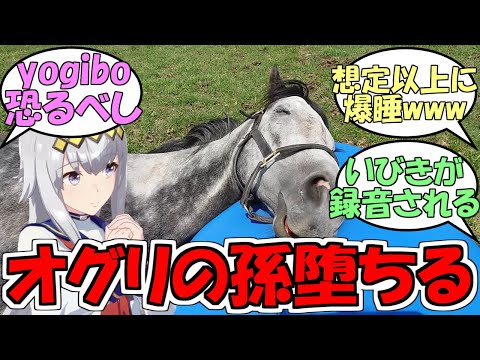
A video emerged showing Oguri Cap’s grandchild—a real racehorse with notable lineage—sleeping soundly on a Yogibo beanbag product. The horse was captured in a deeply relaxed state, complete with an open mouth, snoring, and completely defenseless posture. The footage quickly went viral across Japanese social media platforms, with fans expressing overwhelming enthusiasm about the horse’s apparent comfort and contentment with the product.
This was not the first instance of a racehorse engaging with Yogibo; a horse named Japan (descendant of Glass Wonder) had previously been filmed sleeping on the same product. However, Oguri Cap’s grandchild’s version generated significantly more engagement due to the horse’s legendary bloodline and the more detailed, endearing nature of the footage.
Why It Matters
This phenomenon represents a significant evolution in how modern fan communities interact with both fictional and real-world content. The viral response demonstrates that contemporary marketing and fan engagement have transcended traditional celebrity endorsement models. When a real animal naturally uses a product while appearing genuinely comfortable, it generates more persuasive impact than conventional advertising featuring famous personalities.
Moreover, this event illustrates how the anime and gaming franchise “Uma Musume” (Horse Girls) has successfully created a unique cultural space where fictional characters based on real racehorses blur the line between fantasy and reality. Fans now experience genuine emotional investment in the real animals that inspired their favorite characters, creating a new form of fan devotion that combines traditional fandom with real-world animal welfare appreciation.
Background
Oguri Cap was a legendary racehorse that competed from 1988 to 1990 and holds a prominent place in Japanese racing history. In the Uma Musume game, Oguri Cap is portrayed as a character who loves relaxation and hot springs—a detail that adds symbolic weight to the grandchild’s behavior on the Yogibo.
The Uma Musume franchise itself is built on the premise of respecting real racehorses while creating fictional narratives around them. The game and anime have cultivated a fanbase that maintains genuine interest in the real animals behind the characters. Oguri Cap’s grandchild is also the great-grandchild of Glass Wonder, another legendary racehorse, creating multiple layers of significance for different fan communities.
The term “Yogibo-otchi” (falling for Yogibo) has emerged as new fan terminology, referring to when a horse becomes completely enamored with the beanbag product. This linguistic development reflects how fan communities create new vocabulary to describe novel phenomena within their spaces.
Key Points
- Oguri Cap’s grandchild was filmed sleeping deeply on a Yogibo beanbag, with visible snoring and an open mouth, generating viral engagement across social media
- The horse’s legendary bloodline—being both Oguri Cap’s grandchild and Glass Wonder’s great-grandchild—amplified fan emotional investment
- This represents the second major instance of a racehorse being filmed with Yogibo, but with significantly greater impact due to the horse’s pedigree and the detailed nature of the footage
- The phenomenon demonstrates that real animals naturally using products generates more persuasive marketing impact than traditional celebrity endorsements
- Uma Musume fans experience emotional investment in both the fictional characters and the real racehorses that inspired them, creating a unique dual-layer fandom
- New fan terminology like “Yogibo-otchi” emerged to describe this phenomenon, indicating the maturation and evolution of fan culture
The Fandom Structure: Bridging Fiction and Reality
Uma Musume occupies a unique position in modern entertainment. Unlike traditional anime or game franchises where characters exist purely in fictional worlds, Uma Musume characters are directly based on real racehorses. This creates a psychological connection where fans simultaneously appreciate the fictional character and the real animal.
When fans see Oguri Cap’s grandchild sleeping peacefully on a Yogibo, they are not simply observing a cute animal video. Instead, they are confirming that their “oshi” (favorite character/subject of devotion) and its bloodline are living happily in the real world. This transforms a product placement into an emotional affirmation of their fan investment.
The Significance of Bloodline and Genetics
Social media comments frequently referenced the horse’s genetics: “It’s unavoidable because of Oguri Cap’s bloodline” and “The leg markings look so Oguri-like.” This reveals that fans assign deep emotional and symbolic meaning to genetic inheritance. In fan culture, bloodline represents destiny and inherited characteristics, similar to how narrative-driven franchises use genealogy as a storytelling device.
Fans simultaneously acknowledge both the deterministic nature of bloodline (“it’s unavoidable”) and the individual personality of the horse (“this child’s unique charm”). This dual perspective shows sophisticated fan engagement that balances character background with individual identity.
Marketing Evolution: Beyond Traditional Endorsements
Social media comments noted: “No matter which celebrity appears in a commercial, this is definitely more appealing.” This observation highlights a fundamental shift in marketing effectiveness. Traditional advertising relies on a famous person explaining a product’s benefits. Modern fan-driven marketing succeeds when the target audience sees their “oshi” naturally and genuinely benefiting from a product.
The authenticity of the moment—the horse’s defenseless sleep, the snoring, the open mouth—creates emotional resonance that scripted advertising cannot replicate. Fans interpret these vulnerable moments as proof of genuine comfort and contentment, making the product endorsement feel organic rather than transactional.
The Role of Vulnerability in Fan Attachment
Notably, fans emphasized the horse’s defenseless state: the half-open mouth, the snoring, the complete lack of guard. In fan culture, when attachment deepens, audiences become increasingly drawn to the vulnerable and “weak” aspects of their subject of devotion. These moments of unguarded behavior feel more authentic and emotionally intimate than polished, controlled presentations.
This psychological pattern appears consistently across different fan communities. Fans don’t just appreciate their “oshi” for strength or perfection; they cherish the moments that reveal genuine personality and vulnerability. Oguri Cap’s grandchild’s defenseless sleep represents the ultimate expression of comfort and trust, which fans find deeply moving.
Comparative Analysis: Japan and the Yogibo Precedent
The horse Japan (Glass Wonder’s grandchild) had previously been filmed sleeping on a Yogibo, establishing the concept of “Yogibo-otchi.” However, Oguri Cap’s grandchild generated significantly more engagement. This difference illustrates an important principle in fan culture: the first instance of a phenomenon establishes the concept, but subsequent instances can achieve greater impact through deeper emotional resonance.
Oguri Cap’s grandchild succeeded where Japan created the template because of the legendary status of Oguri Cap itself, the more detailed and endearing nature of the footage, and the additional layer of Glass Wonder’s bloodline. The phenomenon evolved from novelty to meaningful cultural expression.
Multi-Fandom Intersection
Oguri Cap’s grandchild occupies a unique position as both Oguri Cap’s direct descendant and Glass Wonder’s great-grandchild. This creates multiple entry points for different fan communities. Oguri Cap enthusiasts see the continuation of their favorite character’s legacy, while Glass Wonder fans recognize their own “oshi” in the family tree. This multi-layered connection amplifies engagement across different segments of the Uma Musume fanbase.
Perspectives
Fan Enthusiasm: The overwhelming majority of responses expressed joy and excitement. Fans celebrated the horse’s apparent happiness, the successful product placement, and the continuation of legendary bloodlines. Comments like “another victim falls to the fluffy horse face” used humor to express genuine emotional investment.
Racing Community Engagement: Discussion on racing-focused forums included factual information about horse sleeping patterns and behavior, showing how Uma Musume fans integrate real equestrian knowledge with their fictional fandom. This represents a maturation of fan culture that respects the real animals behind the characters.
Commercial Perspective: Comments like “Yogibo, keep it up” and “a new talent has been decided” show fans celebrating the horse’s emergence as a commercial presence. Fans view their “oshi” gaining real-world opportunities as a form of success worth celebrating.
Critical Reflection: Some comments expressed mild concern about commercialization: “Has the stable idol now resort to sponsorship deals?” This reflects mature fan culture that can simultaneously celebrate their “oshi” while maintaining awareness of commercial realities.
Insights
This phenomenon represents a watershed moment in modern fan culture. Fifteen years ago, fan devotion was confined to fictional worlds. Today, Uma Musume has created a space where fans can invest emotionally in real animals while maintaining connection to fictional narratives. Oguri Cap’s grandchild sleeping on a Yogibo is not merely a cute animal video—it is evidence that the real-world subject of fan devotion is living happily and comfortably.
The viral response demonstrates that authenticity and vulnerability generate more marketing impact than traditional celebrity endorsement. When audiences see their “oshi” in an unguarded, genuinely comfortable moment, the emotional resonance far exceeds any scripted advertisement. This has significant implications for how brands approach fan communities and influencer partnerships.
The emergence of new terminology like “Yogibo-otchi” shows that fan communities are evolving beyond passive consumption into active cultural creation. Fans are developing sophisticated language to describe the intersection of fictional fandom and real-world observation, indicating a mature, self-aware community.
However, questions remain about the long-term trajectory. Oguri Cap’s grandchild is a real racehorse that may eventually pursue a racing career. How will fan emotions evolve if the horse transitions from a beloved mascot to a competitive athlete? This represents the next frontier in understanding how fan culture adapts when the boundary between fiction and reality becomes even more complex.
The success of this moment suggests that future collaborations between real animals and fictional franchises will become increasingly common. Uma Musume has essentially created a template for blending entertainment, real-world animal appreciation, and fan engagement in ways that benefit all parties—fans, animals, and commercial partners. Oguri Cap’s grandchild’s peaceful sleep on a Yogibo is not just a viral moment; it is a symbol of a fundamental evolution in how modern audiences experience and express fan devotion.