▶ Watch the original YouTube video
Tears of the Kingdom’s Ganondorf: Why This Is Gaming’s Perfect Villain
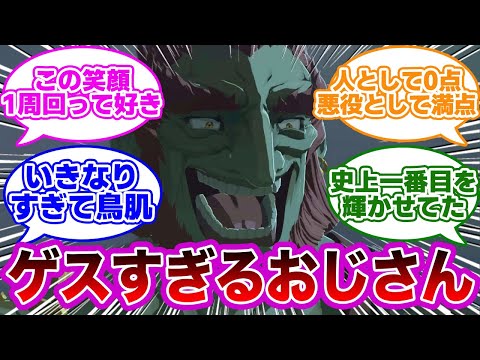
After 15 years following the Legend of Zelda series, one player has concluded that Ganondorf’s return in Tears of the Kingdom represents the franchise’s most perfectly realized antagonist. Fan reactions reveal why this incarnation of the demon king has captivated players in ways previous versions never achieved.
What Happened
Ganondorf’s return in Tears of the Kingdom marks a dramatic departure from his portrayal in Breath of the Wild. Rather than the mindless Calamity Ganon of the previous game, this version emerges as a fully conscious, strategically intelligent antagonist driven by pure ambition for domination. The character’s resurrection after 10,000 years of sealing has sparked widespread fan enthusiasm, with players praising the villain’s design, motivation, and presence throughout the game.
Why It Matters
Ganondorf’s characterization in Tears of the Kingdom represents a significant evolution in video game villain design. The character demonstrates how a perfect antagonist requires more than raw power—it demands clear motivation, psychological complexity, and a direct, personal threat to the player. This approach aligns with broader industry trends toward morally complex antagonists seen in titles like Dark Souls and Elden Ring. For the Zelda franchise specifically, Ganondorf’s success addresses fan disappointment from Breath of the Wild, where the absence of a recognizable villain left many players unsatisfied.
Background
The Legend of Zelda series has featured multiple incarnations of Ganondorf across its 15-year modern era. Ocarina of Time introduced the character as a young, ambitious sorcerer seeking Hyrule’s conquest. Twilight Princess presented an older, more philosophically detached version whose motivations seemed ambiguous. Breath of the Wild replaced the traditional villain entirely with Calamity Ganon, a mindless force of destruction stripped of personality and agency.
Fan reception to Breath of the Wild’s approach was mixed. While the game’s open-world design was revolutionary, many players felt the absence of a compelling villain diminished the narrative impact. This criticism appears to have directly influenced Tears of the Kingdom’s design philosophy, where the development team chose to restore Ganondorf as a fully realized character while maintaining the Calamity as a separate, lesser manifestation of his power.
Key Points
- Series-defining strength: Ganondorf is established as the most powerful incarnation in franchise history, capable of shattering the Master Sword in direct combat
- Pure motivation: His desire for domination stems from a simple origin—envy of Hyrule’s prosperity compared to the harsh Gerudo Desert—but is amplified by limitless power into absolute ambition
- Psychological complexity: Despite his evil nature, moments reveal a childlike wonder beneath the malice, suggesting the corruption of an initially pure desire
- Personal vendetta: Unlike Calamity Ganon, this version demonstrates clear, persistent hostility toward Link specifically, sending arms and shadows to hunt the hero throughout the game
- Strategic intelligence: Ganondorf combines raw power with cunning, demonstrating willingness to kneel before others to achieve his goals—marking him as a political strategist, not merely a force of nature
- Unbroken spirit: The revelation that 10,000 years of sealing left his core consciousness completely intact suggests he is an enemy that cannot truly be destroyed
Timeline
- Ocarina of Time era: Ganondorf emerges as an ambitious young sorcerer seeking Hyrule’s conquest
- Twilight Princess era: An older, more philosophically distant Ganondorf appears with mixed motivations
- Breath of the Wild (2017): Calamity Ganon replaces the traditional villain as a mindless destructive force
- Tears of the Kingdom (2023): Ganondorf returns as a fully conscious, strategically intelligent antagonist with clear personal motivation
Perspectives
Fan analysis reveals three distinct reasons for Ganondorf’s success as a villain. First, players appreciate his completion as an antagonist—he is simultaneously “zero points as a human, perfect score as a villain,” embodying pure evil while remaining psychologically coherent. Second, his personal vendetta against Link creates a sense of individual threat; players feel hunted rather than merely obstructed. Third, his psychological depth—moments where childlike wonder flickers beneath malevolence—prevents him from becoming one-dimensional.
Comparisons to other complex villains illuminate Ganondorf’s uniqueness. Fire Emblem: Three Houses’ Edelgard represents “revolutionary evil,” pursuing world transformation through conviction. Attack on Titan’s Eren Yäger embodies “freedom-driven evil.” Ganondorf, by contrast, represents pure “domination-driven evil”—a desire for control so fundamental it appears etched into his soul. This distinction places him in a different category: the classical, archetypal demon king perfected rather than subverted.
Insights
Ganondorf’s success in Tears of the Kingdom demonstrates that perfect villains require three simultaneous conditions: pure, understandable motivation; overwhelming power to realize that motivation; and complete psychological stability. Previous Ganondorf incarnations achieved two of these three. Ocarina of Time’s version had clear motivation and power but faced defeat. Twilight Princess’s version showed power but muddled motivation. Breath of the Wild’s Calamity possessed power but lacked motivation entirely.
The development team’s decision to reframe Calamity Ganon as merely a “gas leak” from Ganondorf’s true form was strategically brilliant. This allowed them to acknowledge the previous game while establishing that the demon king’s core consciousness remained completely intact through 10,000 years of imprisonment. This design choice carries implications for the franchise’s future: if Ganondorf cannot be truly destroyed, subsequent games must either find a way to surpass this perfect villain or accept that he represents an insurmountable narrative peak.
From a broader industry perspective, Ganondorf exemplifies how classical villain archetypes can evolve within modern game design. Rather than subverting the “demon king” trope, Tears of the Kingdom perfects it—creating an antagonist who is simultaneously timeless and contemporary, mythologically resonant and psychologically complex. This approach suggests that the future of compelling video game narratives may lie not in deconstruction of familiar character types, but in their refinement to their absolute potential.