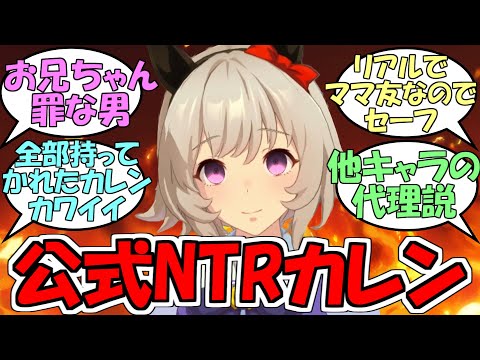
▶ Watch the original YouTube video
Karen’s Official NTR Event: A Deep Analysis of Game Design Strategy and Player Psychology
Uma Musume’s recent event featuring character Karen has sparked widespread debate in the gaming community, with players questioning whether the scenario represents a genuine narrative twist or a sophisticated psychological strategy. Drawing on 15 years of game narrative analysis, this article examines the event’s deeper design intentions, the identity theories surrounding key characters, and how the developers may be deliberately maintaining narrative ambiguity to sustain player engagement.
What Happened
Uma Musume released an event centered on the character Karen that shocked players with its portrayal of emotional vulnerability and apparent romantic rejection. The event depicts Karen competing in a beauty pageant against Scarlet, during which Karen expresses self-doubt and questions her worthiness, saying “I’m not good enough for you anymore.” This marked a stark departure from her typical confident, cheerful personality. The event’s narrative ambiguity—particularly regarding whether two characters, “Big Brother” and “Dust Trainer,” are the same person—has generated extensive speculation within the player community about whether the scenario constitutes what fans are calling an “official NTR” (a term referring to romantic betrayal narratives).
Why It Matters
This event represents a significant case study in modern gacha game design psychology. Rather than simply entertaining players, the event appears deliberately engineered to create emotional investment through uncertainty and psychological tension. The developers’ decision to leave key narrative elements ambiguous suggests a sophisticated understanding of how player communities generate engagement through ongoing discussion and interpretation. This approach has broader implications for how free-to-play games maintain long-term player investment and community activity. Understanding these design strategies reveals how contemporary games manipulate emotional responses and sustain discourse within player communities.
Background
Uma Musume is a popular gacha-based mobile game featuring characters based on famous racehorses. Karen is an established character known for her confident personality and catchphrase about “conquering the world with cuteness.” The game’s narrative structure includes character-specific events that develop their stories and relationships with the player’s character, known as the “trainer.” Karen’s character design has evolved since the game’s initial four-panel manga era, where she was portrayed as a mischievous, somewhat cunning character, to her current incarnation as a perfectionist pursuing an ideal of cuteness. This character evolution becomes relevant when analyzing the event’s narrative implications.
Key Points
- Identity Theory Debate: The community has proposed that “Big Brother” and “Dust Trainer”—two figures mentioned in Karen’s narrative—may be the same person at different points in time, representing character growth rather than separate individuals.
- Cinderella Motif: Karen’s storyline contains deliberate references to Cinderella mythology, including imagery of glass slippers, magical carriages, and destiny, suggesting a multi-layered narrative design.
- Character Evolution Contradiction: Karen’s personality has shifted from her four-panel manga portrayal as a cunning character to her current perfectionist identity, which may represent intentional character development rather than inconsistency.
- Psychological Vulnerability Portrayal: The event marks a rare instance where a gacha game’s official narrative depicts a popular character experiencing genuine emotional defeat and self-doubt.
- Strategic Narrative Ambiguity: The developers appear to have deliberately avoided clarifying whether the romantic scenario is genuine or metaphorical, maintaining space for multiple interpretations.
- New Character Introduction Function: The event simultaneously serves to establish Scarlet as a formidable character by positioning Karen as a contrast, a common gacha game strategy.
Narrative Interpretations
The event supports at least four distinct interpretations that coexist simultaneously:
Interpretation 1: Character Growth Narrative — Big Brother and Dust Trainer are the same person, and Karen’s emotional crisis represents a temporary psychological challenge that will be resolved through future events, mirroring character development patterns seen in works like “Attack on Titan.”
Interpretation 2: Genuine Romantic Conflict — The two figures are genuinely different people, and Karen has experienced actual romantic rejection, creating the literal “NTR” scenario players fear.
Interpretation 3: Cinderella Allegory — The entire event functions as a Cinderella retelling, where Karen’s “magic” (her confidence and cuteness) temporarily fails, and the narrative explores themes of transformation and destiny.
Interpretation 4: New Character Establishment — The event primarily serves a mechanical function: establishing Scarlet’s strength by contrasting her with Karen’s temporary weakness, a standard gacha game practice.
The fact that all four interpretations remain textually valid suggests intentional design rather than narrative oversight.
Design Strategy Analysis
From a game design perspective, this event employs several sophisticated psychological strategies. First, it creates what psychologists call the “Romeo and Juliet effect”—the phenomenon where obstacles to desire increase emotional attachment. By introducing uncertainty about Karen’s romantic situation, the developers intensify player emotional investment in her character.
Second, the deliberate maintenance of narrative ambiguity serves a community engagement function. By refusing to clarify whether Big Brother and Dust Trainer are identical, the developers ensure that player communities will continue generating interpretations, theories, and discussions indefinitely. This mirrors the strategy employed in “Steins;Gate,” where ambiguous time-travel mechanics sustained viewer speculation long after the series concluded.
Third, the event demonstrates what might be called “strategic emotional vulnerability.” Rather than maintaining Karen’s established confident persona, the developers temporarily strip away her psychological defenses, making her more relatable and emotionally resonant. This technique appears in successful character-driven narratives across multiple media, from “Fate/stay night” to “Cinderella Girls.”
Community Response
Player reactions have been notably diverse and intense. On Twitter, the hashtag “Official NTR” briefly trended, with players expressing emotional distress about Karen’s apparent rejection. Comments like “Karen would never look so sad” and “I want to believe in Big Brother” dominated social media, indicating strong emotional investment in the character.
On forums like 4chan’s anime boards, more analytical discussions emerged. Players systematically compared Karen’s dialogue across different events, analyzed the Cinderella references, and debated the timeline implications of the Big Brother/Dust Trainer theory. This represents the kind of sustained interpretive community engagement that sophisticated narrative design can generate.
YouTube comments frequently referenced the phrase “brain destroyed,” suggesting the event’s psychological impact exceeded typical gacha game narratives. This intensity of reaction indicates the developers successfully achieved their apparent goal of creating emotional resonance.
Broader Implications
This event exemplifies how contemporary free-to-play games function as psychological engagement systems rather than purely entertainment products. By understanding player attachment psychology, emotional vulnerability, and community interpretation dynamics, developers can create narratives that sustain engagement far beyond the event’s official duration.
The event also demonstrates the value of narrative ambiguity in modern game design. Rather than providing definitive answers, the developers created space for infinite interpretation, ensuring that player communities will continue generating content, discussion, and engagement around the event indefinitely.
However, the event’s long-term success depends on how Karen’s character develops in subsequent narratives. If future events confirm that her emotional crisis was temporary and resolved, the event functions as character development. If her character remains changed by this experience, the narrative gains additional weight. If the developers never address the event’s implications, it risks being perceived as narrative abandonment rather than sophisticated design.
Conclusion
Uma Musume’s Karen event represents a sophisticated case study in narrative game design that transcends simple entertainment. Through deliberate emotional vulnerability, strategic ambiguity, and multi-layered storytelling, the developers created an event that simultaneously functions as character development, new character introduction, psychological engagement tool, and community discourse generator. Whether this constitutes a narrative masterpiece or a cynical manipulation of player psychology depends largely on how the developers follow up—a question that remains unanswered and may remain intentionally so.