▶ Watch the original YouTube video
Pokémon Partners with All 60 J-League Clubs: Fans React to Gaming and Sports Fusion
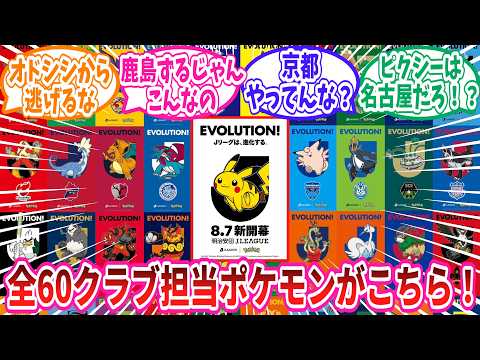
The Pokémon Company has announced an unprecedented partnership with Japan’s J-League, assigning a dedicated partner Pokémon to each of the league’s 60 clubs. The collaboration marks a significant convergence of gaming and sports industries, generating diverse reactions from trainers and fans worldwide.
What Happened
The Pokémon Company and Japan’s J-League have launched a comprehensive partnership assigning a unique partner Pokémon to each of the league’s 60 clubs. Each Pokémon was selected to reflect the club’s identity, colors, and historical characteristics. The initiative represents an unprecedented scale of collaboration between a gaming franchise and a professional sports league, extending Pokémon’s presence beyond traditional media channels into the sports industry.
Why It Matters
This partnership signals a fundamental shift in how major intellectual properties approach cross-industry expansion. Rather than limiting Pokémon to anime, games, and merchandise—its traditional domains—the franchise now actively integrates with professional sports. The collaboration demonstrates that the boundaries between gaming, entertainment, and sports are rapidly dissolving. For the J-League, the partnership offers access to Pokémon’s massive global fanbase and provides clubs with new merchandising and engagement opportunities. For Pokémon, the initiative opens pathways to reach sports fans who may have limited familiarity with gaming franchises.
Background
Pokémon launched in 1996 with the release of Pokémon Red and Green, establishing itself as a cornerstone franchise in gaming culture. Over 25 years, the brand has expanded into anime, trading cards, films, and merchandise, maintaining relevance across multiple generations. The J-League, Japan’s professional soccer league, comprises 60 clubs and commands significant cultural influence in Japan. This partnership represents the culmination of strategic planning between both organizations, likely negotiated over more than a year. The selection of partner Pokémon reflects careful consideration of each club’s visual identity, playing style, and historical significance.
Key Points
- Comprehensive Scale: All 60 J-League clubs receive dedicated partner Pokémon, ensuring every club and its fanbase has representation in the initiative.
- Identity Alignment: Each Pokémon selection reflects the club’s colors, characteristics, and identity—for example, red clubs receive red-colored Pokémon, creating visual and symbolic consistency.
- Diverse Fan Reactions: Responses range from enthusiastic celebration when a club’s partner Pokémon matches a fan’s favorite, to critical responses when selections diverge from fan expectations.
- Cross-Industry Convergence: The partnership exemplifies the broader industry trend of merging gaming and sports sectors, moving beyond experimental collaborations into mainstream strategy.
- New Fan Acquisition: The initiative creates pathways for J-League fans unfamiliar with Pokémon to engage with the franchise, while simultaneously introducing gaming fans to professional soccer.
- Future Expansion Potential: The partnership likely signals upcoming merchandise releases, in-game events, and stadium promotions featuring partner Pokémon.
Comparative Analysis: Similar Collaborations
| Initiative | Year | Scale | Success Level | Distinction from Pokémon × J-League |
|---|---|---|---|---|
| Fate/Grand Order × Regional Campaign | 2018–2020 | ~20 regions nationwide | Moderate | Limited to regional scope; not nationwide |
| Monster Strike × NPB (Baseball) | 2015–2018 | 12 professional teams | Moderate | Baseball lacks soccer’s universal appeal; smaller team count |
| Dragon Quest × Regional Municipalities | 2019–Present | Multiple municipalities | High | Focused on regional development rather than sports |
The Pokémon × J-League partnership exceeds previous gaming-sports collaborations in both scope and ambition. Where Monster Strike partnered with 12 baseball teams, Pokémon engages all 60 J-League clubs. The scale and strategic vision position this initiative not as a limited experiment but as a potential industry standard for future IP collaborations.
Fan Reactions and Online Response
Twitter: Many fans expressed joy when their favorite club’s partner Pokémon aligned with their personal favorite Pokémon, creating what fans describe as “double favoritism.” This convergence of interests generates exceptionally strong emotional responses.
Critical Perspectives: Some fans voiced disappointment when their club’s assigned Pokémon diverged from their expectations of club identity. This reflects the deeply held perceptions fans maintain about their clubs’ characteristics and aesthetics.
YouTube Comments: Analytical commentary dominated, with viewers recognizing the partnership as a strategic evolution in sports marketing and IP utilization.
Forum Discussions: Balanced debate emerged, with supporters highlighting the partnership’s innovative potential alongside skeptics questioning whether J-League fans would genuinely engage with Pokémon content.
Industry Implications and Future Outlook
The Pokémon × J-League partnership represents a watershed moment in entertainment industry convergence. For over a decade, the boundaries between sports fandom and gaming/anime fandom operated as distinct communities. This partnership accelerates the dissolution of those boundaries.
The rise of esports provides historical context: in 2015, competitive gaming faced skepticism as a legitimate sport. Today, esports commands global audiences and professional infrastructure. Similarly, gaming-sports collaborations are transitioning from experimental initiatives to standard business practice.
Predicted Developments:
- Merchandise Acceleration: Extensive product lines featuring club-specific partner Pokémon will launch, with limited editions potentially commanding premium value in secondary markets.
- In-Game Integration: Future Pokémon titles and mobile games like Pokémon GO will likely feature J-League-exclusive events and content.
- Stadium Activations: Live promotions at club stadiums will facilitate direct engagement between sports and gaming audiences.
Practical Guidance for Fans
Deepen Your Understanding: Examine the reasoning behind each club’s partner Pokémon selection by comparing the Pokémon’s characteristics with the club’s playing style, history, and identity. This dual analysis enriches appreciation for both franchises.
Explore Official Context: The Pokémon Company and J-League have released background narratives explaining each partnership. Reading these stories reveals strategic intent beyond visual alignment.
Collect Strategically: Collaboration merchandise often appreciates in value over time as limited editions become retrospectively valued. Early acquisition may prove financially prudent.
Expand Your Perspective: Engaging with partner Pokémon across all 60 clubs—not just your favorite team—deepens understanding of the entire J-League ecosystem and its diverse club identities.
Insights
The Pokémon × J-League partnership transcends conventional IP licensing. It represents a strategic recognition that entertainment consumption patterns have fundamentally shifted. Audiences no longer compartmentalize interests into discrete categories; instead, they seek integrated experiences where multiple passions converge.
This initiative succeeds because it respects the existing identity and community of both Pokémon and J-League while creating genuine value for both fanbases. The partnership’s ultimate success depends on sustained engagement from J-League fans discovering Pokémon through their clubs, and Pokémon fans exploring soccer through their favorite creatures.
Historically, this partnership will likely be recognized as a pioneering model. As other sports leagues and gaming franchises observe the results, similar collaborations will inevitably follow. The Pokémon × J-League initiative establishes a template for how major entertainment properties can meaningfully integrate with sports industries, creating value that transcends traditional marketing boundaries.
The convergence of gaming and sports represents not a temporary trend but a permanent restructuring of entertainment industry dynamics. Pokémon’s willingness to embrace this shift positions the franchise at the forefront of a new era in IP strategy.