▶ Watch the original YouTube video
Why Kamen Rider Kabuto’s Zecktmizer Is a Surprisingly Underwhelming Weapon: A 15-Year Fan Analysis
The Zecktmizer, a weapon from Kamen Rider Kabuto, represents one of the most puzzling design failures in the franchise—a weapon that is theoretically overpowered yet visually underwhelming and rarely used. After 15 years of analyzing anime and gaming media, a longtime fan reveals how the collision between toy business demands and creative storytelling produced this curious artifact of early Heisei-era Rider production.
What Happened
The Zecktmizer is a weapon that appears in Kamen Rider Kabuto (2005-2006), a series that aired during the early Heisei period of the Kamen Rider franchise. According to its in-universe specifications, the Zecktmizer is an extraordinarily powerful weapon capable of firing unlimited homing bombs with a 15-meter blast radius. It is also compatible with the series’ signature “Clock Up” acceleration ability, which theoretically makes it devastatingly effective. However, despite these impressive specifications, the weapon appears only twice in the series before disappearing entirely from the narrative.
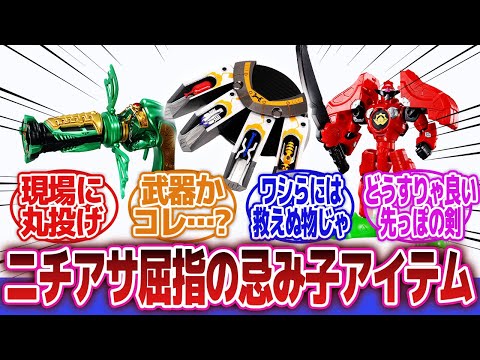
The core problem is a fundamental disconnect: the weapon’s visual design—a nondescript rod-like object—fails to communicate its supposed power to viewers. Unlike other Rider weapons that clearly read as guns or swords, the Zecktmizer appears ambiguous and visually unimpressive, making it difficult for audiences to recognize it as a weapon at all.
Why It Matters
The Zecktmizer is not merely a design misstep; it is a window into the structural tensions that define tokusatsu production. The weapon’s existence reveals the fundamental conflict between toy manufacturers’ commercial demands and creative storytellers’ narrative needs—a tension that has shaped the Kamen Rider franchise since its inception.
Understanding the Zecktmizer’s failure provides insight into how major entertainment franchises navigate competing stakeholder interests, budget constraints, and creative compromise. For fans and industry observers, it demonstrates how even “failed” design choices can illuminate the realities of professional creative production.
Background
Kamen Rider Kabuto aired in 2005-2006, during a period of experimentation for the Heisei Rider series. The franchise had recently achieved significant commercial success with Kamen Rider 555 (Faiz), particularly through its Dengarasher weapon, which became a bestselling toy due to its modular, reconfigurable design. This success led toy manufacturer Bandai to demand similar gimmicks in subsequent series.
Kabuto introduced the Zector System—an extremely complex toy line featuring multiple transformable devices. Producer Shinichiro Shirakura later commented that the production team “did everything they shouldn’t have done to make it sell,” suggesting deep conflict between commercial and creative objectives.
The weapon’s specifications—unlimited ammunition, Clock Up compatibility, and 15-meter blast radius—would make it a game-breaking asset in any narrative context. This overpowered design forced the creative team into an impossible position: use the weapon and collapse the story’s dramatic tension, or abandon it and waste the toy investment.
Key Points
- Specification vs. Appearance Gap: The Zecktmizer is theoretically one of the most powerful weapons in the Rider franchise, yet its rod-like design fails to communicate this power visually, making it unrecognizable as a weapon to viewers.
- Minimal Screen Time: Despite its impressive specifications, the weapon appears only twice in the series before disappearing, indicating narrative constraints forced by its overpowered design.
- Toy Business Conflict: The weapon represents a collision between Bandai’s demand for complex, modular toy gimmicks and the creative team’s need for narratively functional weapons.
- Clock Up Production Costs: The weapon’s Clock Up compatibility created prohibitive animation and production expenses, making its use economically unfeasible for the series’ budget.
- Character Balance Issues: The weapon was never assigned to Zabi (Kamen Rider Zabi), a character whose design would have suited it perfectly, because doing so would have made that character too powerful and destabilized the story.
- Broader Pattern: The Zecktmizer is one of several “underwhelming weapons” produced during the early Heisei period, suggesting systemic production challenges rather than isolated design failure.
Timeline
- 2002-2003 (Kamen Rider Ryuki): Introduction of complex transformation systems; beginning of toy-narrative integration experiments.
- 2003-2004 (Kamen Rider 555/Faiz): Dengarasher becomes a bestselling toy; Bandai recognizes toy gimmicks as critical to series success.
- 2004-2005 (Kamen Rider Blade): Card game elements introduced; toy complexity increases further.
- 2005-2006 (Kamen Rider Kabuto): Zector System introduced; Zecktmizer appears twice before abandonment; production team struggles with Clock Up animation costs.
- 2010 (Kamen Rider Double): Memory gimmicks successfully integrated into narrative structure, suggesting lessons learned from Kabuto’s failures.
- 2016 (Kamen Rider Ghost): Weapon systems better balanced between toy requirements and narrative function, indicating continued refinement.
Perspectives
The Toy Industry Perspective: Bandai’s demands for modular, reconfigurable weapons stem from legitimate commercial success. The Dengarasher’s popularity created genuine business pressure to replicate that model. From this viewpoint, the Zecktmizer represents a reasonable attempt to create a complex toy system, even if the creative execution failed.
The Creative Team’s Perspective: The production staff faced an impossible mandate: create a toy-driven weapon system while maintaining narrative coherence. Shirakura’s comment about doing “everything they shouldn’t have done” suggests the team recognized the fundamental incompatibility between Bandai’s demands and storytelling needs. The Zecktmizer became a compromise that satisfied neither party.
The Viewer’s Perspective: Online fan communities have identified the core problem with remarkable accuracy: the weapon is theoretically powerful but visually unimpressive and functionally absent from the narrative. Viewers recognize that something went wrong in production, even if they don’t fully understand the structural causes.
The Production Evolution Perspective: Later series like Double and Ghost demonstrate that the production team learned from Kabuto’s failures. By the 2010s, toy gimmicks were being integrated more successfully into narrative structures, suggesting that the Zecktmizer’s failure was a necessary learning experience rather than a permanent problem.
Comparative Analysis: The Lineage of Underwhelming Weapons
The Zecktmizer is not unique. Several other early Heisei Rider weapons exhibit similar problems:
Smart Pad (Kabuto): A smartphone-like device with unclear narrative function, representing another toy-driven design that failed to integrate meaningfully into the story.
Basher Magnum (Kabuto): A complex weapon requiring all Zectors to combine—a toy gimmick so complicated that few children could actually perform the combination, limiting both toy appeal and narrative utility.
Ghost’s Sword (Kamen Rider Ghost): Highly modular and reconfigurable as a toy, yet visually unimpressive in the series, with other weapons receiving more screen time and narrative importance.
This pattern suggests that the problem was not unique to the Zecktmizer but rather endemic to early Heisei production, where the industry was still experimenting with how to balance toy sales with storytelling.
The Clock Up Animation Budget Problem
A critical but often overlooked factor in the Zecktmizer’s abandonment is the production cost of Clock Up sequences. The effect required significant animation resources and careful choreography to be visually effective. Using the Zecktmizer during Clock Up would have required even more complex animation, as the weapon’s effects would need to be rendered at accelerated speed.
Production staff reportedly realized that Clock Up sequences consumed far more budget than initially anticipated. This discovery forced difficult choices about which scenes could include the effect. The Zecktmizer, being a complex weapon requiring Clock Up compatibility, became economically unfeasible to animate regularly.
This mirrors challenges seen in later series like Kamen Rider Fourze, where complex toy gimmicks had to be abandoned or simplified due to animation budget constraints. The lesson learned was that toy complexity must be balanced against production feasibility.
Why Zabi Never Used the Zecktmizer
An intriguing aspect of the Zecktmizer’s history is that it was never assigned to Zabi (Kamen Rider Zabi), despite Zabi’s character design emphasizing ranged combat. Logically, a homing bomb weapon would have been perfect for this character.
The likely explanation is narrative balance. Giving Zabi the Zecktmizer would have made that character too powerful, destabilizing the story’s dramatic tension. The production team had to carefully distribute weapon power among the three main Riders (Kabuto, Drake, and Zabi) to maintain conflict and stakes. Assigning the Zecktmizer to any single character would have broken this balance.
This decision reveals another layer of production complexity: weapon design is not merely about individual cool factor but about maintaining ensemble narrative balance across multiple characters.
Insights
The Zecktmizer represents far more than a failed design. It is a artifact of the early Heisei Rider era’s growing pains—a period when the franchise was learning how to navigate the intersection of toy commerce and creative storytelling.
The weapon’s existence demonstrates that “failure” in entertainment production is often not a simple matter of incompetence but rather the inevitable result of competing pressures: Bandai’s legitimate commercial interests, the production team’s creative vision, animation budget realities, and narrative coherence requirements. The Zecktmizer failed because these pressures could not be simultaneously satisfied.
Importantly, the franchise learned from this failure. By the 2010s, series like Double and Ghost showed that toy gimmicks could be integrated more successfully into narratives. The Zecktmizer’s awkward existence was a necessary step in this learning process.
For viewers, the weapon offers a valuable lesson: the most interesting aspects of long-running franchises are often not the successes but the failures—the points where production realities collide with creative ambition. The Zecktmizer is a window into the actual conditions of professional creative work, where compromise, constraint, and pragmatism shape the final product as much as vision and artistry.
How to Appreciate Kabuto’s Production Tensions
For viewers encountering Kamen Rider Kabuto for the first time, paying attention to the Zecktmizer and similar weapons reveals the series’ production context. Rather than dismissing these weapons as failures, viewers can use them as entry points into understanding how the series was made.
Watch for the Clock Up sequences and notice how expensive they appear—this context explains why the Zecktmizer couldn’t be used more frequently. Observe how weapons are distributed among the three main Riders and consider how the narrative balance would collapse if any single character received too much firepower. Compare Kabuto to earlier series like 555 (Faiz) and later series like Double to see how the franchise’s approach to toy integration evolved.
This analytical approach transforms apparent failures into opportunities for deeper engagement with the text, revealing the hidden architecture of professional production.