▶ Watch the original YouTube video
Why Giren’s Greed Remains a Masterpiece Strategy Game Two Decades Later
Giren’s Greed, a PlayStation 2-era real-time strategy game set in the Mobile Suit Gundam universe, continues to command devoted players and premium resale prices more than 20 years after its original release. The game’s enduring appeal stems from its asymmetrical faction balance, sophisticated unit development systems, and seamless integration of Gundam lore into core gameplay mechanics—a design philosophy rarely seen in modern strategy games.
What Happened
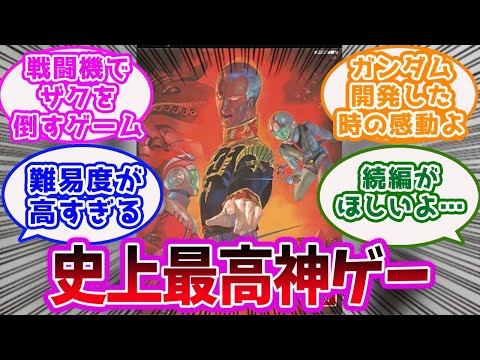
Giren’s Greed, originally released for PlayStation 2 and later ported to PSP, has experienced a remarkable resurgence in player interest despite the absence of any new entries in the series for over a decade. The game remains highly sought after in the secondhand market, with used copies commanding prices exceeding $50 USD. Player communities continue to express strong demand for a modern sequel, citing the game’s unmatched strategic depth and elegant design as reasons why no subsequent title has matched its quality.
Why It Matters
Giren’s Greed represents a rare example of a strategy game where narrative setting and mechanical design are fully integrated rather than separated. In most modern games, story and gameplay function as distinct elements. Giren’s Greed instead makes the historical constraints of each faction—the Federation’s initial technological disadvantage and Zeon’s resource scarcity—central to the strategic experience itself. This approach offers valuable lessons for contemporary game developers about how worldbuilding can enhance rather than complicate gameplay. Additionally, the persistent demand for a sequel despite the game’s age demonstrates a significant market gap that remains unfilled by competing titles.
Background
Giren’s Greed is a real-time tactical strategy game based on the Mobile Suit Gundam franchise, specifically the One Year War scenario that forms the core narrative of the original anime series. Players command either the Earth Federation or the Principality of Zeon across a series of battles, managing unit development, pilot assignments, and resource allocation. The game’s design requires fundamentally different strategic approaches depending on faction selection: Federation players must overcome early technological inferiority using conventional military assets, while Zeon players navigate severe resource constraints despite superior mobile suit technology.
The game’s development system ties directly to historical events within the Gundam timeline. Federation players experience genuine satisfaction when prototype units like the Gundam finally become available after prolonged reliance on conventional forces. Similarly, Zeon players witness the progression of their mobile suit lineup as the war advances, with each new unit type representing a significant strategic shift.
Key Points
- Asymmetrical Faction Balance: The Federation and Zeon operate under fundamentally different constraints that reflect their historical positions in the One Year War, creating distinct strategic experiences rather than cosmetic differences.
- Unit Development as Narrative: The completion of key units like the Prototype Gundam or Qubeley carries emotional weight and directly alters battlefield dynamics, making progression feel meaningful rather than incremental.
- Pilot Assignment Mechanics: Individual pilots dramatically affect unit performance, forcing players to make difficult allocation decisions that ripple across their entire strategy.
- One Year War Scenario Superiority: The limited timeframe and resource constraints of the One Year War create superior strategic tension compared to later scenario expansions with longer timelines and greater unit variety.
- Market Demand Disconnect: Despite strong secondhand market activity and consistent player requests for sequels, no new entry has been released, indicating a significant gap between consumer demand and publisher supply.
- Productive Imperfection: Minor balance issues, such as the Zssa mobile suit’s apparent overperformance, actually encourage player experimentation and strategic problem-solving rather than diminishing engagement.
Design Philosophy Comparison
| Element | Giren’s Greed | Super Robot Wars | Fire Emblem |
|---|---|---|---|
| Unit Development | Historically-grounded tech tree reflecting One Year War progression | Existing unit upgrades and enhancements | Character-focused growth and promotion |
| Balance Design | Faction-specific constraints create distinct strategic requirements | Multiple factions share similar core strategies | Character abilities provide tactical variety |
| Narrative Integration | Gameplay mechanics embody historical circumstances | Original storyline separate from mechanical systems | Individual character narratives |
| Difficulty Adjustment | Faction selection fundamentally alters challenge level | Explicit difficulty settings | Stage and mode selection |
Strategic Faction Differences
Federation Campaign: Overcoming Disadvantage
Federation players begin with access only to conventional military units—fighter aircraft and tanks—despite the narrative promise of mobile suit development. This initial limitation mirrors the historical Federation’s technological gap and creates a distinct early-game experience. The eventual arrival of prototype mobile suits becomes a pivotal moment rather than a routine progression milestone. This design choice transforms what could be frustrating limitations into meaningful strategic constraints that enhance the sense of progression and eventual triumph.
Zeon Campaign: Managing Scarcity
Zeon players face the opposite challenge: access to superior mobile suit designs but insufficient resources for mass production. Players must constantly choose between quantity (mass-producing Zaku units) and quality (deploying limited numbers of advanced mobile suits like the Gelgoog). This resource tension creates ongoing strategic tension throughout the campaign, as every unit commitment carries genuine opportunity cost.
Perspectives
Player Community View: Fan communities consistently express frustration with the absence of a sequel, viewing the game as unmatched in its combination of strategic depth and Gundam authenticity. Comments from players indicate they actively maintain aging hardware specifically to replay the game, suggesting attachment that transcends nostalgia.
Market Reality: The secondhand market demonstrates sustained demand, with used copies commanding premium prices. This economic signal indicates consumer willingness to pay significantly for access to the game, yet publishers have not capitalized on this demonstrated demand.
Developer Perspective (Inferred): The absence of sequels likely reflects concerns about development costs associated with rebalancing the game’s intricate systems for modern standards, combined with the perception that Gundam-specific strategy games represent a niche market despite clear evidence of sustained interest.
Insights
Giren’s Greed demonstrates that strategic depth and narrative authenticity are not opposing forces but complementary elements. By making the historical circumstances of each faction central to gameplay rather than cosmetic flavor, the designers created a game where learning the mechanics simultaneously means understanding the One Year War’s strategic reality. This integration explains why the game has aged gracefully—the mechanics remain engaging because they reflect timeless strategic principles rather than temporary trends.
The game’s minor balance imperfections, rather than undermining its appeal, actually contribute to its longevity. Units like the Zssa that appear overperforming encourage players to develop counter-strategies and experiment with unconventional approaches. This creates ongoing engagement rather than the solved-puzzle feeling that afflicts many perfectly balanced games.
The persistent demand for a sequel, evidenced by premium secondhand prices and consistent community requests, indicates a genuine market opportunity. A modern Giren’s Greed would likely attract both nostalgic players and new audiences interested in strategy games that prioritize mechanical depth over accessibility. The game’s design philosophy—where setting and mechanics are inseparable—offers a template for how licensed games can transcend their source material to become standalone design achievements.
Ultimately, Giren’s Greed endures because it treats players as strategists capable of understanding complex systems and making meaningful decisions within historical constraints. In an era of increasingly streamlined game design, this respect for player intelligence remains rare and valuable.