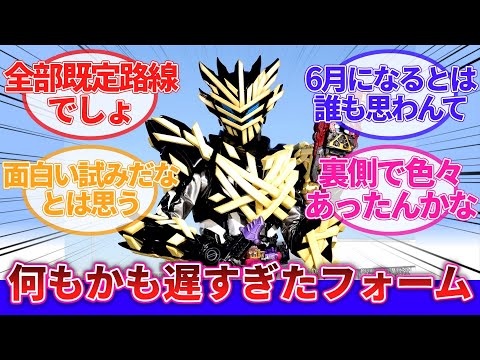
▶ Watch the original YouTube video
Why Bakibaki Rider’s Late Appearance Ruined Its Reception: A Deep Analysis of Toy Marketing vs. Story Development
Bakibaki Rider, a character from Kamen Rider Gaim, suffered from a critical timing mismatch between toy release schedules and story progression. After 15 years of analyzing tokusatsu productions, this case stands out as one of the most striking examples of how merchandise strategy can undermine character reception and narrative quality.
- What Happened
- Why It Matters
- Background
- Key Points
- Timeline
- Perspectives
- Comparative Analysis: Similar Cases in Tokusatsu History
- The Psychology of Expectation and Disappointment
- Power Scaling and Relative Strength
- Evidence of Mid-Production Changes
- How to Properly Evaluate Bakibaki Rider
- Fan Reception and Online Discourse
- Insights: A Victim of Production Systems
What Happened
Bakibaki Rider was announced through toy marketing months before its actual appearance in Kamen Rider Gaim’s narrative. The toy division revealed the character’s existence early as part of a bundled sales strategy with Retsu Gaim, creating inflated viewer expectations. However, the character’s actual debut came far later in the story—after the narrative had already progressed through multiple power escalations and introduced stronger antagonists. By the time Bakibaki Rider finally appeared, the story’s power scaling had advanced so significantly that the character felt underwhelming despite possessing considerable combat capabilities.
Why It Matters
This situation illustrates a fundamental tension in tokusatsu production: toy sales schedules often conflict with narrative pacing. When merchandise announcements precede story developments by months, viewer expectations build exponentially. The gap between expectation and reality becomes the primary factor determining character reception—not the character’s actual design or abilities. Understanding this dynamic reveals how production logistics can inadvertently damage a show’s storytelling quality and fan satisfaction. For long-time tokusatsu viewers and industry analysts, Bakibaki Rider represents a cautionary tale about the consequences of misaligned scheduling.
Background
Kamen Rider Gaim’s production faced constraints from Toei’s workplace reform initiatives, which affected shooting schedules and creative flexibility. The toy division’s decision to bundle Bakibaki Rider with Retsu Gaim locked the character’s appearance window into the merchandise release calendar rather than story requirements. This created a cascading problem: the character was designed with power levels calibrated for an earlier story phase, but appeared during the narrative’s final act when multiple stronger forms had already been introduced. The transformation device Bitter Gaim was originally planned as an accessory to Blade but was later released as a standalone item—a change suggesting mid-production schedule adjustments.
Key Points
- Bakibaki Rider was announced through toy marketing approximately 6 months before its story appearance, allowing viewer expectations to escalate unchecked
- The character’s debut occurred after narrative power inflation had progressed significantly, making its combat abilities feel inadequate by comparison
- Bundled toy sales strategy with Retsu Gaim determined the character’s appearance timing rather than narrative pacing
- Evidence suggests the character’s transformation method and wielder were modified mid-production due to scheduling conflicts
- Fan consensus identifies late appearance as the primary factor in negative reception, not inherent character weakness
- The character possesses legitimate combat strengths—including rapid-strike techniques and tactical advantages—that were overshadowed by poor timing
Timeline
- Early Production: Bakibaki Rider designed with power scaling for mid-story introduction
- Toy Announcement Phase: Merchandise division reveals character existence as part of Retsu Gaim bundle
- 6-Month Gap: Viewer expectations build while story progresses through multiple power escalations
- March (Hypothetical): If Bakibaki Rider had appeared at this point, power scaling would have aligned with narrative progression
- June (Actual): Bakibaki Rider finally debuts after Rambo Rider, Margen Rider, and multiple protagonist power-ups have already occurred
- Final Arc: Character appears during climactic story phase when stronger forms dominate the narrative
Perspectives
The Production Perspective: Toei’s toy division faced legitimate business constraints. Bundling merchandise requires coordinated release schedules, and workplace reforms limited production flexibility. The character was designed competently; external factors simply prevented optimal story integration.
The Viewer Perspective: Fans experienced a classic expectation-versus-reality disappointment. The 6-month gap between announcement and appearance allowed anticipation to build to unrealistic levels. When Bakibaki Rider finally appeared, it could never satisfy the inflated expectations, regardless of actual quality.
The Narrative Perspective: From a storytelling standpoint, Bakibaki Rider represents a casualty of production logistics. The character was competently designed but appeared at the wrong moment in the narrative arc. A 2-3 month earlier debut would have positioned it as a genuine threat; the actual timing made it feel like filler content.
The Comparative Perspective: Similar issues affected Kamen Rider Den-O (derivative riders following toy schedules), Kamen Rider Ryuki (appearance order mismatched with power hierarchy), and Kamen Rider Zero-One (COVID-19 disruptions altered character development). However, Bakibaki Rider’s timing mismatch proved more severe because the narrative power escalation was more dramatic.
Comparative Analysis: Similar Cases in Tokusatsu History
| Series | Affected Character(s) | Timing Issue | Impact on Reception |
|---|---|---|---|
| Kamen Rider Den-O | Derivative Riders | Appeared according to toy release schedule | “Filler” perception emerged; viewer engagement fluctuated |
| Kamen Rider Ryuki | Multiple Riders | Appearance order didn’t match narrative power hierarchy | Viewers questioned why certain riders seemed unexpectedly weak |
| Kamen Rider Zero-One | Multiple Power-Up Forms | COVID-19 disrupted shooting schedule; character arcs altered | Some forms received insufficient narrative development |
| Kamen Rider Gaim | Bakibaki Rider | 6-month gap between toy announcement and story appearance | Character appeared after power inflation; expectations unmet |
Kamen Rider Agito stands as a counterexample: that series successfully balanced toy release schedules with narrative pacing, resulting in higher viewer satisfaction. The production team deliberately synchronized merchandise announcements with story developments, preventing the expectation-reality gap that plagued Bakibaki Rider.
The Psychology of Expectation and Disappointment
Viewer response to Bakibaki Rider reveals a predictable psychological pattern:
- Announcement Phase: Toy reveal triggers anticipation for the character’s story debut
- Waiting Period: Extended gap allows expectations to escalate exponentially
- Appearance Phase: Character debuts; viewers compare reality against inflated expectations
- Disappointment Phase: The larger the expectation-reality gap, the greater the disappointment
In Bakibaki Rider’s case, the 6-month waiting period proved long enough to maximize expectation inflation. By appearance time, no realistic character design could satisfy the accumulated anticipation. This wasn’t a failure of character conception—it was a failure of release timing.
Power Scaling and Relative Strength
Contrary to popular criticism, Bakibaki Rider is not inherently weak. The character demonstrates:
- Capability to instantly defeat Buram Rider
- High-speed movement when combined with Blade
- Rapid-strike techniques using Bakibaki Stick that suppress standard forms
However, “absolute strength” differs from “relative strength.” By the time Bakibaki Rider appeared, the narrative had introduced multiple protagonist power-ups and stronger antagonists. The character’s power level—calibrated for mid-story impact—felt inadequate in the final arc’s escalated context. This demonstrates that character reception depends less on objective capability than on contextual positioning within the story’s power hierarchy.
Evidence of Mid-Production Changes
Several details suggest the character underwent significant revision during production:
- Bitter Gaim was released as an independent transformation item rather than a Blade accessory, indicating a shift in merchandising strategy
- The character’s wielder appears surprised by Bakibaki Rider’s appearance, suggesting unexpected timing even within the narrative
- Visual design shows minimal differentiation from the standard form, unusual for a major character reveal
- The character’s narrative function remains ambiguous, suggesting incomplete story integration
These elements collectively suggest that original plans called for an earlier debut with different transformation mechanics, but production constraints forced substantial revisions.
How to Properly Evaluate Bakibaki Rider
Avoid Comparison with Final-Arc Forms: Evaluating Bakibaki Rider against Rambo Rider or Margen Rider is fundamentally unfair. The character was designed as a parallel form, not a climactic power-up. Comparison should occur within its own power tier.
Contextualize the Timing Issue: Accepting the late appearance as an inherent story element—rather than a flaw—enables deeper appreciation. The question shifts from “why is this character weak?” to “what does this character’s delayed appearance mean narratively?”
Understand Production Constraints: Recognizing that toy sales schedules drive appearance timing removes the expectation that story logic should dictate character debuts. This knowledge transforms frustration into understanding.
Study Comparable Series: Watching Kamen Rider Den-O provides direct comparison. Observing how that series handled similar scheduling conflicts illuminates Bakibaki Rider’s challenges.
Fan Reception and Online Discourse
Negative Consensus: The overwhelming majority of fan commentary emphasizes late appearance as the primary criticism. Common complaints include “appearance timing was off,” “couldn’t keep up with power inflation,” “design lacked visual distinction,” and “felt like filler content.”
Emerging Re-evaluation: A smaller but growing segment of fans argues for reconsideration. These viewers note that “the character is actually quite strong,” “the Blade combination moves look impressive,” “Bakibaki Stick techniques are interesting,” and “reception would be completely different if it had appeared two months earlier.”
This divergence reveals that character evaluation is not objective but contextual. The same character receives opposite assessments depending on when it appears in the narrative.
Insights: A Victim of Production Systems
Bakibaki Rider represents a systemic failure rather than a creative one. The character itself was competently designed. The transformation mechanics were functional. The combat capabilities were legitimate. The fundamental problem was timing—a production logistics issue beyond the character designer’s control.
If Bakibaki Rider had debuted in March, before narrative power inflation accelerated, fan reception would likely have been substantially positive. The character would have appeared as a genuine threat during the story’s mid-phase. Viewer expectations, built during a shorter waiting period, would have remained realistic. The power scaling would have aligned with narrative progression.
Instead, the character appeared in June, after multiple power escalations had already occurred. This single timing decision transformed a competent character design into a fan disappointment.
This case study demonstrates that tokusatsu production success requires synchronizing three elements: toy release schedules, narrative pacing, and viewer expectation management. When these elements misalign—as they did with Bakibaki Rider—even well-designed characters suffer unfair reception.
For future productions, the lesson is clear: merchandise announcements must coordinate with story development, not override it. The Kamen Rider Agito model—where toy releases aligned with narrative beats—should serve as the standard. Bakibaki Rider’s case illustrates what happens when production logistics dominate creative decision-making.
Ultimately, Bakibaki Rider is not a failed character. It is a casualty of misaligned production systems—a competent design undermined by circumstances beyond its conception. In a different timeline, with a different release schedule, this character might have become a fan favorite. Instead, it became a cautionary tale about the importance of coordinating toy marketing with narrative development in tokusatsu production.