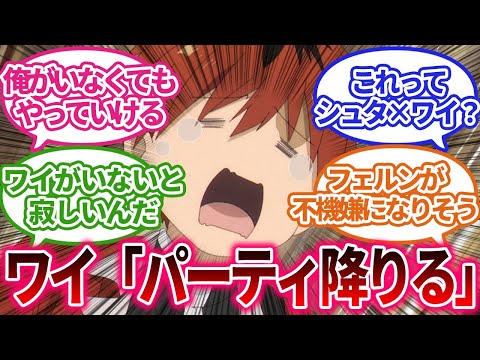
▶ Watch the original YouTube video
Frieren’s Stark Party Withdrawal Controversy: What the Internet Reaction Reveals
In a pivotal episode of the anime Frieren, the character Stark announces his intention to leave the party, claiming he lacks combat ability and is a financial burden. The scene sparked widespread online discussion about the true value of support roles and the psychology of self-doubt, revealing deeper themes about human relationships and self-worth that resonate with modern audiences.
What Happened
Stark, a member of Frieren’s adventuring party, announces his decision to leave the group. His reasoning centers on two main points: his combat abilities are insufficient compared to Frieren and Fern, and he represents a financial drain on the party’s resources. Rather than accepting his departure, Frieren and Fern respond by systematically detailing the specific, concrete ways Stark contributes to the party’s success. Fern adds a crucial observation: Stark’s real reason for wanting to leave is loneliness, not logical assessment. Ultimately, Stark confesses his true feelings and chooses to remain with the group.
Why It Matters
This scene addresses a fundamental modern concern: how we measure human value. In contemporary society, individuals often evaluate themselves and others based on quantifiable abilities and productivity. Stark’s internal struggle—believing his worth is determined solely by combat power—mirrors a widespread psychological issue. The episode’s resolution, which emphasizes the multifaceted nature of human contribution, offers a counternarrative to ability-based hierarchies. The scene has resonated particularly strongly because it validates forms of contribution that are often overlooked: emotional support, practical logistics, and daily care work. This thematic depth has made the episode a focal point for online discussion about self-worth and interdependence.
Background
Frieren is a fantasy adventure anime that follows a group of adventurers on a long journey. Stark is characterized as the party’s archer and support member, handling practical tasks like cooking, equipment maintenance, and resource management. Unlike Frieren, an ancient elf mage of immense power, and Fern, a capable young mage, Stark possesses no magical abilities. His combat contribution comes through archery, which he perceives as marginal compared to his companions’ magical prowess. The episode in question occurs during a period when the party is functioning well, making Stark’s sudden self-doubt appear to stem from internal psychological factors rather than external failure.
Key Points
- Stark proposes leaving the party based on perceived inadequacy in combat ability and financial burden
- Frieren and Fern respond by itemizing Stark’s specific contributions: archery support in combat, meal preparation, equipment repair, resource acquisition, and fraud prevention
- Fern identifies Stark’s true motivation: emotional loneliness rather than rational assessment of his utility
- Stark admits his genuine desire to remain with the group, revealing his self-doubt as a psychological rather than practical issue
- Online discussion focused on the value of support roles, the psychology of self-doubt, and the multidimensional nature of human worth
- The scene exemplifies a modern anime trend toward validating non-combat contributions and complex interdependence within teams
Frieren’s Specific Arguments for Stark’s Value
Frieren addresses Stark’s self-doubt through concrete examples. She emphasizes that his archery has repeatedly saved her in combat situations, functioning as essential support fire rather than primary damage. She highlights his role in daily logistics: purchasing supplies, preparing meals, and maintaining equipment and living spaces. Fern adds that Stark’s ability to distinguish genuine items from counterfeits protects the party from fraud—a practical safeguard with potentially life-or-death consequences in a fantasy setting. Additionally, Fern notes that Stark repairs clothing and equipment, a form of maintenance that extends the party’s resources and comfort. These arguments collectively demonstrate that Stark’s value extends far beyond raw combat power into domains that directly enable the party’s survival and wellbeing.
Perspectives
The Self-Worth Interpretation: Many online commentators viewed Stark’s crisis as a manifestation of modern self-doubt rooted in ability-based hierarchies. This perspective emphasizes that Stark’s problem is not objective inadequacy but internalized belief in his own worthlessness. The resolution validates the idea that human value cannot be reduced to a single metric.
The Support Role Revaluation: Some analysts framed the scene within a broader anime and gaming industry trend toward recognizing support roles as essential rather than secondary. This interpretation notes that contemporary media increasingly portrays teams as interdependent systems where no single role dominates, reflecting shifts in how collaborative work is understood.
The Emotional Bond Perspective: Online discussions frequently highlighted Fern’s observation that Stark’s true motivation is loneliness—a desire for emotional connection rather than a rational assessment of utility. This reading emphasizes that human relationships transcend functional value and that belonging is itself a legitimate need.
The Parental Role Analogy: Some viewers compared Stark’s contributions to parental or caregiving work within a household, noting that his cooking, cleaning, and maintenance mirror essential domestic labor often undervalued in broader society. This perspective connects the anime scene to real-world discussions about the recognition of care work.
Online Reaction Summary
Twitter users engaged extensively with Fern’s statement about friendship, with commentators noting the emotional weight of being valued for relationship rather than utility. YouTube comments frequently characterized Stark as occupying a “mother figure” position within the party, recognizing the emotional and logistical care he provides. Discussion boards debated the practical consequences of Stark’s absence, with some users calculating that the party’s daily operations would require significantly more time without his contributions. Notably, some viewers acknowledged initial skepticism toward Stark as a character, suggesting that this episode successfully reframed audience perception of his importance. The overall tone of online discussion reflected recognition that Stark’s internal struggle mirrors widespread modern anxiety about self-worth and the fear of being unnecessary.
Comparison with Similar Anime Scenes
The Stark episode differs meaningfully from comparable scenes in other anime. In Attack on Titan, Armin’s value is ultimately recognized through his strategic thinking—still an ability-based metric. In Delicious in Dungeon, character value is framed through teamwork and interdependence. Frieren’s approach is distinctive in emphasizing the smallest, most easily overlooked contributions: meal quality, clothing repair, and daily comfort. This granular focus on unglamorous support work represents a notable shift in how contemporary anime portrays human value. The scene also echoes themes from KonoSuba, which similarly portrays seemingly incompetent party members as essential, but Frieren’s explanation of Stark’s value is more systematic and logically structured, lending greater emotional weight to the argument.
Production and Narrative Technique
The timing of Stark’s crisis—occurring during a period of party success rather than failure—deliberately signals that his self-doubt is psychological rather than circumstantial. The production choice to have Frieren and Fern respond with specific examples rather than generic reassurance reflects a sophisticated understanding of how self-doubt operates: abstract encouragement fails, but concrete evidence of value can shift perception. Fern’s seemingly off-topic comment about the impossibility of romantic feelings between two men functions as a strategic emotional intervention, using humor to defuse tension and prompt Stark’s honest admission of loneliness. This technique mirrors psychological approaches to cognitive restructuring, where changing a person’s perception of reality can alter their emotional state.
Insights
The Stark episode reveals several interconnected truths about contemporary media and modern psychology. First, it demonstrates that modern audiences are increasingly receptive to narratives that challenge ability-based hierarchies and validate forms of contribution traditionally considered secondary. Second, the scene illustrates the gap between objective utility and subjective self-perception: Stark is genuinely valuable, yet his self-doubt persists despite this reality. This disconnect suggests that self-worth is not primarily a rational calculation but an emotional and psychological state requiring emotional validation alongside logical argument. Third, the episode reflects broader cultural shifts in how support roles are understood. In gaming, workplace dynamics, and social structures, there is growing recognition that specialized support functions are not subordinate to primary roles but rather essential to system function. Finally, the scene speaks to a widespread modern experience: the fear of being unnecessary, the anxiety that one’s contributions are marginal, and the longing for belonging that transcends utility. By validating Stark’s emotional need for connection alongside his practical contributions, the episode suggests that human value is fundamentally irreducible to function—that people matter not only for what they do but for who they are to others.