▶ Watch the original YouTube video
Why Kamen Rider’s Intermediate Forms Captivate Fans: A 15-Year Analysis of Evolution and Design
A comprehensive analysis of Kamen Rider’s intermediate transformation forms reveals why these mid-stage evolutions resonate so deeply with fans. Drawing from 15 years of viewing experience and comparison with over 300 anime and game titles, this article explores how intermediate forms embody character growth, narrative meaning, and design excellence in ways that set the franchise apart from other tokusatsu series.
- What Happened
- Why It Matters
- Background
- Key Points
- Detailed Form Analysis
- The Concept of “Legitimate Evolution”
- Comparative Analysis: Why Kamen Rider Stands Apart
- The Psychology of “Favorite” Intermediate Forms
- Evolution of Intermediate Form Philosophy (2009-Present)
- Practical Viewing Recommendations
- Fan Community Perspectives
- Future Directions for Intermediate Forms
- Personal Reflection: The Significance of Intermediate Forms
What Happened
A video featuring multiple Kamen Rider fans discussing their favorite intermediate transformation forms has sparked broader conversation about why these mid-stage evolutions hold such significance in the franchise. The discussion highlights forms like Rabbit Rabbit from Kamen Rider Build, Fang Joker from Kamen Rider W, Dead Heat from Kamen Rider Drive, and others, each representing different approaches to character progression and narrative integration.
Why It Matters
Intermediate forms occupy a unique position in tokusatsu storytelling. Unlike initial forms that introduce characters or final forms that represent ultimate power, intermediate forms embody the protagonist’s psychological and narrative journey. Understanding why fans gravitate toward specific intermediate forms reveals deeper truths about how character development, visual design, and narrative coherence work together to create meaningful entertainment. This analysis demonstrates that Kamen Rider’s approach to transformation sequences differs fundamentally from other tokusatsu franchises, prioritizing character growth over mere power escalation.
Background
The Kamen Rider franchise has evolved significantly since 2009, when Kamen Rider Decade premiered. Over the past 15 years, the series has developed increasingly sophisticated approaches to intermediate transformations. What began as simple “bridge” forms between initial and final states has transformed into complex expressions of character psychology, narrative progression, and thematic coherence. The franchise’s production philosophy has shifted from treating intermediate forms as transitional stages to recognizing them as essential narrative and character development tools.
This evolution reflects broader changes in how the franchise conceptualizes transformation sequences. Early series like Kamen Rider W introduced the concept of form selection reflecting character perspective, while later series like Kamen Rider Build integrated intermediate forms directly into character emotional arcs. Recent entries like Kamen Rider Gatchard have begun redefining the transformation system itself, introducing new mechanical elements that expand what intermediate forms can represent.
Key Points
- Legitimate Evolution Aesthetic: The most beloved intermediate forms maintain a sense of “legitimate progression,” where visual design directly reflects character growth and narrative development rather than arbitrary power increases.
- Character Perspective Integration: Forms like Fang Joker demonstrate how intermediate transformations can introduce new character viewpoints or psychological states, deepening narrative complexity and thematic resonance.
- Thematic Coherence: Successful intermediate forms like Rabbit Rabbit maintain consistency with their series’ core themes—in this case, the protagonist’s journey of self-discovery and power integration.
- Design-Narrative Synthesis: Unlike other tokusatsu franchises that prioritize visual spectacle, Kamen Rider’s intermediate forms achieve success by unifying design choices, combat applications, and narrative meaning into cohesive expressions of character development.
- Fan Projection and Identity: Viewers select their favorite intermediate forms based on personal values and worldviews, using these forms as mirrors for their own philosophies and character preferences.
- Evolving System Complexity: Recent series have expanded intermediate form concepts beyond simple visual upgrades, incorporating new mechanical systems and multi-character dynamics that redefine what transformation sequences can accomplish.
Detailed Form Analysis
Rabbit Rabbit (Kamen Rider Build)
Rabbit Rabbit represents the ideal intermediate form, embodying what fans call “legitimate evolution feeling.” This form emerges during a critical narrative moment when protagonist Sento acquires new bottles and begins integrating their power into his own identity. The design maintains visual continuity with previous forms while introducing subtle refinements that suggest increased competence and psychological maturity. The form’s appeal lies not in raw power display but in its faithful representation of character development—Sento’s growing confidence and understanding manifest visually in the transformation itself.
Fang Joker (Kamen Rider W)
Fang Joker demonstrates how intermediate forms can introduce narrative complexity by shifting perspective. This form enables transformation from Philip’s viewpoint rather than Shotaro’s, fundamentally altering combat approach and character dynamics. The form’s genius lies in its consistency throughout the series—the unique property of Philip-centric transformation remains relevant even as the narrative evolves, proving that intermediate forms can serve multiple narrative functions simultaneously.
Dead Heat (Kamen Rider Drive)
Dead Heat occupies an ambiguous position as both Drive’s intermediate form and Mach’s power-up, serving dual narrative functions. This unusual role demonstrates how intermediate forms can bridge multiple character arcs simultaneously, filling narrative gaps while advancing the protagonist’s journey. The form’s practical function—maintaining story momentum between major transformation milestones—proves that intermediate forms serve essential structural purposes beyond character development.
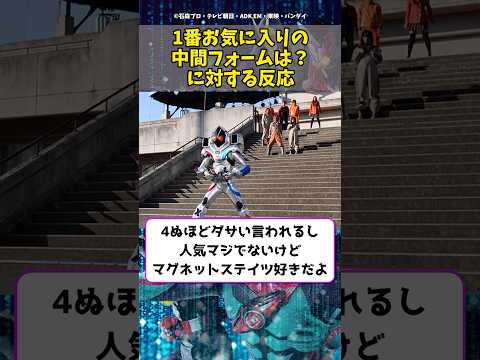
Magnet States (Kamen Rider Ghost)
Magnet States presents a fascinating case study in intentional design choices. Despite initial fan criticism of its “spacesuit-like” appearance, the form’s design deliberately emphasizes scientific control over supernatural power—a core thematic element of Kamen Rider Ghost. The form’s apparent awkwardness serves a purpose: highlighting the tension between scientific rationality and supernatural forces. This demonstrates how design choices dismissed as “ugly” may actually represent sophisticated thematic expression.
Jinba Lemon (Kamen Rider Ex-Aid)
Jinba Lemon embodies the series’ commitment to game-based progression. The form represents a difficulty increase mirroring actual game progression, where player skill and game challenge escalate simultaneously. This form succeeds because it maintains thematic consistency—every visual and mechanical element reinforces the gaming metaphor that defines the entire series.
Fire Gatchard (Kamen Rider Gatchard)
Fire Gatchard introduces new mechanical systems through its anchor gimick, expanding what intermediate forms can represent. Rather than simple visual upgrades, this form demonstrates how transformation sequences can evolve alongside changing mechanical systems, suggesting future directions for the franchise.
The Concept of “Legitimate Evolution”
Fan discussion consistently references the concept of “legitimate evolution feeling” when praising intermediate forms. This phrase encapsulates a specific aesthetic principle: intermediate forms succeed when visual design, narrative function, and character development align perfectly. A form possesses legitimate evolution feeling when viewers intuitively understand why the protagonist transforms at that moment and what that transformation represents about their journey.
This principle distinguishes Kamen Rider’s approach from other tokusatsu franchises. Super Sentai intermediate forms, while often visually striking, typically emphasize team unity over individual character growth. Ultraman intermediate forms prioritize power progression over psychological development. Kamen Rider, by contrast, integrates all three elements—visual design, narrative meaning, and character psychology—into unified expressions of growth.
Comparative Analysis: Why Kamen Rider Stands Apart
| Franchise | Intermediate Form Approach | Primary Focus | Fan Reception |
|---|---|---|---|
| Kamen Rider | Character growth and narrative integration | Psychological development + design + story meaning | Very High (strong fan devotion) |
| Super Sentai | Team unity symbolism | Visual design and team dynamics | Moderate (design appreciation, limited narrative depth) |
| Ultraman | Power progression stages | Visual spectacle and power scaling | Moderate (design-focused, limited character connection) |
| Pretty Cure | Character growth and emotional development | Psychological development + design + story meaning | High (comparable to Kamen Rider) |
This comparison reveals that Kamen Rider’s intermediate forms achieve exceptional fan engagement by synthesizing three typically separate elements: visual design excellence, narrative significance, and character psychological development. Forms like Rabbit Rabbit succeed because they excel simultaneously in all three dimensions, whereas intermediate forms in other franchises often prioritize one or two elements at the expense of others.
The Psychology of “Favorite” Intermediate Forms
Fans selecting their favorite intermediate forms engage in what might be termed “character projection optimization.” Viewers unconsciously choose intermediate forms that reflect their own values, worldviews, and personality traits. A fan favoring Magnet States likely values scientific rationality and embraces unconventional perspectives. A fan preferring Rabbit Rabbit probably values natural progression and harmonious growth. A fan devoted to Fang Joker likely appreciates multiple perspectives and integrated viewpoints.
This phenomenon demonstrates that intermediate forms function as psychological mirrors, allowing viewers to see themselves reflected in the protagonist’s journey. The diversity of “favorite” forms across the fanbase indicates that Kamen Rider’s design philosophy successfully creates multiple entry points for viewer identification and emotional investment.
Evolution of Intermediate Form Philosophy (2009-Present)
Early Era (2009-2012): Transitional Forms
During the Decade and W periods, intermediate forms primarily functioned as bridges between initial and final states. However, Fang Joker began shifting this paradigm by introducing narrative significance—this form wasn’t merely a power increase but a perspective shift that enriched the story.
Middle Era (2013-2016): Character Growth Symbols
Forms like Rabbit Rabbit and Dead Heat elevated intermediate transformations to explicit symbols of psychological development. These forms emerged at narrative turning points where protagonists experienced emotional growth, making the transformation sequence itself a visual manifestation of internal change.
Current Era (2017-Present): Complex Multi-Function Forms
Recent series increasingly employ intermediate forms that serve multiple simultaneous functions. Fire Gatchard’s anchor gimick exemplifies this trend—the form represents not just character growth but also mechanical system evolution, suggesting that future intermediate forms will continue expanding in conceptual scope.
Practical Viewing Recommendations
For viewers seeking to appreciate intermediate forms more deeply, several approaches enhance understanding and enjoyment:
Focus on Narrative Context: Intermediate form episodes typically mark psychological turning points. Rewatching these episodes reveals how narrative and transformation sequences reinforce each other, deepening appreciation for both storytelling and design choices.
Analyze Design Evolution: Comparing intermediate forms with preceding forms reveals intentional design choices. Examining which visual elements change and which remain constant illuminates the designers’ intentions regarding character development and thematic expression.
Watch Related Episodes Consecutively: Viewing episodes immediately before and after intermediate form introduction provides context that dramatically enhances appreciation. The necessity and inevitability of the transformation become apparent through narrative immersion.
Compare Across Series: Examining intermediate forms from different Kamen Rider series reveals the franchise’s evolving production philosophy. This comparative approach demonstrates how the franchise’s approach to character development has become increasingly sophisticated over time.
Fan Community Perspectives
Online communities reveal diverse fan perspectives on intermediate forms. Design-focused fans appreciate visual aesthetics and color schemes. Story-focused fans emphasize narrative significance and character development. Combat-focused fans value fighting style and tactical applications. Character psychology fans concentrate on emotional resonance and internal growth representation.
This diversity demonstrates that Kamen Rider’s intermediate forms succeed by offering multiple appreciation angles. A single form can simultaneously satisfy fans with different priorities, suggesting that the franchise’s design philosophy achieves genuine sophistication in balancing competing aesthetic and narrative demands.
Community discussions on platforms like Twitter and 5channel frequently identify intermediate forms as series highlights, with some fans arguing that intermediate form episodes represent their favorite storytelling moments. This perspective suggests that intermediate forms function not as secondary elements but as central expressions of what makes Kamen Rider narratively compelling.
Future Directions for Intermediate Forms
Based on observed trends across 15 years of series evolution, several developments seem likely:
- AI and Human Integration: Future series may feature intermediate forms representing human-AI fusion, exploring contemporary themes of technological integration and identity.
- Multi-Character Simultaneous Transformation: Following Kamen Rider Revice’s precedent with Jack Revice, future series may increasingly employ intermediate forms that represent multiple character perspectives simultaneously.
- Digital-Physical System Fusion: Mechanical systems like Gatchard’s anchor gimick suggest that intermediate forms will increasingly blur boundaries between digital and physical transformation systems.
These predictions derive from analyzing the franchise’s consistent evolution toward greater narrative and mechanical complexity, suggesting that intermediate forms will continue expanding in conceptual scope and thematic significance.
Personal Reflection: The Significance of Intermediate Forms
Intermediate forms represent the true heart of Kamen Rider storytelling. While initial forms introduce characters and final forms display ultimate power, intermediate forms depict the journey itself—the struggle, growth, and transformation that defines compelling character development. This focus on process rather than destination distinguishes Kamen Rider from franchises emphasizing power escalation or spectacle.
Fang Joker emerges as particularly meaningful because it embodies the principle of integrated perspectives. This form represents the synthesis of multiple viewpoints into unified action, reflecting a core philosophy: that understanding different perspectives enriches decision-making and strengthens character. The form’s consistent relevance throughout its series demonstrates that intermediate forms can achieve lasting narrative significance when they express fundamental character truths.
Simultaneously, Magnet States possesses undeniable appeal through its commitment to thematic coherence. The form’s apparent awkwardness serves profound thematic purposes, demonstrating that design choices dismissed as failures may actually represent sophisticated artistic expression. This recognition encourages viewers to reconsider initial judgments and seek deeper meaning in seemingly unconventional choices.
The franchise’s continued evolution of intermediate form concepts suggests that future series will discover new ways to express character development and narrative progression through transformation sequences. As long as Kamen Rider maintains its commitment to synthesizing visual design, narrative meaning, and character psychology, intermediate forms will continue captivating audiences and inspiring devoted fan communities.