▶ Watch the original YouTube video
Pokémon Scarlet & Violet: Ogerpon’s Tragic Strength and What It Reveals About Game Design
Ogerpon, a legendary Pokémon featured in the Pokémon Scarlet & Violet DLC “The Teal Mask,” represents one of gaming’s most sophisticated character studies. Through its portrayal of justified rage and emotional depth, Ogerpon challenges conventional storytelling in the Pokémon franchise and demonstrates how video games can express complex human emotions through gameplay mechanics.
What Happened
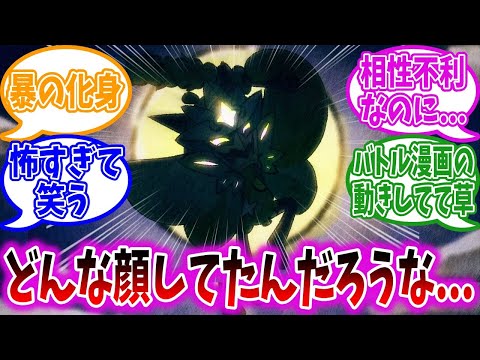
In the “Teal Mask” DLC for Pokémon Scarlet & Violet, players encounter Ogerpon, an enraged legendary Pokémon that engages in a 1v3 battle against the player’s team. The narrative reveals that Ogerpon’s fury stems from the death of a mask craftsman—a figure who recognized Ogerpon as an individual with agency rather than merely a creature to be controlled. This craftsman was killed by Pecharunt (referred to as Momo in the original), a Pokémon driven by an endless cycle of unfulfilled desires. Despite facing a perfectly balanced opposing team with type advantages, Ogerpon defeats all three opponents without using Terastallization, demonstrating overwhelming power fueled entirely by emotional anguish.
Why It Matters
Ogerpon represents a significant evolution in how video games portray emotion through character design and combat mechanics. Rather than relying solely on numerical stat increases, the game expresses Ogerpon’s grief and rage through visual presentation, battle intensity, and narrative context. This approach raises fundamental questions about the Pokémon franchise itself: Are Pokémon merely tools for trainers, or are they sentient beings with their own agency and emotional lives? Ogerpon’s characterization suggests the latter, offering a more nuanced perspective on the relationship between humans and Pokémon that has implications for how future games in the franchise might explore these themes.
Background
The Pokémon Scarlet & Violet DLC introduces players to the Kitakami region and its cultural traditions, including the practice of mask-wearing. The mask craftsman created a special mask for Ogerpon, not merely as a tool to enhance its power, but as a means of recognizing Ogerpon’s individuality and potential. This relationship contrasts sharply with the typical trainer-Pokémon dynamic seen throughout the franchise. Pecharunt, meanwhile, is a Pokémon consumed by a cycle of desire—it seeks to be loved and accepted, but its toxic nature prevents it from forming healthy relationships. When the mask craftsman attempts to help Pecharunt, the situation escalates tragically, resulting in the craftsman’s death. Ogerpon, having lost the one being who truly understood it, is left consumed by justified rage.
Key Points
- Pure Emotional Motivation: Ogerpon’s anger stems from a single, universally relatable source—the loss of someone who recognized its individual worth—making it more emotionally justified than comparable characters in other games.
- Mechanical Expression of Emotion: The game conveys Ogerpon’s rage not through stat boosts alone, but through visual intensity, movement speed, and the overwhelming defeat of a strategically superior opponent, creating a seamless link between psychology and gameplay.
- Pecharunt’s Complexity: Rather than a traditional villain, Pecharunt is portrayed as a being driven by unfulfilled desire for love, lacking malicious intent but incapable of controlling its destructive nature—a more nuanced antagonist than typical Pokémon games present.
- The Mask Craftsman’s Significance: The craftsman’s role as someone who validated Ogerpon’s existence makes their death the emotional core of the narrative, transforming a simple revenge plot into a meditation on recognition and belonging.
- Ambiguous Salvation: The DLC’s epilogue suggests Ogerpon finds some measure of peace through forming new friendships, offering a form of healing that doesn’t erase past trauma but creates space for new connections.
- Franchise Implications: Ogerpon’s characterization questions the fundamental premise of Pokémon—whether these creatures are sentient beings deserving of autonomy or resources to be exploited for human benefit.
Narrative Structure and Comparison to Other Games
Ogerpon’s character design draws parallels to other games that explore emotion-driven power, but with key distinctions. In Final Fantasy VII, Cloud’s rage against Sephiroth grants him extraordinary strength, yet his anger is intertwined with personal trauma and ambition. In Metal Gear Solid 3, The Boss’s loyalty to her nation fuels her combat prowess, but her sacrifice ultimately goes unrecognized. Ogerpon differs in that its anger is entirely justified, rooted in a loss that any player can understand emotionally. Unlike Eren from Attack on Titan, whose desire for freedom contains selfish elements, Ogerpon’s motivation is purely reactive—a response to genuine harm.
| Game | Character | Source of Rage | Power Expression | Moral Justification |
|---|---|---|---|---|
| Attack on Titan | Eren | Parental death, desire for freedom | Titan transformation and destruction | Moderate (contains selfish elements) |
| Final Fantasy VII | Cloud | Anger toward Sephiroth | Limit Break techniques | High (but ultimately redeemed) |
| Metal Gear Solid 3 | The Boss | Loyalty to nation | Enhanced combat ability | Very high (but unrecognized) |
| Pokémon Scarlet & Violet | Ogerpon | Death of the mask craftsman | 3v1 battle dominance without Terastallization | Highest (pure, universally justified) |
Perspectives
The Pokémon community has interpreted Ogerpon’s story through multiple lenses. One perspective emphasizes sympathy for Ogerpon, viewing it as a victim of circumstance whose rage is entirely warranted. Another perspective extends compassion to Pecharunt, recognizing that it too is a victim—a being whose desire for love was never properly guided or understood. A third perspective focuses on the mask craftsman’s role, questioning whether the craftsman’s approach to helping Pecharunt was fundamentally flawed, suggesting that all parties involved bear some responsibility for the tragedy. These competing interpretations coexist without clear resolution, reflecting the narrative’s deliberate complexity.
The Ambiguity of Ogerpon’s Awareness
One unresolved question remains: Does Ogerpon fully understand that the mask craftsman is dead? The game leaves this ambiguous. If Ogerpon is aware, its rage becomes a conscious response to loss. If Ogerpon is unaware, its anger becomes something more primal—a reaction to absence without complete understanding. This ambiguity may be intentional, as it mirrors real human grief, which often exists without full comprehension of its cause. This “incomprehensible rage” elevates Ogerpon to an almost mythological status, more akin to a force of nature than a character driven by rational motivation.
Insights
Ogerpon represents a watershed moment in video game storytelling, particularly within the Pokémon franchise. By portraying a legendary creature as a being with genuine emotional depth and agency, the game challenges players to reconsider the ethical implications of the Pokémon premise itself. The character demonstrates that video games need not rely on stat increases or mechanical upgrades to convey power; instead, emotional authenticity can be expressed through the integration of narrative, visual design, and gameplay mechanics working in concert.
The tragedy of Ogerpon also illustrates a broader truth about human experience: that grief and rage are not moral failings but natural responses to loss. By validating Ogerpon’s emotions rather than punishing them, the game suggests a more mature approach to character development. Furthermore, the DLC’s epilogue—in which Ogerpon forms new friendships—offers a form of healing that does not erase trauma but acknowledges that life continues and new connections are possible.
From a design perspective, Ogerpon’s 1v3 battle without Terastallization serves as a masterclass in how mechanics can reinforce narrative. The player witnesses not merely a statistical advantage but a visual and emotional expression of overwhelming grief transformed into power. This approach may influence future game design, encouraging developers to view combat encounters as opportunities for emotional storytelling rather than purely mechanical challenges.
Finally, Ogerpon raises questions about the nature of villainy in video games. Pecharunt is neither purely evil nor purely sympathetic—it is a being trapped in a cycle of unfulfilled desire, incapable of controlling its own destructive nature. This nuance suggests that future games might move away from binary moral frameworks toward more complex characterizations that acknowledge the tragedy inherent in conflict, even when one side must be opposed.