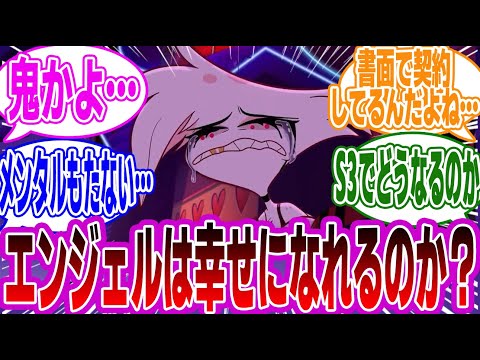
▶ Watch the original YouTube video
Hazbin Hotel Season 2: Fan Analysis of Angel Dust’s Psychological Breakdown and Path to Happiness
Hazbin Hotel Season 2’s episode “Where Is Angel’s Happiness?” presents one of anime’s most profound explorations of psychological manipulation and identity loss. Drawing on 15 years of anime analysis experience and comparisons with landmark series like Neon Genesis Evangelion and Attack on Titan, this deep dive examines how the show depicts Angel Dust’s dual subjugation and the fan community’s complex reactions to his character arc.
- What Happened
- Why It Matters
- Background
- Key Points
- Comparative Analysis: Psychological Breakdown in Anime
- Fan Community Response and Interpretation
- Thematic Analysis: Psychological Control in Modern Anime
- Potential Resolutions for Season 3
- Charlie’s Character Arc and Necessary Growth
- Alastor’s Psychological Architecture
- Viewing Recommendations for Deeper Understanding
- Broader Industry Implications
- Conclusion: A Landmark in Anime Character Psychology
What Happened
In Hazbin Hotel Season 2’s pivotal episode “Where Is Angel’s Happiness?”, Angel Dust discovers a devastating truth: he has been serving as Alastor’s spy while simultaneously trapped under Valentino’s control. This revelation triggers a profound psychological crisis, as Angel realizes that his sense of agency and free will—the foundation of his identity—has been systematically dismantled through dual layers of manipulation. The episode explores not just the external control exerted by these two demons, but the internal collapse of Angel’s sense of self.
Why It Matters
This narrative development represents a significant evolution in how contemporary anime addresses psychological trauma and manipulation. Rather than focusing on external conflicts or physical battles, Hazbin Hotel Season 2 centers on internal psychological warfare—a thematic shift that reflects broader cultural anxieties about invisible forms of control in the digital age. The episode’s exploration of how victims can be manipulated into believing they are acting of their own volition, while actually being controlled, resonates with modern concerns about psychological influence and autonomy. For the anime community, this marks a departure from the typical hero’s journey narrative toward a more nuanced examination of how environments and relationships can systematically erode a person’s sense of self.
Background
Angel Dust enters Season 2 having apparently found refuge and community at the Hazbin Hotel. However, the season gradually reveals the complexity of his situation. He remains bound by contract to Valentino, the abusive overlord who controls his body and work. Simultaneously, unbeknownst to Angel, Alastor has been using him as a spy, manipulating him into believing his actions serve the hotel and its inhabitants. This dual subjugation operates on different psychological levels: Valentino’s control is external and overtly coercive, while Alastor’s manipulation is psychological, allowing Angel to maintain a false sense of moral purpose and agency.
The episode’s emotional weight derives from the show’s commitment to depicting how psychological manipulation differs fundamentally from physical coercion. Where earlier anime like Attack on Titan (2013) explored the shock of revealed identities and betrayal, Hazbin Hotel examines the deeper trauma of discovering that one’s sense of choice itself has been compromised.
Key Points
- Dual Control Structure: Angel Dust exists under two simultaneous systems of control—Valentino’s contractual, physical domination and Alastor’s psychological manipulation that convinces Angel his actions are self-directed and morally justified.
- Identity Dissolution: The episode’s central tragedy is not merely betrayal, but the realization that Angel’s sense of personal agency and identity has been systematically dismantled, leaving him uncertain of what he truly wants or believes.
- Charlie’s Unintended Harm: The narrative reveals that Charlie, despite her good intentions, has repeatedly overridden Angel’s stated preferences and boundaries, inadvertently replicating the controlling behavior of his abusers.
- Alastor’s Linguistic Manipulation: Alastor’s control operates primarily through language, tone modulation, and psychological techniques similar to neuro-linguistic programming, allowing him to influence Angel’s subconscious while maintaining plausible deniability.
- Unresolved Desires: A critical ambiguity remains: the episode concludes without clarifying whether Angel truly wants redemption and heaven, or whether he simply wants to be with Husk, leaving his fundamental motivations uncertain.
- Contract Complications: The legal and metaphysical nature of Angel’s contracts with both Valentino and Alastor remains unresolved, creating uncertainty about potential paths to freedom in Season 3.
Comparative Analysis: Psychological Breakdown in Anime
The depth of Angel Dust’s psychological crisis invites comparison with other landmark anime explorations of character breakdown:
| Series | Character | Nature of Crisis | Psychological Depth | Resolution Status |
|---|---|---|---|---|
| Hazbin Hotel | Angel Dust | Erasure of free will through psychological manipulation | ★★★★★ | Unresolved (Season 3 pending) |
| Attack on Titan | Annie Leonhart | Identity exposure and betrayal | ★★★★☆ | Partial (crystallization state) |
| Jujutsu Kaisen | Yuji Itadori | Forced coexistence with curse entity | ★★★★☆ | Ongoing |
| Neon Genesis Evangelion | Rei Ayanami | Loss of self-identity and individuality | ★★★★★ | Ambiguous |
Angel Dust’s crisis differs from these precedents in a crucial way: while Annie’s betrayal was sudden and external, and Yuji’s struggle involves a tangible entity, Angel’s trauma stems from the realization that his internal sense of choice itself has been compromised. This places his psychological breakdown on par with Rei Ayanami’s existential crisis in Evangelion, yet with the added dimension that Angel still possesses the possibility of recovery through genuine choice—a possibility that remains open as of Season 2’s conclusion.
Fan Community Response and Interpretation
The fan community’s reaction to “Where Is Angel’s Happiness?” reveals several layers of interpretation. The most prevalent discussion centers on the fundamental question: what does Angel actually want? Multiple viewers noted that the episode concludes without Angel articulating whether he desires redemption and heaven, or simply wishes to remain with Husk. This ambiguity has generated extensive debate across platforms.
A secondary discussion focuses on Charlie’s role in perpetuating harmful patterns. Fans identified three specific moments where Charlie overrides Angel’s stated boundaries: forcing his participation in Season 1, pressuring him to stay at the hotel in Season 2, and failing to pursue him when he leaves. This observation has led to discussions about whether Charlie, despite her benevolent intentions, replicates the controlling behavior of Angel’s abusers.
Alastor’s linguistic manipulation techniques have also garnered significant analytical attention. Viewers noted the precision of his vocal performance—strategic emphasis, tonal shifts, and deliberate vocal breaks—which function as psychological tools rather than mere performance choices. This has drawn comparisons to real-world manipulation tactics and neuro-linguistic programming.
Thematic Analysis: Psychological Control in Modern Anime
The prevalence of psychological manipulation as a central theme in recent anime—including Jujutsu Kaisen’s exploration of cursed influence, Attack on Titan’s final arc, and Hazbin Hotel’s dual-control structure—suggests a broader industry shift. This trend likely reflects contemporary anxieties about invisible forms of control in the digital age, where influence operates through information, psychology, and social manipulation rather than overt force.
The 2010s emphasized external enemies and physical conflict. The 2020s increasingly focus on internal enemies and psychological warfare. This evolution mirrors societal concerns about social media manipulation, algorithmic influence, and the erosion of individual agency in networked environments.
Potential Resolutions for Season 3
The central unresolved question concerns how Angel’s contracts—with both Valentino and Alastor—will be dissolved. Three primary scenarios appear plausible:
Scenario 1: Alastor’s Voluntary Release
Alastor’s apparent shift toward opposition to the primary antagonist could enable him to release Angel from their arrangement. Given Alastor’s complete psychological understanding of Angel, such a release would constitute the most profound form of redemption available to Angel.
Scenario 2: Valentino’s Death
Contracts typically terminate upon the death of one party. Valentino’s elimination in Season 3 would automatically dissolve his claim over Angel, though this would not address the deeper psychological damage.
Scenario 3: Angel’s Self-Directed Choice
The most dramatically resonant resolution would involve Angel consciously choosing to break free, exercising genuine agency for perhaps the first time. Within Hazbin Hotel’s metaphysical framework, where Charlie’s conviction manifested as tangible power, Angel’s determination to reclaim his autonomy could function as a legitimate form of contract dissolution.
The most probable outcome combines Scenarios 2 and 3: Valentino’s death occurs while Angel simultaneously makes a conscious choice to reject further control, thereby reclaiming his agency through an act of will.
Charlie’s Character Arc and Necessary Growth
A critical dimension of Season 3’s narrative must involve Charlie’s recognition that her well-intentioned actions have repeatedly overridden Angel’s autonomy. The show has established three specific instances where Charlie’s behavior mirrors the controlling patterns of Angel’s abusers, despite fundamentally different intentions. For Charlie’s character to achieve genuine growth, she must undergo a process of self-reflection and acknowledge how her desire to help has sometimes manifested as control.
This recognition would represent a sophisticated narrative choice: acknowledging that harm can occur through good intentions, and that respecting others’ autonomy sometimes means accepting their choices even when we believe those choices are wrong.
Alastor’s Psychological Architecture
Alastor’s manipulation operates through linguistic precision rather than overt coercion. His vocal performance—including strategic emphasis, tonal modulation, and deliberate vocal breaks—functions as a psychological tool. He constructs narratives that allow his victims to believe they are acting autonomously while actually executing his predetermined plans. His statement that he maintains control “as long as I’m smiling” encapsulates his core strategy: the appearance of benevolence masks complete psychological domination.
This approach parallels real-world manipulation techniques and represents a more sophisticated form of control than physical coercion, precisely because victims remain unaware they are being controlled.
Viewing Recommendations for Deeper Understanding
To fully appreciate Hazbin Hotel Season 2’s psychological complexity, viewers should:
- Revisit Season 1, Episodes 4 and 6: These episodes establish the foundational dynamics between Charlie and Angel, revealing how Charlie’s controlling behavior originated from benevolent intentions.
- Analyze Angel and Husk’s Dialogue: Their conversations reveal how both characters avoid genuine emotional honesty, instead relying on deflection and false casualness.
- Observe Alastor’s Facial Expressions: His smile varies subtly depending on whether he maintains complete control or faces unexpected complications, providing insight into his psychological state.
- Compare with Fate/Zero and Neon Genesis Evangelion: These series explore similar themes of psychological control and identity dissolution, providing valuable comparative context.
Broader Industry Implications
Hazbin Hotel’s approach to psychological trauma and manipulation represents a significant evolution in how animated series address character development. Rather than focusing exclusively on external growth and achievement, the show examines how environments and relationships can systematically undermine a person’s sense of self. This thematic focus suggests that contemporary anime is increasingly engaging with psychological realism and the complexities of trauma recovery.
The show’s commitment to depicting psychological nuance—including the ambiguity of what Angel actually wants, the unintended harm caused by well-meaning characters, and the sophistication of psychological manipulation—elevates it beyond typical narrative structures and into territory previously occupied by works like Evangelion.
Conclusion: A Landmark in Anime Character Psychology
Hazbin Hotel Season 2’s “Where Is Angel’s Happiness?” represents a landmark achievement in anime character psychology. The episode’s exploration of how free will can be systematically dismantled through psychological manipulation, combined with its refusal to provide easy answers or simple resolutions, marks it as a significant work in the medium’s ongoing evolution.
The central ambiguity—the genuine uncertainty about what Angel truly wants—is not a narrative flaw but a deliberate choice that reflects psychological reality. Recovery from psychological manipulation is not instantaneous; it involves prolonged uncertainty about one’s own desires and motivations. By refusing to resolve this ambiguity in Season 2, the show commits to psychological authenticity.
Season 3 will determine whether this setup leads to genuine character growth and recovery, or whether it devolves into melodrama. Given the show’s demonstrated commitment to psychological nuance, optimism appears warranted. Hazbin Hotel has established itself not merely as entertainment, but as a serious exploration of human relationships, autonomy, and the possibility of recovery from psychological harm.