▶ Watch the original YouTube video
A limited-edition Attack on Titan collaboration bento box has sparked debate among fans about whether it successfully recreates the anime’s world or relies too heavily on forced explanations. After analyzing 15 years of anime merchandise and comparing it to past successful collaborations, the verdict reveals a fundamental tension between world-building authenticity and practical food satisfaction.
What Happened
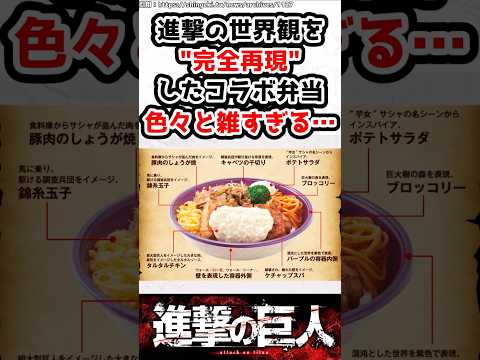
A convenience store released a limited-edition bento box designed to represent the world of Attack on Titan. The box includes multiple food elements intended to reference iconic elements from the series: ginger-fried pork (representing stolen warehouse meat), eggs (evoking the Survey Corps cavalry), shredded cabbage (grassland imagery), potato salad, broccoli (representing a forest), and a large meat portion with tartar sauce. The box is packaged in a purple container meant to convey the series’ dark atmosphere.
Why It Matters
This collaboration highlights a recurring challenge in anime merchandise: balancing artistic world-building with practical food quality. For dedicated fans, collaboration products represent an opportunity to immerse themselves in their favorite fictional worlds. When these products fail to maintain internal consistency with the source material’s logic, it breaks that immersion. The reception of this bento box offers insights into what fans actually value in branded merchandise and how production constraints shape creative decisions.
Background
Attack on Titan, which aired from 2013 to 2023, has been the subject of numerous merchandise collaborations over the past decade. Previous successful collaborations include a 2017 Lawson onigiri (rice ball) that focused on the iconic “walls” concept, and a 2018 Marugame Udon collaboration featuring the character Levi. The franchise’s 10-year run means both longtime and newer fans have different expectations for what “world authenticity” means. The series’ fictional world notably lacks rice as a staple food—characters primarily consume bread and meat—making the choice to include rice in this bento box particularly contentious among fans.
Key Points
- World-building attempt: The bento box incorporates visual elements from Attack on Titan, including references to the food storage facility, the Survey Corps, and the series’ darker aesthetic.
- Forced explanations: Multiple fan comments indicate that the connections between food items and their supposed references feel contrived, with explanations appearing as “forced associations” rather than natural thematic links.
- Material quality concerns: Fans noted that inexpensive ingredients were used, raising questions about whether the premium price point was justified.
- World logic inconsistency: The inclusion of rice contradicts the source material, where the fictional world’s primary staples are bread and meat. This breaks the internal consistency fans expect.
- Taste versus authenticity trade-off: The bento box appears to sacrifice both authentic world-building and food satisfaction, failing to excel in either category.
- Comparison to past successes: Earlier collaborations succeeded by focusing on a single iconic element rather than attempting to cram multiple references into one product.
Timeline
- 2013: Attack on Titan anime premieres; initial food storage facility scene becomes iconic to the series.
- 2017: Lawson collaboration onigiri released, focusing on the “walls” concept—considered a successful execution.
- 2018: Marugame Udon collaboration featuring character-focused design.
- 2019: Demon Slayer x Seven-Eleven bento collaboration serves as a reference point for successful anime food merchandise.
- 2023: Attack on Titan series concludes after 10 years.
- 2024: Current collaboration bento box released, receiving mixed to negative reception.
Perspectives
Fan perspective: Dedicated fans view collaboration products as a gateway to experiencing their favorite fictional worlds. They expect internal consistency—if the source material doesn’t include rice, the merchandise shouldn’t either. Fans also appreciate when explanations feel organic rather than forced. The most common criticism centers on the bento box’s reliance on weak thematic connections that feel like “afterthoughts” rather than thoughtful design choices.
Production perspective: Merchandise creators face significant constraints: material costs, shelf life, food safety regulations, and the need to appeal to both longtime and casual fans. The inclusion of rice likely reflects practical considerations—rice is a standard bento component, cost-effective, and familiar to Japanese consumers. The purple container and multiple visual elements suggest an attempt to balance world-building ambitions with production realities.
Marketing perspective: Since Attack on Titan concluded in 2023, this collaboration targets existing fans rather than new audiences. The strategy appears to rely on nostalgia and fan goodwill, assuming that devoted fans would accept creative liberties. However, this assumption underestimated fans’ critical engagement with the source material.
Insights
The bento box’s lukewarm reception reveals a fundamental tension in anime merchandise design: world authenticity and practical food satisfaction are often at odds. The most successful past collaborations—like the 2017 Lawson onigiri—succeeded by narrowing their focus to a single iconic element rather than attempting comprehensive world representation. By concentrating on the “walls” concept, that product achieved strong visual recognition while maintaining food quality and requiring minimal explanation.
The current bento box attempts to pack multiple references into one product, resulting in forced explanations that undermine both its thematic coherence and its appeal as a meal. Fans recognize this compromise and respond critically, not because they’re hostile to the collaboration concept, but because they understand the source material deeply enough to notice inconsistencies.
There’s also a lesson about fan expectations: dedicated audiences don’t simply want branded products—they want products that respect the internal logic of the worlds they love. When a collaboration breaks that logic (by including rice in a world without it), it signals that the creators didn’t fully consider the fans’ perspective. This is particularly significant for a series that concluded after a decade-long run, where fans have accumulated substantial knowledge of the fictional world’s rules and aesthetics.
Future anime collaborations may benefit from this feedback by adopting a more minimalist approach: focus on one or two iconic elements, ensure thematic consistency with source material, and prioritize food quality over the number of references. The “failure” of this bento box, paradoxically, demonstrates the sophistication of modern anime fandom and their genuine investment in the worlds they support.