▶ Watch the original YouTube video
What If Kira’s First Mobile Suit Was Freedom? Analyzing the Internet’s Reaction to This Gundam SEED Alternate Scenario
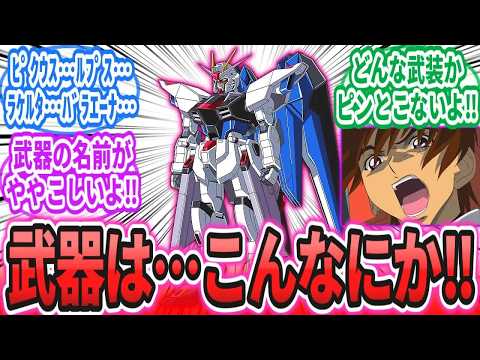
A long-standing “what if” scenario among Gundam SEED fans imagines protagonist Kira Yamato piloting the Freedom Gundam as his first mobile suit instead of the Strike Gundam. This alternate scenario has sparked diverse fan reactions ranging from enthusiasm to structural criticism, revealing deeper insights into the series’ narrative design and character development philosophy.
What Happened
An alternate scenario has circulated within the Gundam SEED fan community proposing that Kira Yamato’s initial mobile suit could have been the Freedom Gundam rather than the Strike Gundam. This hypothetical premise has generated substantial online discussion, with fans debating whether such a change would enhance or fundamentally undermine the series’ narrative structure. The scenario has become a focal point for analyzing how character development and mechanical design intersect in the original Mobile Suit Gundam SEED series.
Why It Matters
This alternate scenario illuminates the deliberate creative choices made by director Kazuyoshi Katoki and the production team. Understanding why Kira begins with the Strike Gundam—rather than the more powerful Freedom—reveals how Gundam SEED uses mobile suit progression as a metaphor for psychological growth. The discussion demonstrates how deeply engaged fans analyze narrative structure and production intent, transforming a simple “what if” into a sophisticated examination of storytelling mechanics in mecha anime.
Background
Mobile Suit Gundam SEED premiered in 2002 and follows Kira Yamato, a young Coordinator who becomes a mobile suit pilot during an interstellar conflict. Kira’s journey begins with the Strike Gundam, a versatile machine equipped with swappable weapon systems. As the series progresses, Kira pilots increasingly advanced units, culminating in the Freedom Gundam—a high-performance mobile suit that represents his full acceptance of his Coordinator abilities and his choice to forge his own path.
The Strike Gundam’s defining characteristic is its modularity and expandability. Its design allows for multiple equipment configurations, symbolizing Kira’s initial uncertainty about his identity and his gradual self-discovery throughout the series. The Freedom Gundam, by contrast, is presented as a complete, fully-realized machine embodying absolute capability and autonomy.
Key Points
- Character-Mecha Synchronization: Kira’s mobile suit progression directly mirrors his psychological development—from uncertainty with Strike, to acceptance with Aile Strike, to self-determination with Freedom.
- Three Fan Response Categories: Online reactions divide into optimistic fans interested in alternate storylines, critical fans who recognize structural incompatibility, and analytical fans examining production intent.
- Narrative Structure Incompatibility: Beginning with Freedom would eliminate the visual metaphor of growth through mechanical evolution, fundamentally altering the series’ thematic foundation.
- Comparison with Other Gundam Series: Similar analysis of other Gundam protagonists (Amuro Ray, Shin Asuka) reveals a consistent pattern: initial mobile suits possess versatility and expansion potential rather than perfection.
- Director’s Intentional Design: Director Kazuyoshi Katoki deliberately selected the Strike Gundam to express Kira’s incomplete state at the narrative’s beginning, using mechanical design as psychological representation.
- Contrast with Shin Asuka: The parallel structure between Kira and Shin Asuka in SEED DESTINY—where Shin pilots the transformable Impulse Gundam—further validates the necessity of initial mechanical versatility for character development.
Narrative Structure Analysis
The Strike Gundam’s versatility through swappable weapon systems (Wing Unit, Launcher Striker, Sword Striker) represents Kira’s trial-and-error approach to understanding his identity and capabilities. This mechanical flexibility directly corresponds to his psychological journey of self-discovery.
If Kira had begun with the Freedom Gundam, the series would lose this crucial visual metaphor. Freedom is a complete, perfected machine with minimal room for evolution or expansion. Introducing Kira with such a fully-realized unit would contradict the narrative’s core theme: a young man learning who he is and choosing his own destiny through gradual self-actualization.
This structural necessity becomes evident when comparing Gundam SEED with other entries in the franchise. Mobile Suit Gundam’s Amuro Ray begins with the RX-78 Gundam—a versatile machine that evolves with his skills. Gundam SEED DESTINY’s Shin Asuka pilots the Impulse Gundam, whose multiple transformation modes reflect his shifting emotional states. This consistent pattern across successful Gundam narratives demonstrates that initial versatility, not perfection, serves character development.
Fan Perspectives
Optimistic Interpretation: Some fans express genuine curiosity about how the narrative would change if Kira possessed Freedom’s overwhelming performance capabilities from the beginning. This perspective reflects pure creative interest and the fan community’s imaginative engagement with the source material.
Critical Analysis: More analytically-minded fans recognize that the scenario fundamentally cannot work within the established narrative framework. They understand that Kira’s character arc depends on mechanical progression as a visual representation of internal growth. These fans typically demonstrate the deepest comprehension of the series’ structural design.
Production-Focused Examination: A third group focuses on director Kazuyoshi Katoki’s creative decisions, attempting to understand why the Strike Gundam was selected as the optimal narrative choice. This perspective treats the scenario as a thought experiment for validating production intent.
Comparative Framework: Mobile Suit Selection Across Gundam
Examining initial mobile suit assignments across major Gundam series reveals a consistent principle: versatility precedes specialization in character-driven narratives.
In Mobile Suit Gundam, Amuro Ray’s RX-78 Gundam combines versatility with expandability, allowing his piloting skills and the machine’s capabilities to develop in parallel. In Gundam SEED, Kira’s Strike Gundam follows this identical pattern. In Gundam SEED DESTINY, Shin Asuka’s Impulse Gundam introduces transformation mechanics that reflect his unstable psychological state. Even in Gundam 00, protagonist Setsuna F. Seiei’s GN-001 Gundam, while more complete than typical initial units, still allows for significant pilot development before reaching its full potential.
The Freedom Gundam breaks this established pattern by presenting a fully-realized machine with minimal expansion potential. Assigning such a unit to a protagonist at narrative’s beginning would contradict the fundamental design philosophy that governs successful Gundam storytelling.
Director’s Creative Intent
Director Kazuyoshi Katoki demonstrates a sophisticated approach to expressing character psychology through mechanical design. Kira’s mobile suit progression functions as visual narrative:
- Strike Gundam: Represents Kira’s undefined state—he does not yet understand his Coordinator nature or his true identity.
- Aile Strike: Symbolizes Kira’s acceptance of his Coordinator abilities and his decision to utilize his inherent power responsibly.
- Freedom Gundam: Embodies Kira’s complete self-actualization and his choice to pursue his own path independent of external pressures.
This progression is not merely mechanical enhancement; it is psychological maturation rendered visible through machine design. Beginning with Freedom would eliminate this crucial narrative tool, forcing character development to rely solely on dialogue and circumstance rather than the elegant visual metaphor the series employs.
Contrast with Shin Asuka’s Arc
The parallel structure between Kira and Shin Asuka in Gundam SEED DESTINY further validates the necessity of Kira’s initial mechanical limitations. Shin pilots the Impulse Gundam, a machine capable of multiple transformations reflecting his volatile emotional state. If Kira had begun with the perfected Freedom Gundam, the contrast between these two protagonists would collapse. Kira would appear as an already-complete entity while Shin remains unfinished—a dynamic that would undermine the series’ exploration of how different individuals respond to similar circumstances.
The current structure creates meaningful tension: Kira grows through mechanical and psychological evolution, while Shin’s transformations represent emotional instability. This contrast enriches both narratives and demonstrates deliberate structural design by the production team.
Fan Creativity and Motivation
The emergence of this alternate scenario reflects three distinct motivations within the fan community:
Power Fantasy Appeal: Some fans simply enjoy imagining Kira with overwhelming mechanical superiority, exploring how such advantage would alter conflict outcomes. This reflects the same impulse that drives interest in “best equipment” discussions in gaming communities.
Narrative Questioning: Other fans genuinely wonder whether the Strike Gundam was truly necessary, approaching the scenario as intellectual inquiry. Paradoxically, fans who ask such questions typically demonstrate the deepest understanding of why the choice was essential.
Production Analysis: A third group uses the alternate scenario as a thought experiment to validate and understand director Katoki’s creative decisions. This approach treats the hypothetical as a tool for comprehending production intent.
Insights
The “Freedom as initial mobile suit” scenario, while imaginatively compelling, ultimately proves structurally impossible—and this impossibility itself validates Gundam SEED’s narrative excellence. Director Kazuyoshi Katoki’s selection of the Strike Gundam was not arbitrary but deliberately calculated to enable character development through mechanical progression.
The scenario demonstrates that successful mecha narratives require careful alignment between protagonist psychology and mechanical design. The Strike Gundam’s versatility and expandability perfectly mirror Kira’s journey from uncertainty to self-determination. The Freedom Gundam’s perfection would contradict this narrative arc, creating a protagonist who begins complete rather than one who grows into completeness.
For viewers approaching Gundam SEED, recognizing this synchronization between character and machine enriches the viewing experience substantially. Each mobile suit change marks a psychological threshold—a moment when Kira’s internal transformation manifests through external mechanical change. This elegant integration of form and content represents sophisticated storytelling that transcends typical mecha anime conventions.
The fan discussion surrounding this alternate scenario ultimately serves as indirect validation of the series’ structural design. That the scenario “doesn’t work” is not a limitation but evidence of the production team’s mastery in aligning narrative, character development, and mechanical design into a cohesive whole. The scenario’s impossibility proves the original choice’s necessity—a paradox that speaks to Gundam SEED’s enduring narrative sophistication.