▶ Watch the original YouTube video
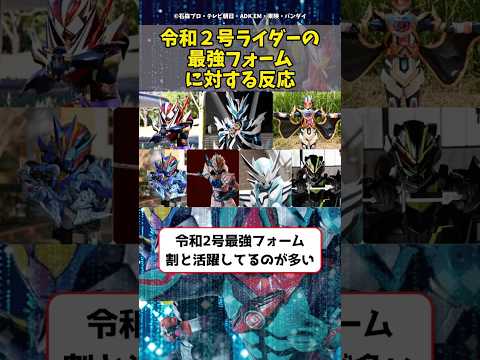
Reiwa Second Rider’s Ultimate Form Sparks Major Fan Reaction: What It Means for the Franchise
The Reiwa era’s second Rider has unveiled an ultimate form that is generating significant discussion across fan communities. This development signals a fundamental shift in how the franchise treats secondary characters, marking a departure from decades of tradition where the protagonist held exclusive claim to the most powerful transformations.
What Happened
The Reiwa-era second Rider has achieved an ultimate form, a development that has captured the attention of longtime fans and sparked widespread debate across social media platforms including Twitter, 5channel, and YouTube. This transformation represents a significant narrative moment in the Kamen Rider franchise, as secondary Riders historically have rarely obtained such powerful forms. The emergence of this ultimate form has prompted fans to speculate about the character’s future role in the series and the broader direction of the franchise.
Why It Matters
This development carries implications far beyond a simple power-up. The ultimate form’s appearance suggests a fundamental reconceptualization of the second Rider’s narrative role. In the Showa era (1971–1989), second Riders served primarily as support characters to the protagonist. The Heisei era (2000–2019) gradually elevated their status to partners and independent characters with their own story arcs. The Reiwa era appears to be taking this evolution further by positioning second Riders as equals to protagonists. This shift reflects changing audience expectations and the maturation of the fan community, which now demands complex, multi-layered narratives rather than simple hero-centered stories.
Background
The Kamen Rider franchise has a 50-year history of character hierarchies. The original 1971 series introduced the concept of a second Rider as a supporting character. Throughout the Showa era, second Riders like Kamen Rider 2 remained subordinate to the protagonist in both narrative importance and power levels. The Heisei era began challenging this structure, particularly with Kamen Rider W’s introduction of Kamen Rider Accel, whose independent character development and eventual parity with the protagonist marked a turning point. The Reiwa era, beginning with Kamen Rider Zero-One in 2019, has continued this trend by establishing multiple Riders as co-leads from the outset, as seen in series like Kamen Rider Saber where multiple Riders pursue independent objectives.
Key Points
- The Reiwa second Rider’s ultimate form represents a significant departure from traditional franchise hierarchy where protagonists exclusively held the most powerful transformations
- This development suggests the production team is intentionally implementing a “multiple protagonists” narrative structure rather than a single-hero-centered approach
- Fan communities are actively debating whether this form signals a protagonist-versus-secondary-Rider conflict or a deepening partnership between the two characters
- The evolution of second Rider treatment across Showa, Heisei, and Reiwa eras reveals a clear progression toward greater character equality and narrative independence
- This ultimate form may serve as a pivotal turning point for the series, fundamentally altering the power dynamics and story direction
- The emergence of this form reflects broader industry trends toward complex, multi-character narratives that appeal to mature fan audiences
Timeline
- 1971: Original Kamen Rider introduces the second Rider concept as a support character
- 2000–2019 (Heisei Era): Second Riders gradually gain independence and narrative prominence, particularly from Kamen Rider W onward
- 2009: Fan engagement with second Rider narratives intensifies, marking a shift in audience expectations
- 2019–Present (Reiwa Era): Multiple Riders are established as co-leads from series inception, with equal narrative weight
- Present: Reiwa second Rider achieves ultimate form, signaling the culmination of decades-long evolution in character treatment
Perspectives
Fan reactions across platforms reveal multiple interpretations of this development. On Twitter, the dominant sentiment expresses excitement and anticipation, with comments like “The Reiwa era truly is different” and speculation about whether the protagonist’s position will be challenged. Some fans express concern that the protagonist’s significance may diminish if the second Rider becomes too powerful. On 5channel, discussions take a more analytical tone, with detailed comparisons to Kamen Rider W and Kamen Rider Agito, examining how this development fits within the franchise’s historical patterns. YouTube comments focus on specific production elements—design aesthetics, voice acting quality, and narrative direction—while expressing curiosity about future developments. These varied reactions collectively suggest that the fan community has matured beyond simple hero-worship, now valuing complex character dynamics and narrative sophistication.
Insights
The Reiwa second Rider’s ultimate form represents the culmination of a 50-year evolution in how the franchise conceptualizes secondary characters. What began as a clear protagonist-support hierarchy has gradually transformed into a multi-protagonist narrative structure. This shift is not merely aesthetic or power-based; it reflects fundamental changes in storytelling philosophy and audience expectations. The franchise appears to be moving away from the Showa-era model of singular heroic figures toward a Reiwa-era model where multiple characters with distinct motivations and equal narrative weight drive the story forward. This evolution suggests that the production team recognizes that modern audiences—particularly longtime fans with decades of franchise experience—demand narratives of greater complexity and character equality. The ultimate form’s appearance may trigger one of two narrative paths: either a conflict between protagonist and secondary Rider that tests their relationship, or a deepening partnership that elevates both characters. Given the Reiwa era’s emphasis on multi-character coexistence, the latter scenario appears more likely. Ultimately, this development signals that the Kamen Rider franchise continues to evolve as a medium, reflecting the maturation of both its production values and its audience.