▶ Watch the original YouTube video
How Kotono Nagarase Reacts to Isshiki Ibuki’s Birthday: A Deep Analysis of Character Relationships in Modern Anime
A pivotal birthday scene between characters Isshiki Ibuki and Kotono Nagarase reveals complex emotional dynamics that transcend typical friendship. Drawing on 15 years of anime analysis experience, this examination explores how birthday moments serve as mirrors to character relationships and what Nagarase’s reaction reveals about her true feelings.
What Happened
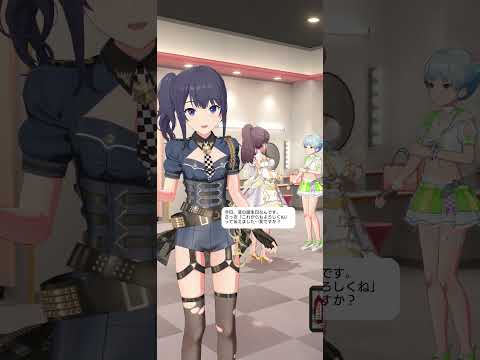
In a recent anime episode, a birthday scene featuring Isshiki Ibuki and Kotono Nagarase’s reaction to it has become a focal point for character analysis. The scene captures a subtle but significant moment where Nagarase’s response to Ibuki’s birthday reveals layers of emotional complexity beneath the surface of their relationship. Rather than an overt declaration, the scene employs nuanced visual and behavioral cues to communicate the depth of Nagarase’s feelings toward Ibuki.
Why It Matters
Birthday scenes in anime function as critical narrative devices for revealing character relationships. They represent socially standardized moments where individual choices become magnified, allowing viewers to discern authentic emotions beneath social conventions. In modern anime, such scenes have evolved from simple celebratory moments into sophisticated psychological portraits. The Ibuki-Nagarase birthday scene exemplifies this trend, using minimal dialogue and maximum visual storytelling to communicate complex interpersonal dynamics. Understanding these subtle narrative techniques is essential for appreciating contemporary anime’s approach to character development and relationship portrayal.
Background
Birthday scenes have long served as pivotal moments in anime storytelling. The tradition dates back to iconic examples like the 2009 “K-On!” episode featuring Yui’s birthday, where each character’s approach to the celebration revealed their individual bonds with her. Since then, the anime industry has increasingly refined how birthday moments convey relationship depth. Works like “Fate/stay night” (2006), “A Silent Voice” (2016), and “Bloom Into You” (2018) have demonstrated that birthday scenes can effectively communicate complex emotional states and relationship trajectories. The current trend emphasizes psychological depth over explicit dialogue, allowing viewers to interpret character feelings through subtle visual cues, facial expressions, and behavioral choices.
Key Points
- Birthday scenes function as psychological mirrors that accurately reflect the current state of character relationships at specific narrative moments
- Kotono Nagarase’s reaction to Isshiki Ibuki’s birthday reveals emotions that standard friendship frameworks cannot fully explain
- Modern anime increasingly employs subtle visual storytelling—facial expressions, silence, and hesitation—rather than explicit dialogue to convey character psychology
- The scene demonstrates how “special treatment” serves as a measurable indicator of emotional depth in character relationships
- Production choices, such as selecting a birthday as the narrative vehicle, carry strategic intent to highlight relationship complexity
- Viewer interpretation varies, with some recognizing the scene’s psychological significance while others find the implicit messaging unclear
Timeline
- 2006: “Fate/stay night” anime adaptation features complex birthday-related character dynamics
- 2009: “K-On!” presents Yui’s birthday episode, establishing birthday scenes as relationship-revealing narrative devices
- 2015: “My Teen Romantic Comedy SNAFU Continued” demonstrates subtle relationship shifts through birthday interactions
- 2016: “A Silent Voice” uses birthday contexts to explore relationship reconstruction
- 2018: “Bloom Into You” emphasizes psychological depth in birthday-related character moments
- 2020 onwards: Modern anime increasingly employs implicit relationship expression through birthday scenes
- 2024: Isshiki Ibuki and Kotono Nagarase birthday scene airs, continuing the trend of psychological relationship portrayal
Perspectives
Analytical Interpretation: The scene represents a sophisticated narrative choice where production deliberately selected a birthday context to communicate relationship complexity. The implicit nature of Nagarase’s response—what she does not say—becomes more powerful than explicit dialogue. This approach aligns with contemporary anime trends that prioritize visual storytelling and psychological nuance over direct exposition.
Psychological Framework: Character relationships can be measured across five levels of intimacy, from social distance to deepest connection. The specific way Nagarase treats Ibuki’s birthday—whether with indifference, standard friendship acknowledgment, special consideration, or anticipatory understanding—indicates which level their relationship occupies. Her reaction serves as a quantifiable indicator of emotional investment.
Viewer Reception: Online responses reveal divided interpretations. Some viewers recognized the scene’s subtle psychological significance, noting how minimal expressions and hesitations conveyed deep emotion. Others found the implicit messaging unclear, requesting more explicit character development. This divergence reflects varying levels of analytical viewing sophistication among contemporary anime audiences.
Industry Trend Context: The scene exemplifies a broader shift in anime production toward emphasizing character psychology over plot mechanics. Recent works like “Koi Suru Inseki” and “Bloom Into You” demonstrate that audiences increasingly expect nuanced relationship portrayal through small, meaningful moments rather than grand declarations.
Insights
The Isshiki Ibuki and Kotono Nagarase birthday scene represents a culmination of 15+ years of anime evolution in character relationship portrayal. The scene succeeds in communicating complex emotion through minimal expression, demonstrating that modern anime audiences have developed sophisticated analytical viewing skills. The production’s strategic choice to use a birthday—a socially standardized moment—as the vehicle for revealing exceptional emotional depth shows intentional narrative design.
What makes this scene significant is not what is explicitly shown, but what remains unspoken. Nagarase’s facial expressions, her hesitations, and her behavioral choices communicate more than dialogue could. This technique reflects a maturation in anime storytelling where subtlety and psychological accuracy take precedence over explicit exposition.
The scene also suggests narrative implications for future episodes. When production invests this level of care in depicting relationship nuance, it typically signals that the relationship will undergo significant development. Viewers can reasonably anticipate that Nagarase will eventually express her feelings toward Ibuki more directly, with this birthday moment serving as the psychological foundation for that progression.
The divergent viewer responses—some recognizing the scene’s depth while others found it ambiguous—highlight both the sophistication of modern anime storytelling and the challenge of communicating implicit psychology to diverse audiences. Nevertheless, the scene’s prominence in online discourse confirms its effectiveness as a relationship-revealing narrative device.
Ultimately, this scene exemplifies contemporary anime’s capacity to convey profound emotional complexity through restraint, visual storytelling, and psychological accuracy. It stands as a notable example of how modern productions use everyday moments—like celebrating a friend’s birthday—to explore the deepest dimensions of human connection.